

Chugai investing S$476m more into S'pore facility
Funds will be used to boost Japanese drug maker's local employee base and antibody R&D pipeline
Singapore
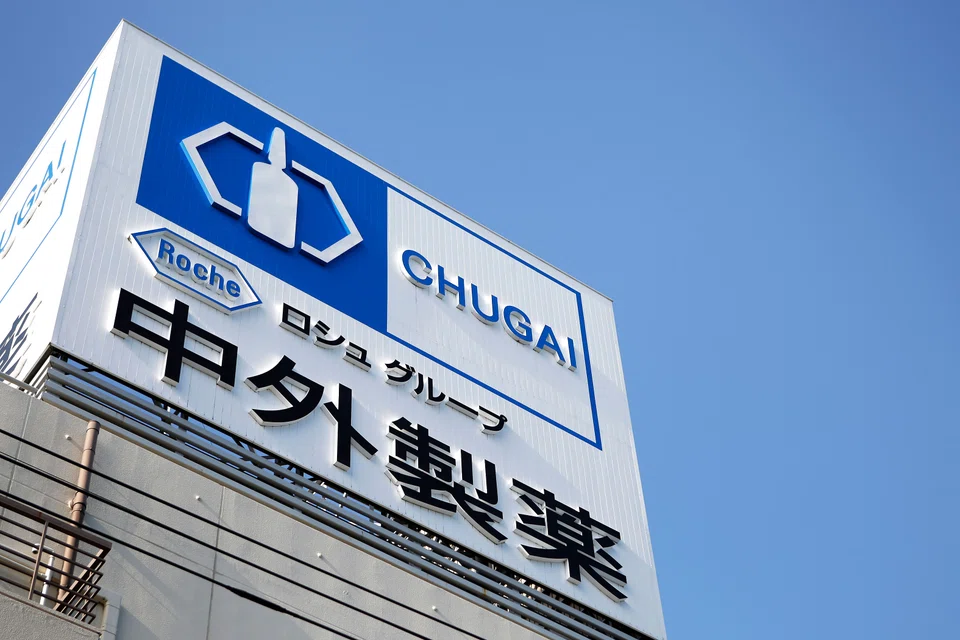
JAPANESE drug maker Chugai Pharmaceutical on Wednesday announced that it will invest S$476 million from now until 2021 into its research institute in Singapore, Chugai Pharmabody Research (CPR).
When CPR first set up its corporate laboratory here in 2012 to develop antibody drugs, it planned to pour about S$200 million into antibody research over the subsequent five years.
The new grant now comes on top on that. In a statement on Wednesday, it said: "CPR has progressed as initially expected, and this additional investment will make it one of the largest pharmaceutical R&D (research and development) operations in Singapore."
The investment will go towards boosting the company's local employee base and antibody research and development pipeline, it said.
Koichi Matsubara, director and CEO of CPR, told The Business Times that the company is planning to add about 40 researchers, mostly Singaporeans.
CPR currently employs about 70 staff who specialise in developing more effective antibody drugs using Chugai innovations such as its "Recycling Antibody(r)" and "Sweeping Antibody(r)" technologies. The imminent new hires will boost the staff strength to 110 by 2016.
In addition, it will be expanding physically too. From occupying the fourth floor at the Synapse building at Biopolis Drive, it will now go on to rent more than half of the seventh floor.
Chugai aims to accelerate development of new therapeutic antibodies by novel technologies which are currently being built up, while continuing to work on R&D activities with established antibody engineering technologies.
Hisafumi Okabe, vice-president and general manager of the research division at Chugai Pharmaceutical, credited A*Star and the the Singapore Economic Development Board for their support in helping it build up its operations in Singapore much faster than expected.
When Chugai first set up its Biopolis facility, Chugai Pharmaceutical chairman and CEO Osamu Nagayama had said that in terms of scientific infrastructure, Singapore easily trumps Japan, where stiff regulations and a lack of clear direction was crippling the domestic biomedical industry.
Singapore's organised biomedical cluster also stood in contrast to Japan where "there are tens and tens of bio-clusters, each one trying to achieve something of their own".
In a statement, EDB chairman Beh Swan Gin said that Singapore remains committed to providing the best environment for companies such as Chugai to attract and develop research talent.
Lim Chuan Poh, chairman of A*Star, added that Chugai's expansion in Singapore showed the Republic's attractiveness as a research hub with ready access to biomedical research talent, state-of-the-art infrastructure, and an environment that encourages open innovation through partnerships.
Parent firm Chugai Pharmaceutical, which is about 60 per cent owned by Swiss health-care giant Roche, made the announcement in Tokyo during its results briefing.
For its fiscal year ended Dec 31, 2014, it reported a 8.8 per cent increase in revenue to 461 billion yen (S$5.2 billion), and a 0.4 per cent rise in net income to 52 billion yen. On the stock market, it rose 2.4 per cent to 3,240 yen on higher volume.
TRENDING NOW

If Europe goes to war, the fallout will be felt in East Asia

Keppel posts 20% rise in Q3 net profit; New Keppel earnings up 15%

CICT Q3 NPI rises 13.8% to S$334.9 million on contributions from Paragon and other acquisitions
Stocks to watch: Keppel, CICT, MLT, Golden-Agri, Wilmar, CDLHT, FEHT, UltraGreen.ai

