Concerns about AI bubble overblown as Chinese tech giants step up race against US players: analysts
South-east Asian players, on the other hand, are likely to display more promise as AI adopters

[SINGAPORE] The phrase “AI bubble” has been a buzzword lately due to uncertainty over how sustainable the exponential growth of artificial intelligence (AI) is this year.
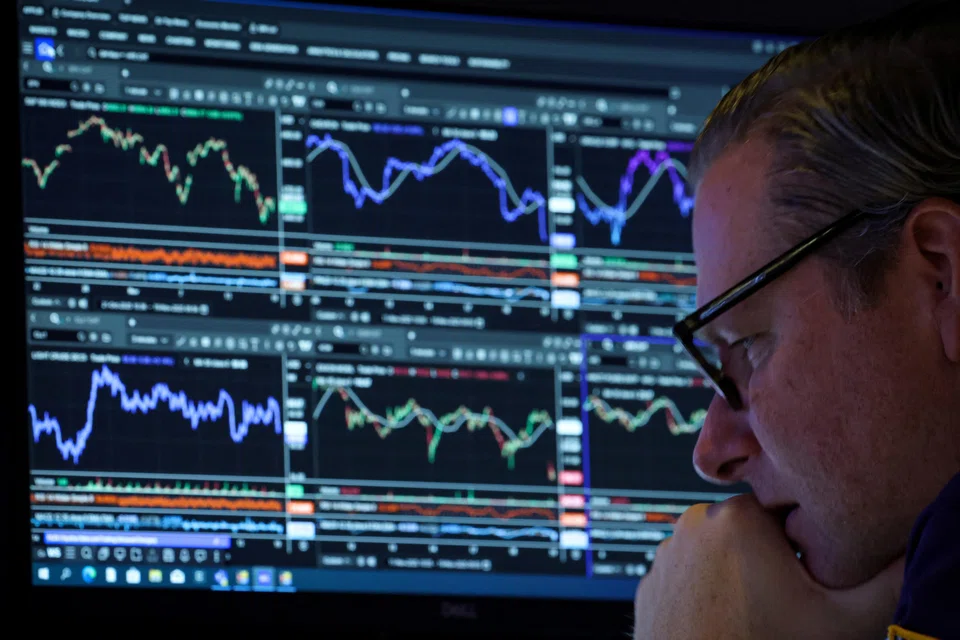
Fears of the AI bubble bursting have spooked some investors, resulting in a number of market sell-offs in November.
“Our China AI infrastructure picks are down around 8 per cent… falling alongside global AI comps on renewed AI ‘bubble’ angst’,” equity research analysts from Macquarie wrote in a Nov 26 report.
The Solactive China Humanoid Robotics Index, which jumped close to 60 per cent in October, has since fallen 20 per cent from this high, amid rising investor caution regarding “stretched valuations” of AI firms. The index includes robotics companies such as Chinese manufacturers Ubtech Robotics and Shenzhen Inovance Technology.
However, the analysts believe concerns over an AI bubble are overblown.
“A bubble bursts when there is too much supply chasing too little demand. In AI, we have the opposite,” they said.
The Macquarie analysts cited the US as an example, where they do not see any pull-back in infrastructure capacity or the nation’s all-out push for frontier model dominance with OpenAI’s GPT-4 and Google’s Gemini models.
For context, frontier AI models are those that have advanced capabilities.
This has been accentuated by major AI model launches – most notably Gemini 3 on Nov 18 and Claude 4.5 – which show that scaling is still paying dividends, and focus remains on the frontier.
The “Genesis Mission”, a national initiative by the US government launched on Nov 24 to build the most powerful scientific platform in the world, has been touted as one of the country’s largest efforts to stay ahead in the AI race, particularly in terms of research and innovation.
China ramps up infrastructure development
That said, the Macquarie analysts also flagged how China is “finally (being) serious” about its AI race against the US, as its infrastructure development accelerates.
Internet companies Alibaba, Tencent and Baidu were the analysts’ top picks. The Hong Kong-listed stocks have a 12-month absolute return rate of 93 per cent, 58 per cent and 53 per cent, respectively, as at Nov 25.
Morgan Stanley Asia analysts were also “overweight” on Tencent in their Nov 19 note, with a target price on the counter at HK$735.
This comes as Tencent has been recruiting AI talent for the past three to six months to focus on upgrading architecture for its proprietary foundation model, Hunyuan.
However, the US still leads in graphics processing units (GPUs) and switch silicon layers, and controls most of the proprietary scale-up fabrics in the AI supply chain.
“This gives it the edge in the very largest frontier-model clusters,” the Macquarie analysts wrote.
Tech hardware and networking standout
China may lag behind the US on the AI supply chain, but it displays strength in optical modules, mass manufacturing and advanced printed circuit boards.
Optical communications module manufacturer Zhongji Innolight, in particular, is now added to the Macquarie analysts’ top picks, with Macquarie’s Lai initiating coverage on the stock with an “outperform” recommendation.
Zhongji Innolight recorded a 292 per cent 12-month absolute return, as at Nov 25.
The analysts noted that half of Innolight’s high-speed capacity is located outside China, and mostly within Thailand, to serve US cloud demand.
Other names which surfaced included Chinese tech hardware players Luxshare and Lenovo Group, with a 55 per cent and 7 per cent absolute return for the 12-months.
This is aligned with China’s AI diffusion strategy – as opposed to the US’ aim to dominate frontier models and its stack beneath it, consisting of semiconductors, power and data centres, cloud and software.
“Networking is the key layer where China can lean on its industrial base to narrow the gap with the US rather than chase an unwinnable GPU arms race,” said the Macquarie analysts.
Singapore, Malaysia signal promise in S-E Asia
Experts said that players in South-east Asia have not quite made their mark as frontiers in generative AI.
Daniel Blake, Asia and emerging markets equity strategist at Morgan Stanley, however, noticed that within the broader AI ecosystem, there are “upstream opportunities” in the region, citing data centre investments going into Malaysia as an example.
“We are also seeing more (such) potential projects coming on board in Singapore as well,” he noted at Morgan Stanley’s 2026 Asia and Emerging Market Equities Outlook briefing on Nov 24.
Singapore was also flagged as a city for “AI champions” to grow and develop, with sectors such as consumer, e-commerce, gaming and autonomous driving among those on the rise.
“There is clearly going to be a lot of opportunity to embed AI in these business models in South-east Asia,” he said.
Decoding Asia newsletter: your guide to navigating Asia in a new global order. Sign up here to get Decoding Asia newsletter. Delivered to your inbox. Free.
Copyright SPH Media. All rights reserved.