

Construction, process and marine workers among priority groups for Covid-19 vaccine

Singapore
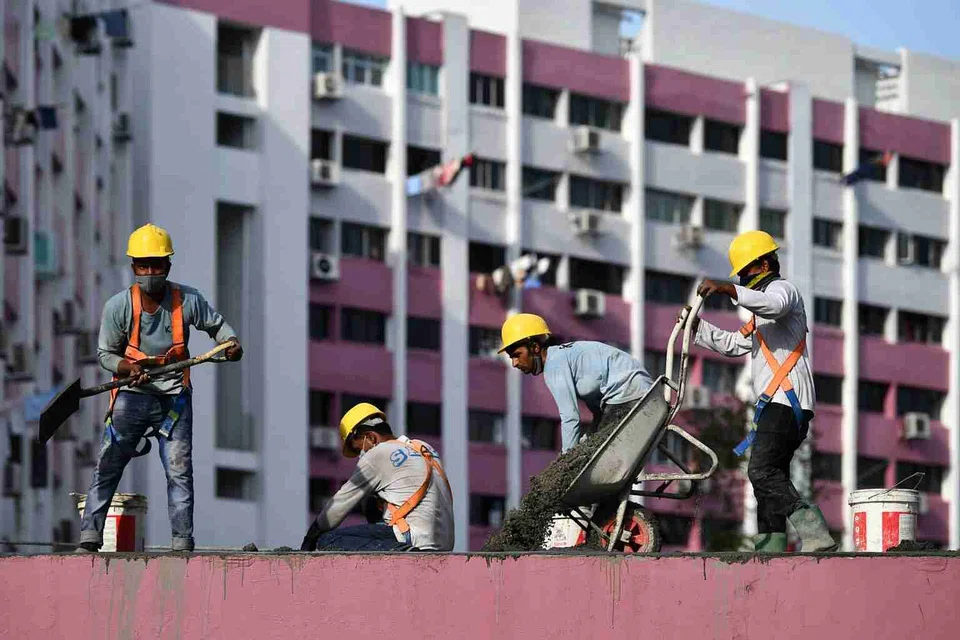
WORKERS "in jobs or settings where risk of a super-spreading event is high", including migrant workers, will be among the priority groups for Covid-19 vaccination, said Health Minister Gan Kim Yong in Parliament on Monday. These include the construction, marine and process sector.
In a ministerial statement, he addressed many questions on Covid-19 vaccines, noting that while safety is a top priority, a vaccine injury financial assistance programme will also be introduced to provide peace of mind.
Singapore has secured "enough vaccines for all Singaporeans and long-term residents in Singapore", he said, with these arriving in batches.
Groups that are most at-risk get priority. Vaccination has thus begun with healthcare workers and staff working in the healthcare sector.
Also prioritised will be Covid-19 frontline and other essential personnel, including swabbers hired by the Health Promotion Board, and staff at government quarantine facilities, community care facilities and dedicated Stay-Home Notice facilities.
As earlier stated, the plan is to then start vaccinating the elderly and those at greater risk of severe disease from February. Those in jobs or settings with a high risk of super-spreading events will also get priority.
The vaccination programme will then be progressively broadened. Some categories being studied include the military and police force, and foreign representatives overseas.
For the general public, prior bookings will be needed, with more information on how to make bookings to be provided later. Vaccination centres will be set up across the island.
"As more vaccines are approved for use, we will adjust our vaccination programme, depending on the vaccine supply as well as the disease epidemiology at that point in time."
Vaccination is an important line of defence in Singapore's Covid-19 strategy, and will be "a key enabler allowing us to return to normalcy", said Mr Gan, urging residents to get vaccinated once their turn arrives.
Noting concerns of members of Parliament, he gave assurance as to the vaccine's safety and efficacy, noting the stringent approval process.
Based on current data, side effects are similar to those for other established vaccines and usually resolve on their own in a few days.
However, "as with all medications and established vaccines, there is a small risk of very rare but serious adverse events that may occur post-vaccination, including allergic reactions".
This is why the recommendation is that people with known severe allergies should not be vaccinated.
All vaccine recipients should be observed on-site for 30 minutes post-vaccination, so that any severe allergic reactions can be detected and treated promptly, he added.
The Ministry of Health (MOH) will also introduce a vaccine injury financial assistance programme, to provide support for persons "who suffer a serious adverse event that is assessed to be related to Covid-19 vaccines administered in Singapore".
"While we expect few to need this, the programme will give peace of mind to those taking the vaccination," said Mr Gan, adding that further details will be provided in due course.
Only the Pfizer-BioNTech vaccine has been approved so far. If and when other vaccines are approved, individuals will not get a choice. Instead, vaccine allocation will largely be based on "medical indications of the different vaccines", their suitability for different groups and availability.
"Any Covid-19 vaccine that is approved for use will have to meet the stringent safety and efficacy requirements," said Mr Gan. "Allowing individuals to have choice of vaccines will unnecessarily complicate the already complex vaccination programme."
Member of Parliament for Yio Chu Kang Yip Hon Weng asked if those who are not vaccinated would have their job scopes reviewed to reduce exposure to the virus.
In most instances, this will not be necessary unless there is a resurgence of local cases, said Mr Gan. For specific cases such as researchers or laboratory staff working directly on the Covid-19 virus, or "those who face very high risk of exposure to infected individuals", the MOH and the Ministry of Manpower are reviewing the issue and will provide advice later.






