Contender for Bank of Korea governor backs higher property taxes to contain inflation
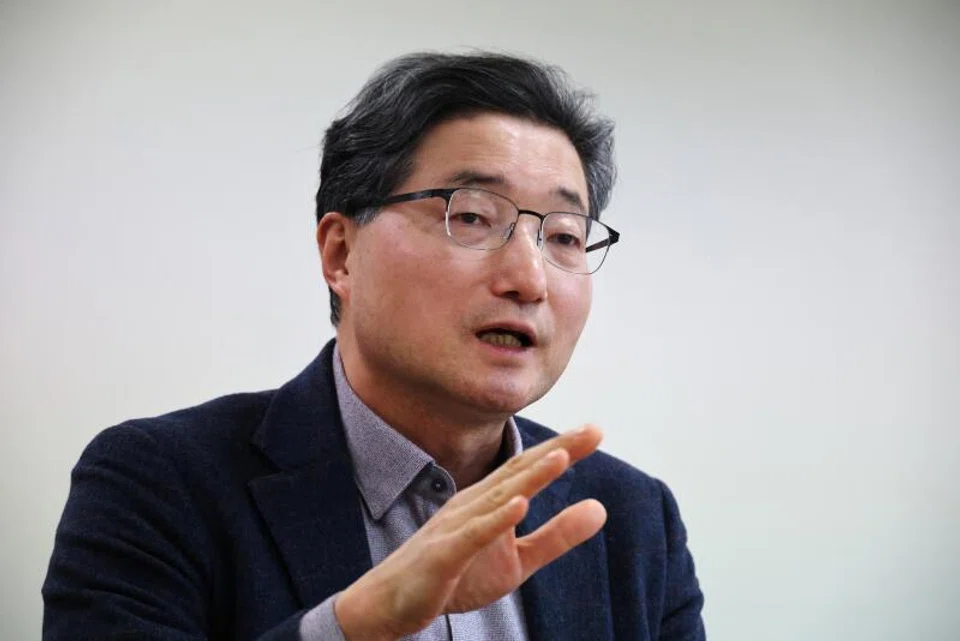
[SEOUL] Lee Seung-heon, one of the leading candidates to become the next Bank of Korea (BOK) governor, backs raising taxes on property ownership to stop surging home prices from stoking inflation but a policy pivot to more monetary tightening would be premature.
Lee, who previously held the No 2 spot in the central bank as senior deputy governor, is regarded as a potential successor to replace BOK governor Rhee Chang-yong, whose four-year term ends on Apr 20.
In an interview on Feb 6, Lee said he does not see a need for immediate policy tightening but said the government should introduce stronger curbs on the housing market as a rally in property prices could reignite inflationary pressure and prevent middle-class families from buying their own homes.
“When it comes to property market policies, I don’t think it’s possible to stabilise the market unless the cost of owning homes actually increases by raising property ownership taxes, for instance,” he said.
But overall monetary policy should stay steady as “it’s a bit too early” to signal possible interest rate increases.
“Growth is still a bit weak. We need to gain momentum here so I’d say the market is moving too quickly. While the direction may be right, I think it’s too hasty,” Lee said, referring to recent gains in three-year treasury yields which hit a 19-month high last week.
South Korea’s central bank recently adopted a neutral stance after four rate cuts since October 2024, as a weakening won along with upswings in Seoul’s apartment prices forced policymakers to shift towards financial stability.
The BOK left the benchmark interest rate at 2.5 per cent for a fifth meeting on Jan 15. The yield on three-year government bonds, a key indicator of market expectations for the benchmark rate, has been steadily climbing from the middle of last year as traders scaled back expectations for additional monetary easing.
Strong semiconductor exports have been shielding Asia’s fourth-largest economy from the impact of higher US tariffs, as demand for artificial intelligence-driven memory chips boosts corporate earnings and domestic investment.

During his tenure at the BOK, Lee worked on currency policies and also represented the bank with counterparts such as the US Federal Reserve and the International Monetary Fund. But one of the first issues he could be facing would be the rising cost of homeownership in the country.
Lee’s comments backing raising property taxes echo those of President Lee Jae-myung, who has been urging people owning multiple homes to sell before the government raises real estate taxes.
Although South Korea imposes exceptionally high stamp duties and capital gains taxes on property sales of more than 60 per cent, its ownership levies remain comparatively low.
On the Korean won, which is currently trading at 1,465.30 per US dollar, Lee said the currency is where it should be.
“Somewhere between 1,400 and 1,470 is what I call a natural range for now,” he said, adding that anything weaker than 1,450 would be due to anxiety stemming from external uncertainties.
“The level can temporarily breach 1,500 per dollar but I don’t think such a level would be sustainable.” REUTERS
Decoding Asia newsletter: your guide to navigating Asia in a new global order. Sign up here to get Decoding Asia newsletter. Delivered to your inbox. Free.
Share with us your feedback on BT's products and services