
A cornered Putin is more dangerous than ever
 Add BT as a preferred source
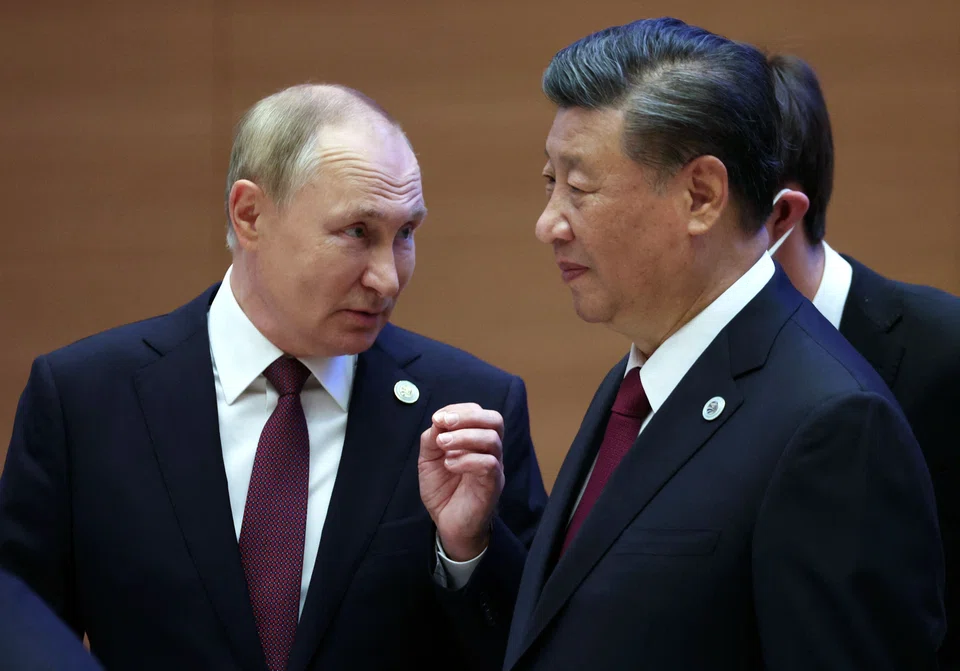
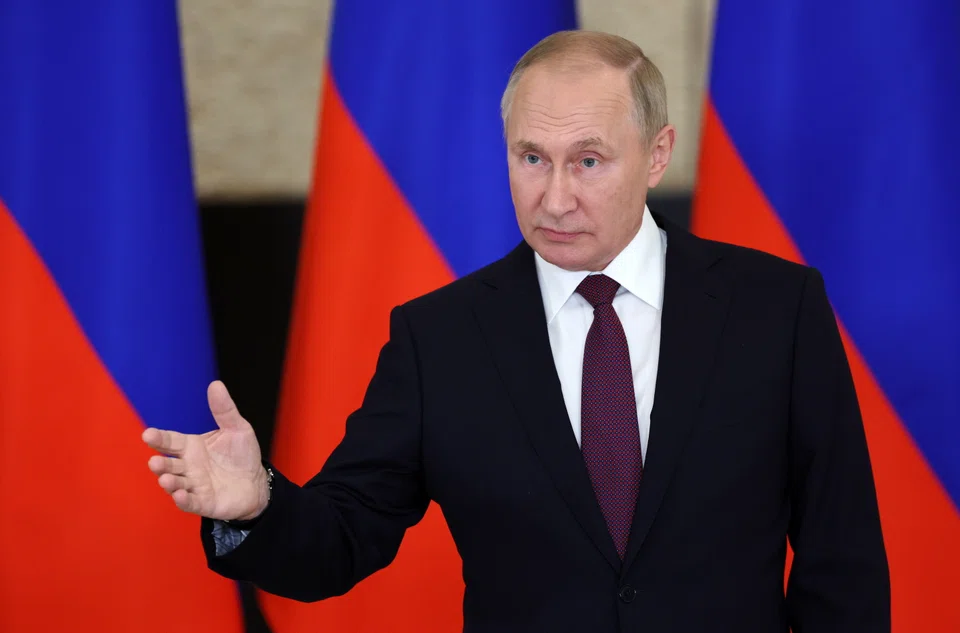
PRESIDENT Vladimir Putin of Russia, in a speech on Wednesday (Sep 21) that was a reminder of how easily the war in Ukraine could spread, doubled down on his nuclear threat and accused the West of seeking to “destroy” his country. He also suggested that Ukrainians are mere pawns of the “military machine of the collective West”.
In a videotaped address to the nation, he effectively conceded that the war he started Feb 24 has not gone as he wished. By calling up roughly 300,000 reservists to fight on what has become a 1,000 km front, and abandoning the original objective of demilitarising and “de-Nazifying” all of Ukraine, he acknowledged something he had consistently denied: the reality and growing resistance of a unified Ukrainian nation.
But Putin cornered is Putin at his most dangerous. That was one of the core lessons of his hardscrabble youth that he took from the furious reaction of a rat he cornered on a stairwell in what was then Leningrad.
His speech at once inverted a war of aggression against a neighbour into one of defence of the “motherland”, a theme that resonates with Russians. He warned the West in unmistakable terms – “this is not a bluff” – that the attempt to weaken or defeat Russia could provoke nuclear cataclysm.
“Russia won its defensive wars against Napoleon and Hitler, and the most important thing Putin did here from a psychological perspective was to claim this, too, is a defensive war,” said Michel Eltchaninoff, the French author of Inside the Mind of Vladimir Putin. “It was an aggressive war. Now it’s the defence of the Russian world against the Western attempt at dismemberment.”
That “Russkiy Mir”, or imagined world imbued with some inalienable Russian essence, grew in size as Putin suggested in the speech that the country’s nuclear arsenal could be used to defend eastern and southern areas of Ukraine captured since the war began.
Navigate Asia in
a new global order
Get the insights delivered to your inbox.
He said Russia would support imminent referendums on the future of 4 regions in Ukraine. This method, described this week by President Emmanuel Macron of France as “simulacra” of referendums, was used in Crimea in 2014 to justify Russian annexation.
It seems likely that the referendums in Donetsk and Luhansk in the east, and Kherson and Zaporizhzhia in the south – which the United States and Western allies have denounced as “sham” votes – would also lead to Russian annexation. At that point, a Ukrainian attack next month on the city of Kherson in the south, captured by Russia at the start of the war, could, in Russia’s view, be viewed as an attack on Russian soil, justifying a nuclear riposte.
A Ukrainian counteroffensive is underway in the Kherson region, and senior Ukrainian officials have vowed to recapture the city.
“If the territorial integrity of our country is threatened, we will, of course, use all means at our disposal to defend Russia and our people,” Putin said.
His speech, which may of course be a bluff despite his denial, nevertheless placed before the West a dilemma that has been inherent in its policy from the start of the war: How far can intense military and logistical support of Ukraine – effectively everything short of Nato troops on the ground – go without setting off nuclear confrontation?
It was also an attempt to divide the West before a winter that promises to be hard, with inflation and energy costs rising. While the Biden administration has little apparent interest in diplomacy at this stage, France, Germany and Italy still seek the “dialogue” with Russia that Macron mentioned in his speech on Tuesday to the United Nations, a dialogue judged necessary, he said, because “we seek peace”. THE NEW YORK TIMES
Decoding Asia newsletter: your guide to navigating Asia in a new global order. Sign up here to get Decoding Asia newsletter. Delivered to your inbox. Free.
Share with us your feedback on BT's products and services

