

Cross-border travel resumption with China gives much-needed boost to Macau, Hong Kong

Angela Tan
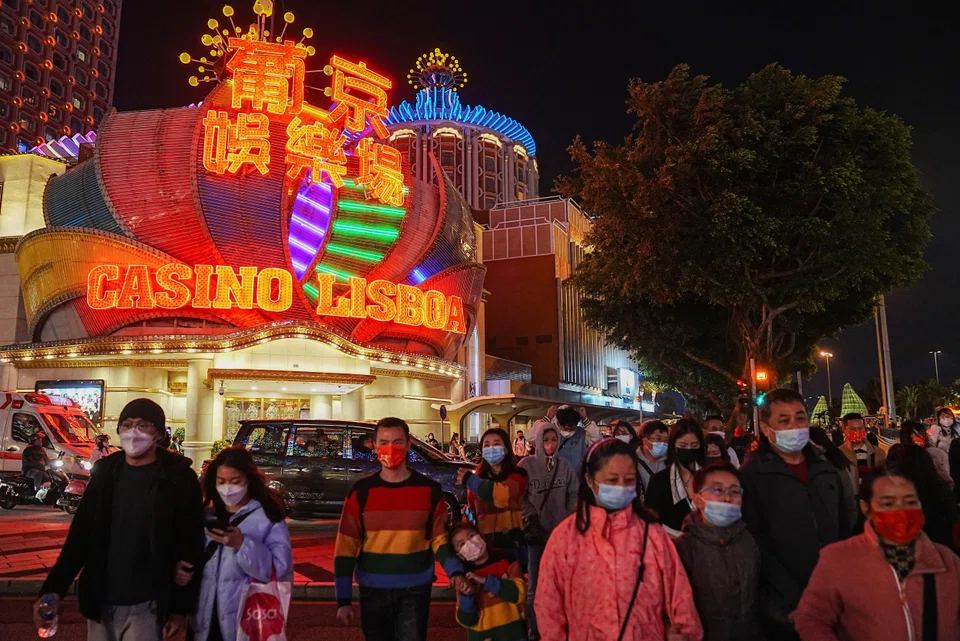
THE return of normal travel between mainland China, Macau and Hong Kong will revitalise the battered Greater Bay Area, and finally allowing the cities to compete on equal footing with neighbouring economies that had reopened their borders earlier in 2022.
After more than three years of strict Covid-19 restrictions, business travellers and tourists are now able to travel without the fuss of daily quotas and mandatory vaccine requirements.
From Feb 6, group tours from mainland China to Hong Kong and Macau were reinstated, with Macau planning to distribute 120,000 free air tickets to visitors this year and Hong Kong handing out 500,000 tickets.
Mark Haefele, chief investment officer of global wealth management at UBS, said: “We expect the return of mainland travellers to lift the outlook for the Macau gaming, aviation, and domestic consumption sectors, as well as Hong Kong landlords, insurers, and securities firms. The resumption of mobility should also boost demand for crude oil and base metals.”
Over at Macau, where gaming and tourism revenue eclipse other sectors, the sounds of slot machines are beginning to ring again at major casinos.
Gross gaming revenue in the first five days of February – just before travel restrictions were lifted – hit 1.9 billion Macanese patacas (S$311.5 billion) – a level that suggests a “45 per cent plus” recovery when compared to pre-Covid 19 levels in 2019.
JP Morgan Securities analyst DS Kim noted that the period included a “bit of boost from tail-end demand” post the Chinese New Year holiday, but he believes Macau’s recovery is two or three quarters ahead of what was anticipated and is therefore “very positive fundamentally”.
Jefferies’ Global Gaming, Lodging & Leisure Research team said that the return of group tours was positive for Macau as group tours accounted for 23 per cent of total mainland China visitation in 2019. But it warned that group tours comprise relatively lower-value players, who focus on shopping and eating, unlike the e-visa players who are among the highest value players.
Investors’ interest in China’s two Special Administrative Regions is expected to improve with more opportunities to travel.
For Hong Kong, the resumption of travel mobility means that it can now better compete with cities like Singapore, which had reopened its borders earlier in 2022, analysts said.
The reopening will drive overseas listings and energise Hong Kong’s financial sector, global accounting firms said. They expect homecoming listings to continue and Hong Kong to remain the preferred overseas listing destination for mainland Chinese companies, with initial public offering (IPO) fundraising set to become more active.
KPMG believes that Hong Kong will remain one of the top listing destinations in 2023, with a strong pipeline of more than 120 companies seeking IPOs targeting fundraising of HK$180 billion (S$30.5 billion) from about 90 deals.
Deloitte sees 110 firms, raising around HK$230 billion. In the so-called drought year in 2022, the Hong Kong Stock Exchange had 82 IPOs, raising US$13.4 billion.
Property consultants CBRE expects the reopening to induce business flows of all types: “Overall investment market sentiment and the wealth effect will improve compared to 2022,” it noted.
While demand from mainland Chinese capital will continue to fuel Hong Kong investment market in the long run, the depreciation of the yuan against the stronger US dollar and Hong Kong dollar will influence the spending magnitude by tourists, and also deter near-term purchasing.
CBRE expects the travel resumption to fuel enquiries and inspections to buy retail properties, but the expectation gap between buyers and sellers is “considerable”.
Investor focus is on assets in tourist-heavy areas including emerging commercial hotspots such as Kai Tak and along Victoria Harbour. Leasing demand will be led by the food and beverage and other lifestyle trades.
The normalisation of business and travel activity will also strengthen the case for hotel investment. Industrial properties will remain the preferred asset class for investors in 2023, due to stable leasing demand, shrinking pool of stock and low vacancy, while demand for office properties remains weak, with distressed sales offering opportunities for cash-rich investors.
Fitch Ratings projected in December that Macau’s economy could see a 46 per cent rebound in 2023, from a 17 per cent decline in 2022.
Economists from Barclays, HSBC, Hang Seng Bank and DBS forecast Hong Kong’s gross domestic product to grow by between 2.1 and 6.5 per cent in 2023, after contracting 4.2 per cent last year. Comparatively, Singapore – a rival business hub – is expected to grow by between 0.5 per cent and 2.5 per cent in 2023.
TRENDING NOW

First Resources blames El Nino, outside fires for Kalimantan hotspots amid haze scrutiny
High Court rules against Julius Baer’s Singapore trust arm in US$50 million family trust dispute
Singapore key exports jump by higher-than-expected 68.4% in September, led by non-electronics

MSCI proposes downgrading Indonesia to standalone market status

