Crying fowl: Poultry players scramble for fresh, frozen chicken supplies before Malaysia’s ban kicks in
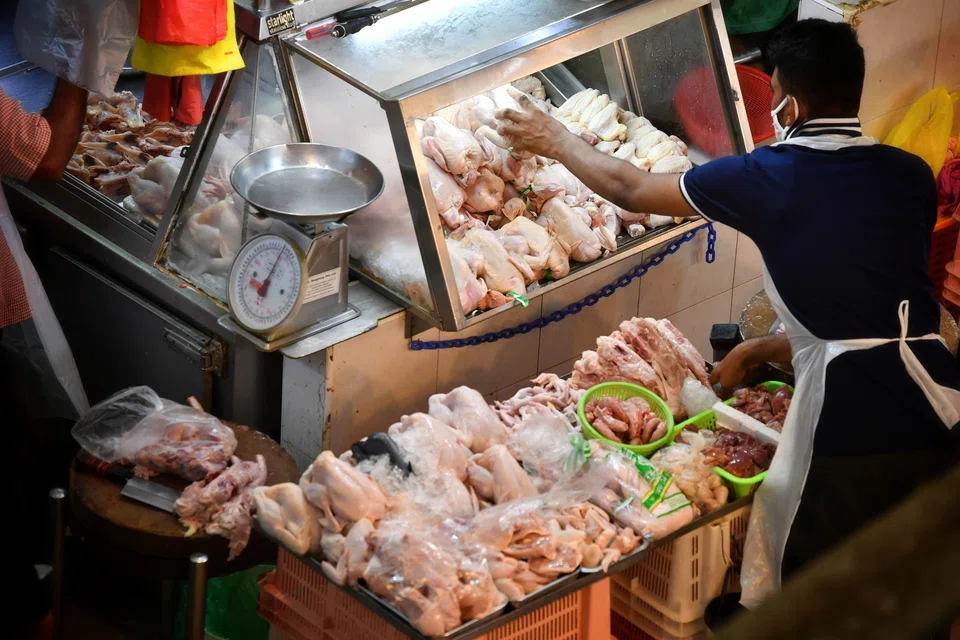
WITH Malaysia’s surprise ban on live chicken exports set to kick in on Jun 1, poultry suppliers and food outlets in Singapore are busy ramping up orders of frozen chicken, triggering a spike in demand for cold storage facilities, while others are stepping up imports of live chicken over the next few days.
Oh Wei Chiat, chief operating officer of chicken importer Boong Poultry, will be sourcing for “as much frozen chicken as possible” to tide through the next month. Boong Poultry has 16 kampung chicken farms in Malaysia, and imports over 12,000 livestock into Singapore daily.
Importing fresh, chilled chicken from alternative markets will be “challenging” due to its short shelf life and limited supply, Oh noted - though it is an option he is exploring. “Buying chilled chicken from countries like Indonesia and Thailand will require a longer shipping lead time (than Malaysia), and I’m worried about how fresh the meat will be when it reaches us. So I’m currently checking with customers if they are okay with frozen chicken as a substitute.”
Chicken importer Kee Song Food is intensifying its production schedules and importing around 25 to 40 per cent more live chickens from Malaysia daily over the coming week, said the company’s head of business development, James Sim.
“The demand hike is like 10 Chinese New Years combined into one period,” said Sim.
Apart from its role as a chicken importer and supplier in Singapore, Kee Song Food also runs 17 breeder and broiler farms in Malaysia, producing some 23.1 million chickens a year.
Sim expects a 90 per cent decline in live chicken sales in Singapore after the ban kicks in. “We can only stockpile so much due to factors like storage duration and capacity,” he said.
“We don’t use growth hormones or antibiotics, and we organically farm our chicken. We have a brand reputation to maintain - customers expect that. So we can’t just pivot to frozen meat from other sources in such a short period.”
Malaysia’s Prime Minister Ismail Sabri Yacob on Monday (May 23) announced that his country will halt exports of up to 3.6 million chickens a month from Jun 1 to ensure sufficient supply in its domestic market.
One-third of Singapore’s chicken supply comes from Malaysia, while other major markets include Brazil and the US, according to the Singapore Food Agency (SFA). Meanwhile, cold storage facilities told The Business Times that they are anticipating a spike in demand for their space as more customers pivot to frozen chicken sources - though the impact on capacity is likely to only be felt in “1 to 2 months”.
Daniel Tan, executive director of Commonwealth Kokubu Logistics, said his firm has received requests from 2 customers to procure 6 weeks worth of frozen chicken for them, up from their initial orders of 2 weeks’ worth.
While Tan expects his major customers to increase their frozen and chilled chicken imports by 50 per cent over the next month, an overall influx of shipments could place pressure on Singapore’s already “short supply” of frozen storage facilities, he noted.
“Frozen storage facilities have seen occupancy rates go above 90 per cent in the last 2 years, as Singapore has also been increasing its stockpile of frozen food during the pandemic for food security,” Tan added. Darren Lee, director of Jurong Coldstore, foresees his customers ordering more frozen chicken imports from Brazil and the US. But he believes his warehouse will have sufficient storage capacity due to the high inventory turnover.
“There are incoming shipments, but people will also consume more frozen chicken at the same time,” he said.
Other players hatch their own plans
While Malaysia’s ban is only on chicken exports, even egg importers such as Neo Kok Hwee, director of Raymang Eggs & Poultry Supplier, are bracing themselves for potential supply chain shocks.
In the last few days, Neo has reached out to new suppliers in Poland, Ukraine, New Zealand and Ireland. The firm currently imports 75 per cent of their eggs from Malaysia, with the remaining from Thailand and Australia.
“If they can ban the export of chickens, they could ban other things. I’ve also given notice to my existing suppliers in Australia and Thailand that I may need to import more eggs,” Neo said. He expects the price of eggs to increase by 5 to 10 per cent in the next few weeks.
But Koh Yeow Koon, managing director of egg farm Seng Choon, noted that the ban only has a direct impact on the meat industry. The export ban is on broilers - which are chickens imported for the purpose of consuming as meat - and not on the import of 1-day-old chicks from Malaysia, which lay eggs, he said.
“As long as the egg supply and demand in Singapore remains stable, we do not anticipate an increase in egg prices as a result of the ban,” Koh added.
Restaurants and food establishments are starting to feel the pinch.
Industry players are working with their suppliers for alternative supply sources, according to a spokesperson from the Restaurant Association of Singapore.
“While we wait for supplies to stabilise, we seek the understanding of consumers that prices may have to be adjusted to reflect the increase in prices of supplies, and that the taste and texture of the meat may be different given the different sources of supply,” the spokesperson added.
One Farrer Hotel has 5 restaurants - all of which only use fresh chicken from Malaysia, noted director of food and beverage at the hotel, Dennis Ng.
Although there are no cost sharing requests from suppliers yet, the hotel conservatively predicts at least a 20 per cent increase for the chicken-related items on its menus.
“We are switching to frozen chicken which is more diverse, wherever possible. We are also increasing our channels by exploring fresh chicken from Thailand,” Ng said. “We will revisit our menus to increase or replace food items which are not affected by the ban.”
Boong Poultry’s Oh has already received enquiries on his frozen chicken supplies from customers such as chicken rice sellers and restaurants.
“A lot of people are panic-buying, but we dare not commit to them yet - we’re still doing our projections to see what volume we have on hand to sell to them,” he said.
At a media briefing on Wednesday (May 25), Singapore’s Permanent Secretary for Trade and Industry Gabriel Lim said the impact of Malaysia’s ban will include a few factors such as the length of time the ban will be in effect, and how quickly Singapore will be able to tap on new sources.
As a country reliant on imports, it will not be possible for the government to completely shield Singaporeans from the impact caused by global issues such as supply chain disruptions and inflationary pressures, he noted.