Danantara Indonesia’s investment arm to miss 2026 profit target
The numbers are the first released to the public since the sovereign wealth fund was launched in February 2025
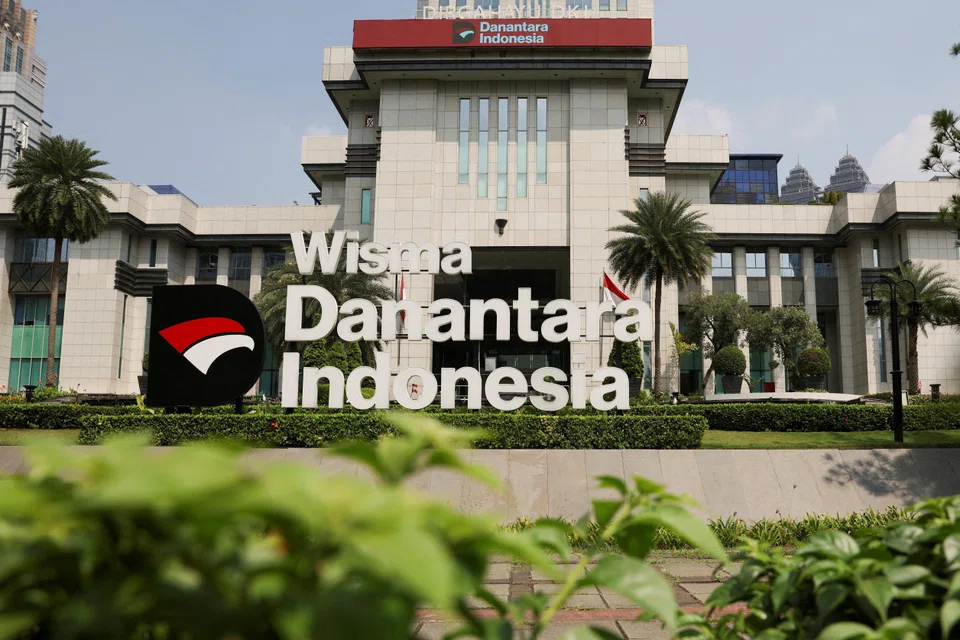
[JAKARTA] The investment unit of sovereign wealth fund Danantara Indonesia expects to miss its net profit target this year due to losses on investments in local equities, executives said on Tuesday (Nov 24), though it expects a sixfold profit increase in 2027.
Danantara Investment Management’s (DIM) 2026 net profit is estimated to come in at 800 billion rupiah (US$44 million), well below a previous target of 3.4 trillion rupiah, according to company executives.
Its target for 2027 is between five trillion rupiah and six trillion rupiah.
“This is primarily due to the current pressure on the capital markets, which has led to a significant decline in capital market investments or public investments,” said Rosan Roeslani, chief executive of DIM’s parent company, during a parliamentary hearing.
The numbers were the first presented to the public since DIM’s parent, Danantara Indonesia, was launched by President Prabowo Subianto in February 2025. Danantara has been tasked with driving Indonesian gross domestic product growth to 8 per cent by 2029, from 5 per cent in recent years.
Danantara is different from most other sovereign wealth funds because it was formed out of a consolidation of state companies, as opposed to using fiscal or commodity surpluses.

Equity market slump
DIM’s return on average equity (ROAE) is expected to be 0.8 per cent in 2026; next year, it is expected to be between 3.8 and 4.1 per cent. DIM chief executive Pandu Sjahrir said he hopes to increase ROAE to 8 per cent by 2030.
DIM had around 9 per cent of its public portfolio in Indonesian stocks, with more than 40 per cent invested in developed-market equities. The diversification helped cushion DIM’s bottom line, said its managing director Ali Setiawan.
Investor sentiment has weakened this year amid concerns about fiscal health and the central bank’s independence.

On top of that, index provider MSCI’s warnings of a potential downgrade of the stock market to “standalone” status from “emerging” now, due to transparency issues, have sparked large capital outflows.
Jakarta’s main stock index has lost nearly 40 per cent so far this year, the worst-performing gauge in the world. The rupiah is also down more than 8 per cent this year, hitting a number of record lows in recent weeks.
About 31 per cent of DIM’s public portfolio was in fixed income, with its overall exposure to AI and its ecosystem estimated at 19 per cent.
No guidance was given on profit drivers for 2027, but Pandu said the company’s performance was sensitive to moves in the rupiah exchange rate and interest rates.
Lawmaker Harris Turino called the 2026 ROAE rate “far from expectations”, adding that keeping funds in term deposits at commercial banks carried better returns.
Growth of 70% in AUM
DIM gets its capital from dividend payouts from existing state companies. It also raises funds in the bond market and from bank loans.
DIM’s total assets under management in 2026 were expected to be 248 trillion rupiah, more than three quarters of which were placed in public investment.
Expecting a 50 trillion rupiah capital injection and around 122 trillion rupiah more from fundraising in 2027, DIM forecasts 2027 total assets will reach 390 trillion to 421 trillion rupiah, with the upper end of the range representing a 70 per cent annual increase.
Next year, the proportion of private investment will rise to 45 per cent.
Among its private investments were an AI infrastructure project in Indonesia called the “Tokyo Project” and properties in the holy city of Mecca.
Investment arm
Danantara’s other investment arm – the Danantara Development Management Fund – which oversees investment in projects that have low returns but are considered important, would receive 42 trillion rupiah in capital next year, its chief Sigit Puji Santosa told a separate parliamentary hearing.
He said this would be leveraged by co-investors, development financing institutions and banks so that its total investment in 2027 could reach 354 trillion rupiah.
Projects the development arm is pursuing include manufacturing national electric cars and electric motorbikes, as well as coal gasification, he said. Its capital also comes from existing state companies’ dividend payouts. REUTERS
Decoding Asia newsletter: your guide to navigating Asia in a new global order. Sign up here to get Decoding Asia newsletter. Delivered to your inbox. Free.
Share with us your feedback on BT's products and services