As Davos convenes, deference to Trump has replaced everything
The traditional rhetoric of the World Economic Forum centred on global integration, climate change and international cooperation. Not anymore
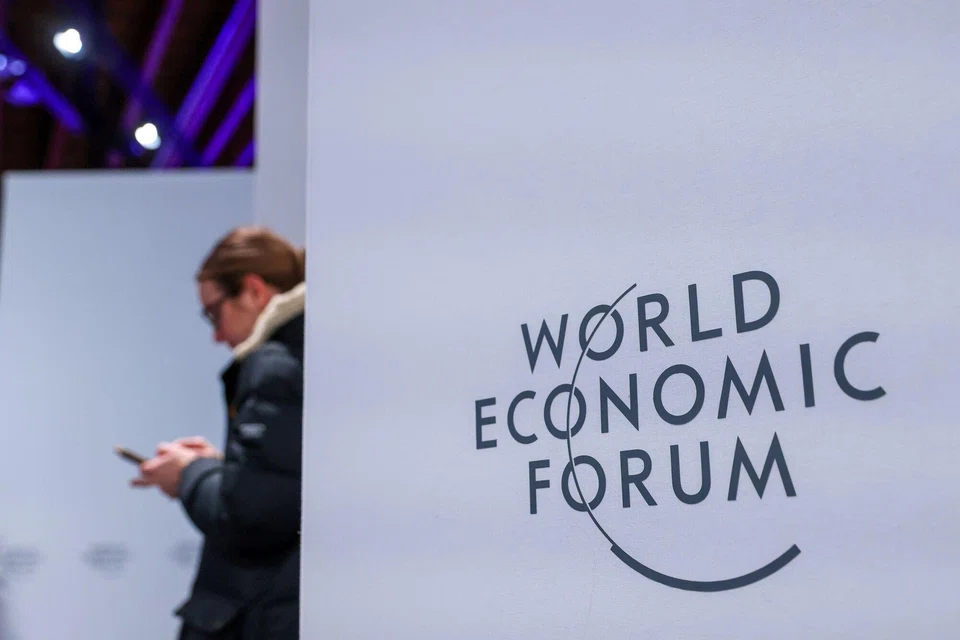
[DAVOS] Even in the heyday of the liberal democratic order, the conceit of the World Economic Forum (WEF) induced scepticism: Once a year, the wealthiest, most powerful people on Earth gather in a village in the Swiss Alps to devise solutions to the most critical problems in modern life.
The slogan of the forum, “Committed to Improving the State of the World”, has long encapsulated the reason for doubt. People with the greatest stake in the status quo – billionaire executives who run the largest banks and technology companies – are cast as change agents, uniting with world leaders to pursue the betterment of humanity.
But this year, with the world seized by turmoil, and the United States ruled by a president who is hostile to the concept of multilateral cooperation, Davos seems especially challenged by internal contradictions.
The event’s most prominent attendee, US President Donald Trump, leads the country that was the architect of the post-World War II order, one centred on collective security and liberalised trade. He has applied his authority to pursue a global trade war while threatening to seize Greenland from Denmark, a fellow member of Nato. Over the weekend, he said that he would impose new tariffs on a bloc of European nations if they continued to oppose his efforts to take control of the Danish territory.
He is the headline participant at the forum, an institution viewed as a cheerleader for the globalisation he has long demonised.
Forum organisers are accustomed to the contortions of packaging a gathering of executives and world leaders as a vision quest. Yet the divergence between the organisation’s traditional ideals and the new workings of power are so stark this year that they appear to have induced surrender, an acceptance that no set of principles can unite the people flocking to Davos, Switzerland.
Some 3,000 participants drawn from 130 countries were making their way to the village for the start of the forum on Monday evening. The theme for this year’s festivities encompassed everything and nothing: “A Spirit of Dialogue”.
In a news release, forum organisers noted the need for discussion “amid the most complex geopolitical backdrop in decades”, one “marked by rising fragmentation and rapid technological change”.
Yet in contrast with previous years, there was no mention of climate change or the need for an energy transition, to say nothing of promoting trade. There was only a pledge to air out “the issues that matter most to people, economies and the planet”.
Buzzwords that once got a strenuous workout – fair taxation, anti-corruption, sustainability and social justice – were largely absent from the forum’s official pronouncements.
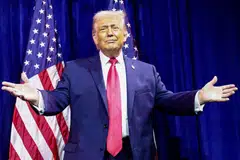
It was an implicit recognition of the changing values governing the global economy as forum organisers readied the red carpet for their star attraction, Trump, expected to speak on Wednesday.
His administration has replaced a previous focus on clean energy with a return to fossil fuels, while prosecuting a campaign to root out so-called woke tendencies in government and business. He has been gathering donations for the construction of a White House ballroom from crypto executives engaged in business deals with his family enterprise – the sort of conflict of interest that once animated forum leaders. And his threats to impose tariffs over Greenland are the latest example of the way he challenges the once-prevailing orthodoxy.
“This is the death of Davos,” said Mark Blyth, a political economist at Brown University. “It has no relevance, none whatsoever. And the bigger question is, did it ever have relevance outside the chattering classes that were embedded in the status quo to start with?”
Faced with the reality that the world is increasingly run by people who oppose its customary objectives, the forum appears to have reduced itself to its central purpose: a business meeting.
Much change has transpired in the year since the last Davos. Gone is Klaus Schwab, the German economist who started the forum in 1971. His departure was hastened by scandals over how he oversaw the organisation; he was accused of mismanaging funds and mistreating female employees.
In August, Larry Fink, the CEO of BlackRock, the world’s largest asset management company, stepped in as the forum’s interim co-chair. Fink was once a proponent of a concept championed by Schwab known as stakeholder capitalism – the idea that businesses were accountable to more than their shareholders. They had to consider the interests of their employees, their communities and society writ large. Fink wrote annual letters urging his fellow corporate executives to advance the mission to adapt to climate change.
But Fink was attacked by oil-producing states for hostility to fossil fuels. In recent months, he has sought Trump’s support for his effort to purchase a pair of ports at the Panama Canal. Fink contributed at least US$2.5 million toward Trump’s ballroom.
In the forum news release, Fink offered no words for climate change or business as an agent for social change. “Dialogue matters more than ever,” he said. “Understanding different perspectives is essential to driving economic progress.”
Some things have not changed. In its 56th incarnation, the forum remains a major destination for the global elite, with 65 heads of state and 850 major corporate executives attending, according to organisers.
Jensen Huang, CEO of Nvidia, the computer chip company at the centre of the artificial intelligence boom, is expected to participate. So is perennial attendee Jamie Dimon, CEO of JPMorgan Chase, and Microsoft’s CEO, Satya Nadella. Despite the diminishing of climate change as a forum concern, Al Gore, a climate activist and Davos regular, is attending.
Davos has always featured multiple realms, some in tension with its stated ethos. The conference has traditionally been packed with discussions of green energy, the migration crisis and the pursuit of peace, as executives holed up in their hotel suites plotting deals.
When Trump attended Davos in 2018, in his first term as president, his arrival was anticipated as a collision of two world views. The Davos elite was supposedly bent on global integration and international cooperation to limit climate change – anathema to a president whose mantra was “America First”.
But the executives in Davos heard what they wanted to hear: a president who was delivering tax cuts and deregulation. Those emerging from a dinner hosted by Trump expressed satisfaction with his focus on business.
This time, any pretence that the values of Davos and Trump’s worldview are in opposition has been carefully erased. The official programme still includes sessions on the subjects of traditional interest, like one titled “Can EVs Really Dominate?” But AI and crypto have been elevated as the central areas of concern.
The planning for Trump’s attendance underscores his success in securing the deference of the heads of the world’s largest companies.
“Why is Trump going to Davos?” asked Blyth, the political economist. “He’s punching them in the head and telling them who’s in charge. He’s informing them that, basically, unless they align with him, they no longer matter.” NYTIMES
Decoding Asia newsletter: your guide to navigating Asia in a new global order. Sign up here to get Decoding Asia newsletter. Delivered to your inbox. Free.
Share with us your feedback on BT's products and services