

Despite travel curbs, Greater China still a key tourism market for Singapore: STB

Annabeth Leow
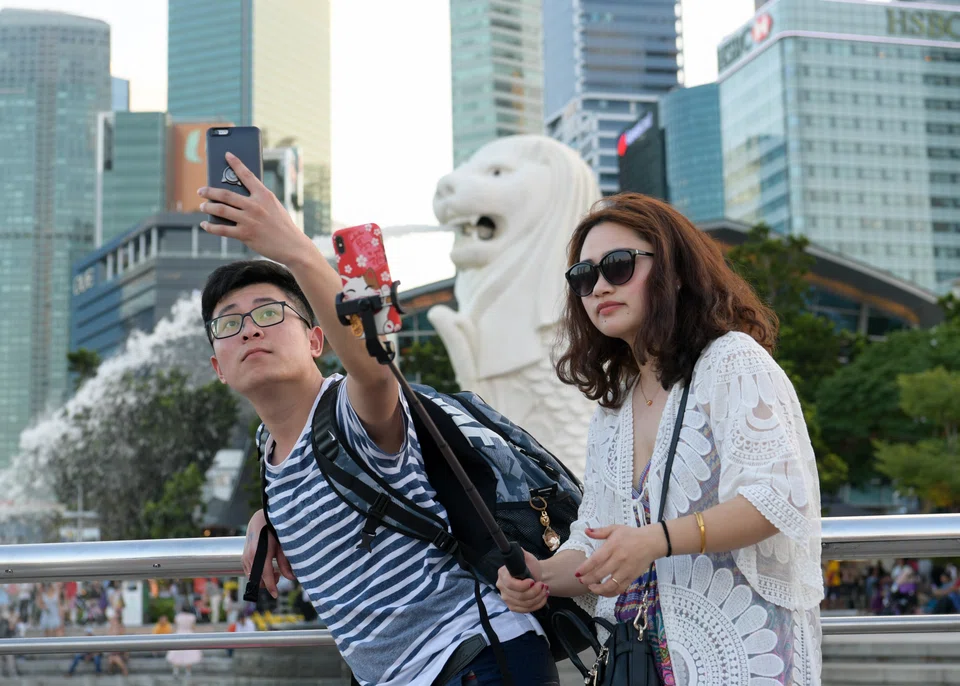
THE Singapore Tourism Board (STB) is doubling down on promoting the Republic in the Greater China region, even though planners do not expect a near-term recovery in visitors from there.
Earlier this week, the STB launched a tender for public relations (PR) and marketing services in Hong Kong – which The Business Times (BT) understands was part of a standard procurement exercise, after the conclusion of its latest contract with PR agency Sinclair Communications.
Juliana Kua, assistant chief executive of the STB’s international group, said that “we are focusing active marketing on key regions and markets that have reopened” in the immediate term, such as South-east Asia, India, Australia, Europe, the United States and South Korea.
The STB does not expect “a major uptick” in travellers from the Greater China region for now, with Kua citing fluid quarantine measures and border policies.
Still, “we will continue to launch localised, market-specific SingapoReimagine campaigns in all our key markets”, she said, calling Greater China “an important visitor source market”.
Statistics show that travellers from Greater China – defined by the STB as mainland China, Hong Kong, Taiwan and Macau – made up about 23.9 per cent of international visitor arrivals in 2019. The rest of North Asia accounted for another 8 per cent.
But the share of travellers from Greater China fell to 6.3 per cent in the first 4 months of 2022, and the rest of North Asia, to 3.4 per cent, amid outbound travel curbs in China and Japan.
In contrast, the share of travellers from the immediate South-east Asian region rose from 34.6 per cent in 2019 to 39.7 per cent in the year to date.
Still, the STB continued marketing Singapore as a destination in Greater China during the pandemic. Kua pointed to partnerships with brands such as Hong Kong-based Shangri-La Hotels and Resorts and Sino Hotels, and Chinese platforms Ctrip and Tencent QQ, in 2021.
More recently, the STB held a “Peranakan Festival” in the southern Chinese city of Quanzhou in March, in a tie-up with luxury hotel brand Tsingpu and media partner Lifeweek, she added.
Meanwhile, “we will continue to monitor market conditions closely and dial up our marketing under the SingapoReimagine campaign as more countries relax their border conditions for leisure travel”, Kua told BT, referring to the STB’s efforts at promoting a recovery in international tourism.
Specific in-market projects include a partnership with media platform Urban List in Australia, an art installation and a gin exhibition in India, and an upcoming restaurant collaboration in France – all of which are expected to “drive awareness and mindshare” for Singapore.
“While Greater China remains a key and strategic market, we have always invested in a mix of new and long-haul markets to ensure that Singapore remains resilient as a travel destination,” noted Kua.
TRENDING NOW
Analysts cut DBS target price on lower 2027 earnings, but see buying opportunity after share price slide
China Investment Corp, PGIM’s 50% stake in Nex mall up for sale; asking about S$1.2 billion

Nvidia CEO Jensen Huang drops from world’s top 10 richest after chips sell-off
OCBC wealth clients turn defensive amid market volatility as Q3 profit rises 3%

