
Diners and doctors help UK economy to extend recovery
Growth at 1% in June faster than expected; healthcare contributes the most to expansion
 Add BT as a preferred source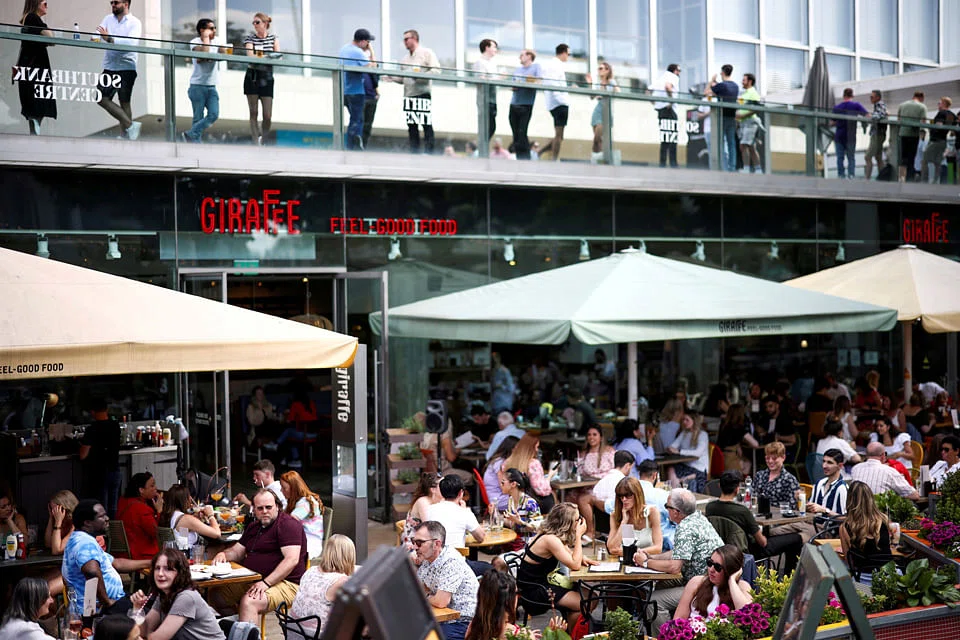
London
BRITAIN'S economy grew by a faster-than-expected 1 per cent in June, the first full month of indoor service for many hospitality firms, and also helped by the healthcare sector due to a rise in routine medical checkups after the pandemic.
But the official data showed British gross domestic product (GDP) remained 2.2 per cent smaller than it was immediately before the pandemic struck the country, a reminder of the damage done by Britain's long coronavirus lockdowns last year.
Britain's economy slumped by almost 10 per cent in 2020, one of the biggest hits suffered by a rich nation, and the Bank of England (BOE) expects it to regain its pre-pandemic size only at the end of 2021.
The United States economy has already made up the hit.
The GDP figures have yet to show the impact of a surge in coronavirus cases in July although other data published on Thursday showed consumer spending in the week to Aug 5 rose to within a whisker of its February 2020 level.
Navigate Asia in
a new global order
Get the insights delivered to your inbox.
The month-on-month growth for the overall economy in June was stronger than an increase of 0.8 per cent expected in a Reuters poll of economists.
Sandra Horsfield, an economist with Investec, said that confidence among consumers and businesses was likely to build over time as long as there was no return to lockdowns.
"How smooth the transition will be is the big unknown, with perhaps the biggest question marks hanging over the performance of the labour market once the furlough scheme fully ends in late September," she said.
Finance minister Rishi Sunak repeated on Thursday that he had no plans for a further extension of the furlough programme which has protected the incomes of millions of workers.
Britain's huge services sector grew by 1.5 per cent in June.
Healthcare contributed the most to growth, as family doctors saw more of their regular patients due to an easing of coronavirus precautions, the Office for National Statistics (ONS) said.
Output from food and beverage services such as pubs and restaurants jumped by more than 10 per cent, helped by the Euro 2020 soccer tournament.
Industrial output shrank by 0.7 per cent, hit by maintenance of oil field production sites and a swing in the volatile pharmaceutical industry. The narrower measure of manufacturing grew by 0.2 per cent, while construction output fell by 1.3 per cent.
Compared with the first quarter of this year, when much of Britain's economy was in the grip of a third lockdown, economic output was up by 4.8 per cent, the ONS said.
The International Monetary Fund expects Britain's economy to grow by 7 per cent in 2021, the same as the US, as it bounces back from last year's slump.
However, the BOE thinks Britain's economy will eventually settle back into its pre-crisis rut of slow growth.
It expects British GDP to grow 5.75 per cent next year but by only 1.25 per cent in 2023.
Last week the BOE laid out its plans for a "modest tightening" of its huge stimulus programme.
The ONS lowered its estimate for growth in May to 0.6 per cent from an originally reported 0.8 per cent increase but revised up April's rebound to 2.2 per cent from 2 per cent.
GDP in the three months to the end of June was 22.2 per cent higher than in the same period of 2020, reflecting the impact of the first coronavirus shutdown last year and the lifting of restrictions this year.
Separate trade data from the ONS showed British exports to the European Union in May and June exceeded their levels immediately before Britain left the EU's single market at the start of this year, excluding volatile trade in precious metals. REUTERS
Decoding Asia newsletter: your guide to navigating Asia in a new global order. Sign up here to get Decoding Asia newsletter. Delivered to your inbox. Free.
Share with us your feedback on BT's products and services

