

Doctors at heart of US opioid crisis
Chicago
WHEN 55-year-old Sheila Bartels left her doctor's office in Oklahoma, she had a prescription for 510 painkillers. She died the same day of an overdose.
Her doctor, Regan Nichols, is now facing five second-degree murder charges - one for each patient who overdosed after she prescribed them opioid drugs, such as Oxycontin - prescriptions that can lead to addiction.
"Doctors bear enormous responsibility for the opioid crisis," said David Clark, a professor of anaesthesiology at Stanford University who worked on a government-sponsored panel that studied the crisis, and recommended new training and guidelines for health care providers and regulators.
"We didn't have (a crisis) until doctors became enamoured with what they imagined to be the potential for opioids in controlling chronic pain," Mr Clark told AFP.
An estimated two million Americans are addicted to opioid drugs - many forced to buy pills illegally when prescriptions run out. Some, in desperation, resort to heroin and synthetic opioids smuggled into the US by Mexican drug cartels.
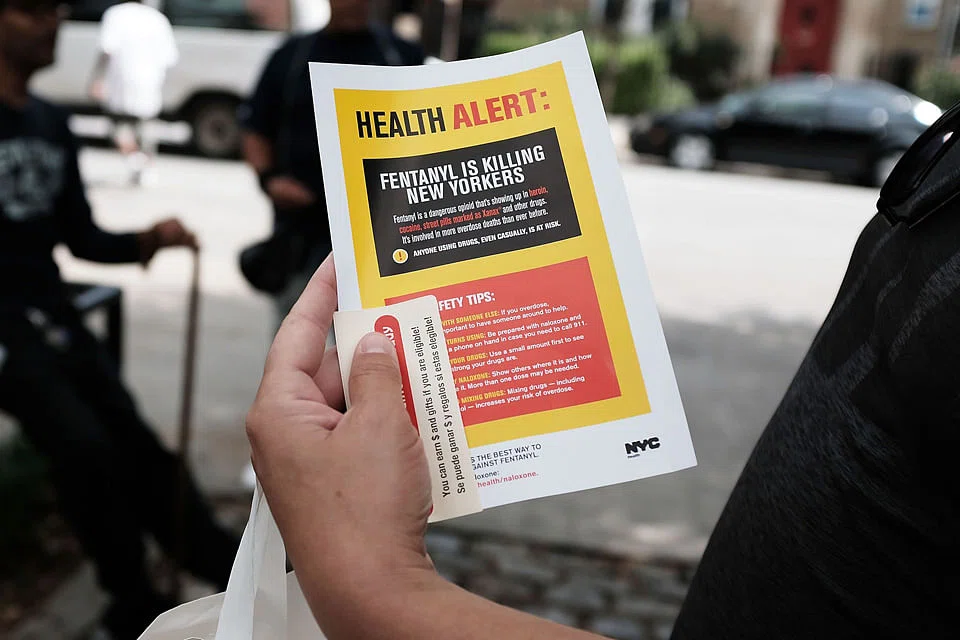
Ninety people die every day in the United States from opioid overdoses. More than 180,000 have died since 1999, including pop icon Prince, who passed away in April 2016 at age 57 after an accidental overdose of fentanyl, a powerful opioid painkiller.
Doctors in the United States prescribe more opioids than in any other country - enough to medicate every American adult.
While those physicians who are prosecuted for overprescribing make headlines, specialists said that they are not solely to blame, and that the US health care system as a whole must be held accountable for the country's spiralling opioid epidemic.
"Pharmaceutical companies targeted general practitioner doctors, the ones who see most of the people who have pain," Ohio attorney-general Mike DeWine, whose state has been hard hit by the crisis, told AFP. "I think they certainly were misled, and they were told things that were not true."
The problem is not a new one. It began two decades ago as doctors were being taught to better manage their patients' pain, and drug companies were touting the efficacy of opioid painkillers.
The painkillers - meant only for patients in the most dire need - started getting into the hands of those with chronic conditions that had been treated with simple over-the-counter drugs such as aspirin.
And they did not know that they were addictive. "You had people with a simple toothache, or knee surgery, or back surgery, that were on these opioids for too long a period of time or prescribed a higher dosage than they needed," said Robert Ware, chief of police in the town of Portsmouth, Ohio, which became a sort of ground zero for the crisis.
As more and more people were getting addicted, "pill mills" began to pop up in Portsmouth and across the nation to meet demand. These clinics were run by doctors who would prescribe opioid drugs to anyone who could pay.
In Portsmouth, a struggling Ohio town bordering two other states where the steel industry was once king, Mr Ware was seeing pill mills become part of the economy, as addicts from nearby states travelled there to get their fix.
Eventually, state regulators and local law enforcement shut down the pill mills by arresting doctors and requiring that clinics be associated with established, reputable medical programmes.
The Justice Department has promised a further crackdown on unscrupulous doctors and pharmacists. On Tuesday, US President Donald Trump - hosting a meeting on the crisis during his summer vacation - suggested that more prosecutions as a whole may be necessary.
But in Portsmouth, Mr Ware said, the community has learned a tough lesson. "You cannot arrest your way out of this problem," he said.
The town's opioid addicts came from a cross-section of society, because most got hooked through legitimate prescriptions.
And addicts needed help to recover over the long run. So Portsmouth beefed up its health care offerings and addiction treatment - and went from being a haven for pill mills to a refuge for recovery.
Overdoses there are now trending downward, in contrast to the rest of the country, Mr Ware said. "We are kind of ahead of the curve in getting out of the problem," he added.
Across the country, overall drug overdose deaths are rising to new highs - 60,000 estimated fatalities in 2016. Certain states, such as Ohio and West Virginia, have been harder hit than others.
Mr DeWine is fighting the epidemic from another front - suing the drug companies. According to The Washington Post, at least 25 states, cities and countries are doing the same. AFP
TRENDING NOW
Motoring tycoon Peter Kwee is back in court: Here are his previous legal battles

Peter Kwee’s Ridley Park bungalow on the market with S$100 million asking price

Demand, tech capabilities position Apac and AI as Skyscanner’s next growth frontiers: CEO Bryan Batista

South-east Asia has lost Nvidia’s best salesman

