Don't rush into 'hasty legislation' on working from home: Gan Siow Huang

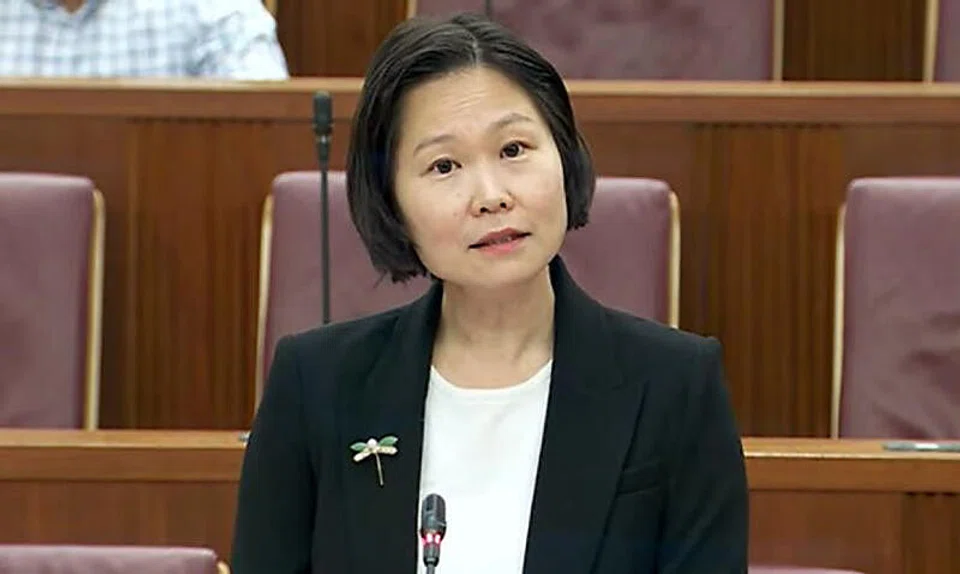
SINGAPORE "should not rush into hasty legislation" around working from home, Minister of State for Manpower Gan Siow Huang said on Tuesday (Jan 11), though she noted that such arrangements are expected to become more mainstream.
She was replying to questions from People's Action Party (PAP) MPs Louis Ng (Nee Soon GRC) and Yip Hon Weng (Yio Chu Kang), such as whether Singapore would introduce the right to work from home and bar employers from contacting staff outside working hours.
Gan noted that three-quarters of Singapore workers in 2020 were employed at companies offering remote working, although the number of hours spent on remote work is not tracked by the Ministry of Manpower (MOM) as the figures vary based on businesses' and workers' needs.
"We expect work-from-home arrangements to become a more mainstream option" as most employers plan to let workers telecommute for at least a quarter of the time, she said.
But she added: "We should not rush into hasty legislation that unintentionally creates workplace rigidity that may impede our economic recovery at this time."
Ng later asked: "I'm not asking for 100 per cent compulsory work from home, but to legislate the right to work from home and also to give employers the right to reject for work related reasons...
"What is stopping MOM from legislating this right to work from home?"
But Gan, citing similar legislation overseas, told him that "the outcomes are actually rather mixed on whether this legislation makes a substantial improvement in the work life".
"Legislation may not be the best solution. In fact, what I think we should focus on is enabling employers and employees with resources and with guides, to help them implement work from home and flexible work arrangements in a practical manner and a sustained manner," she said.
Gan also pointed to other forms of flexible work for frontline workers - such as flexi-load, flexi-time and flexi-place arrangements - to ensure that "our approach for workplace flexibility should be inclusive and not just about working from home".
Meanwhile, progressive work communications practices - for example, not making staff reply to non-urgent work messages after hours - are covered by recommendations from the Tripartite Advisory on Mental Well-being and Alliance for Action on Work-Life Harmony, she said.
"The government will continue to work with our tripartite partners to expand the provision of flexible work arrangements in a sustainable manner," Gan said.
She added, in a response to a follow-up question from PAP MP Melvin Yong (Radin Mas), that smaller businesses might need more help in implementing working from home and flexi-work arrangements, which is where resources such as tripartite advisories "will come in useful".
As such, "we should give it some time" for companies to review the Tripartite Standard on Work-Life Harmony and work with employees and unions on adopting its practices, she told Yong, who is assistant secretary-general of the National Trades Union Congress.
Decoding Asia newsletter: your guide to navigating Asia in a new global order. Sign up here to get Decoding Asia newsletter. Delivered to your inbox. Free.
Copyright SPH Media. All rights reserved.