

Dubai enlists businesses to help secure hub status after Iran war shock
Government pledges 2.5 billion dirhams in support, focusing mainly on tourism and retail; analysts, businesses say more might be needed
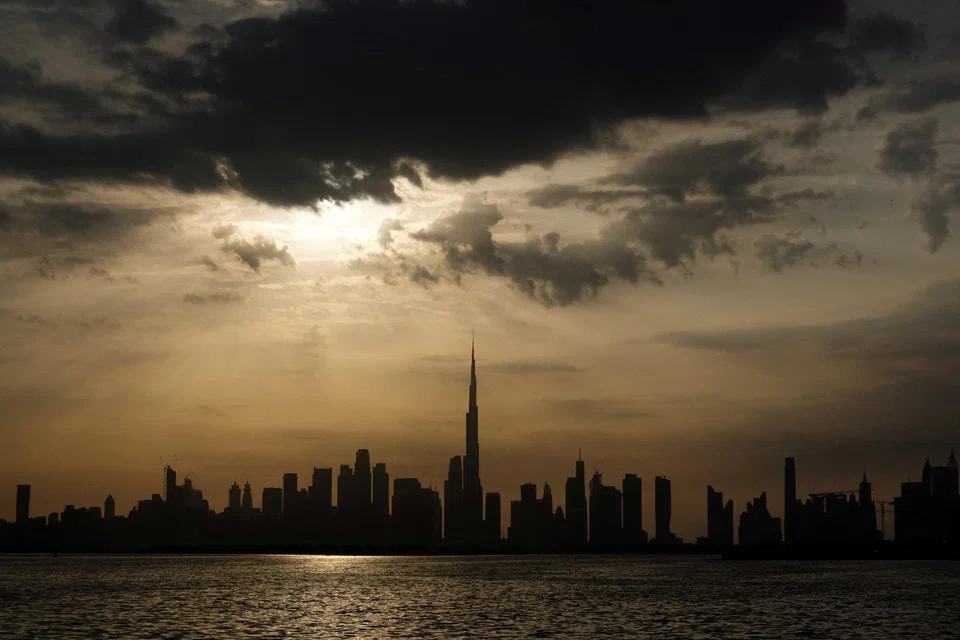
[DUBAI] Days after Iran began striking targets across the United Arab Emirates in March, Dubai’s top officials gathered hundreds of business leaders to discuss how the Gulf tourism and financial hub could limit the economic damage.
The meeting, unusual for its size and timing and reported for the first time, helped spur measures including a central bank liquidity package, said five sources, who declined to be named because it was private.
Two sources said that attendees were asked three questions: “What should we do to get tourists back? What should we do to get investors back? And how can we support your business?”
They added that the crown prince of Dubai had circulated between tables, asking business leaders for their input.
Dubai has since pledged 2.5 billion dirhams (S$881.1 million) in support, focused mainly on sectors such as tourism and retail, which have been hit hardest by the conflict.
While a preliminary US-Iran peace deal is easing the immediate strains, restoring business confidence in Dubai will take time and may require more incentives, six company leaders and analysts told Reuters.
“Investors want signals on how authorities will respond if tensions return, not just how they managed the last shock,” said Neil Quilliam, associate fellow at UK-based think tank Chatham House, almost four months after the war began.
As shelter alerts locked down the UAE, the Mar 10 meeting was an early signal of authorities’ determination to prevent capital flight or an exodus of businesses and investors.
Hosted by Helal Saeed Al Marri, director-general of Dubai’s Department of Economy and Tourism (DET), the meeting was also attended by Dubai Crown Prince Sheikh Hamdan bin Mohammed bin Rashid Al-Maktoum.

Those present at the newly renovated Meydan hotel included real-estate magnate Hussein Sajwani, Emirates airline president Tim Clark and representatives of Rothschild and UBS. The UAE’s military and big family-owned companies were also represented.
Government officials told business leaders there would be fiscal and financial support and that teams were working tirelessly on supply chains, the sources noted.
Several investor calls arranged through banks including JPMorgan and Citi have followed, another three sources said.
Rothschild, JPMorgan, Citi and UBS declined to comment. Real estate developer Damac and Emirates did not respond to requests for comment.
“The Dubai DET and other entities maintain regular and ongoing engagement with a broad range of stakeholders as part of Dubai’s established public-private collaboration model,” the DET told Reuters.
“While recent months have seen political instability in the region, they have also underscored the city’s resilient economic foundations, and its ability to absorb challenges,” it added.
Dubai remains committed to its long-term strategic goals, the DET added in emailed comments.
‘Dubai-it’
Big billboards appeared along the city’s roads in the week of Jun 15 with just the words: “Dubai-it”.
It is a new term coined by the government, in what it says is a nod to Dubai’s history of getting big things done fast, and a sign of what is to come.
With oil generating less than 2 per cent of its gross domestic product, Dubai sought international companies, Wall Street and Chinese banks, hedge funds and the wealthy.
Its convenient time zone, proximity to the Gulf’s sovereign wealth funds and favourable tax regime have drawn capital and jobs.
For Iran, that made it a target that could unsettle international finance, adding to pressure on Washington.
HSBC analysts have cut their 2026 Gulf growth forecast by five percentage points since the conflict began, and now expect the region to contract for the first time since the Covid-19 pandemic.
Non-oil growth in Dubai and Abu Dhabi could fall eight percentage points or more year on year, they said.
March and the entire second quarter have been “lost”, said the CEO of a UAE investment firm, who declined to be identified because of the sensitivity of the matter.
“I suspect recovery will be uneven, with some sectors and activities bouncing back or adjusting to the new normal faster than others,” said Robert Mogielnicki, founder of consulting firm Polisphere Advisory.
While restaurant tables are filling again and flights have largely resumed, hotel occupancy has plummeted. Trade flows are also shifting, with cargo increasingly moving through Oman and Saudi Arabia to avoid the Strait of Hormuz, bypassing Dubai.
Quilliam at Chatham House said new “targeted support” may be needed for exposed sectors such as tourism and aviation, or small and medium-sized enterprises.
The CEO of a small-medium business, who spoke on condition of anonymity, said Dubai could tell banks to boost lending to the sector and possibly remove corporate tax or offer rebates.
Another business owner said that the government could partner with global private equity firms to invest in assets and companies to provide a floor for prices, reduce risk and boost external credibility.
Global ripples
While the peace accord has halted months of intermittent fighting, challenges persist.
Foreign investor flows on the Dubai Financial Market swung from a net inflow position of US$890 million year to date on Feb 26, two days before the war began, to outflows of US$853 million in the same period to Jun 12.
To safeguard the banking sector, the UAE central bank launched a Mar 17 relief package, backed by more than US$270 billion in foreign exchange reserves.
The US$681 million so far rolled out is dwarfed by the pandemic support of some US$1.93 billion and a fraction of Dubai’s US$121 billion 2024 real GDP, the latest annual figure available.
Longer-term pledges include a US$9.3 billion new metro line and US$15 billion in prospective contracts related to an airport expansion, while Emaar Properties is planning a new US$55 billion development.
Mogielnicki said that Iran’s strikes on the UAE had created “acute economic pressures”, in part due to the large expatriate presence. The widely held view is that the economy remains resilient, he said.
Quilliam said that the peace deal was a step forward, but investors would focus on what follows.
“If stability persists, capital will return. If uncertainty lingers, they will hold back,” he said. REUTERS
Decoding Asia newsletter: your guide to navigating Asia in a new global order. Sign up here to get Decoding Asia newsletter. Delivered to your inbox. Free.
Share with us your feedback on BT's products and services
TRENDING NOW

DBS, OCBC, UOB rout lops billions off STI as inflation, rate concerns spook investors

Grab CEO’s wife Chloe Tong on life with Anthony Tan and finding her purpose

OCBC sheds S$8 billion in value as shares close nearly 6% down; analysts cautious on banks

Deal between tycoon friends sparks scrutiny of Philippine power sector

