Dueling protests at South Korean ex-leader’s sentencing highlight political rift
Former President Yoon Suk Yeol was found guilty of masterminding an insurrection when he declared martial law in 2024
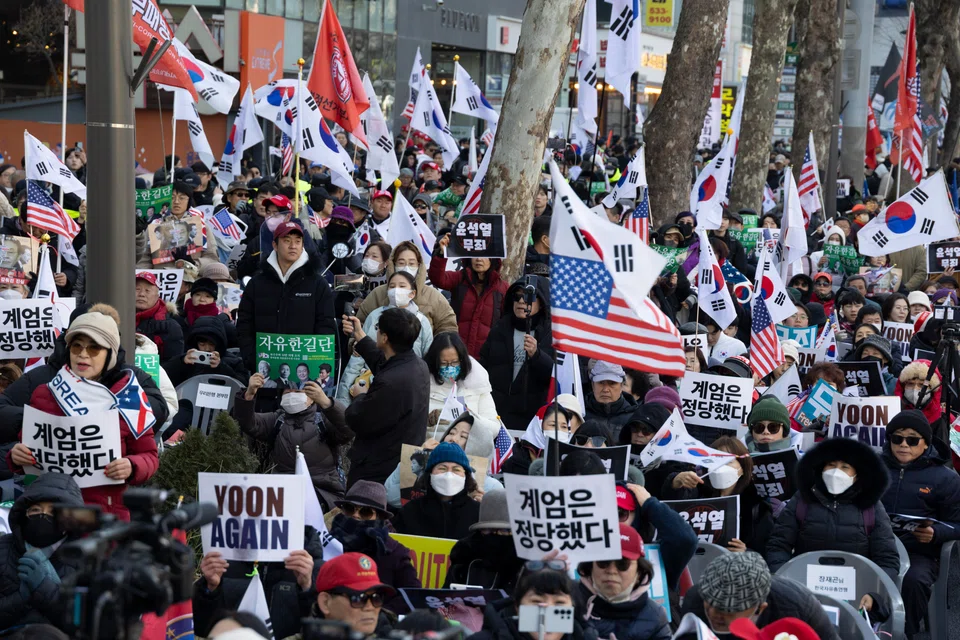
THE dueling protests outside the courthouse in Seoul, South Korea, where former President Yoon Suk Yeol was sentenced to life imprisonment on Thursday were heavy on bitterness and retributive fervor - familiar sentiments in a country with deep political polarisation.
The court found Yoon guilty of leading an insurrection in 2024, when he declared martial law and sent special forces into the National Assembly to arrest his political opponents.
The presiding judge said he had pushed South Korean society into an “extreme state of conflict” between warring political camps.
On Thursday, those tensions were on display outside the courthouse, where pro- and anti-Yoon groups blared their respective slogans - and calls for Yoon and his political nemesis, President Lee Jae Myung, to receive the death penalty - through loudspeakers.
In one camp, hundreds of Yoon supporters gathered in front of a makeshift stage with a screen playing a live broadcast of the trial. Some waved American flags, a symbol commonly used by South Korea’s far-right movement.
One man stood atop a van wearing a jacket that said “MKGA,” short for Make Korea Great Again. Yoon has enthusiastically courted such crowds ever since his impeachment.
Several blocks away, a smaller cluster of anti-Yoon protesters chanted for the death penalty, the punishment that prosecutors had sought for the ex-president.
One demonstrator, Choi Jaejic, said he had spent nearly every weekend over the past year joining rallies calling for a conviction. “Martial law threw the country into chaos,” said Choi, a translator. “He took away precious time away from my children.”
“Even the death sentence wouldn’t be enough,” said Kim Mo Geun, a college student in his 20s.
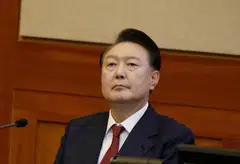
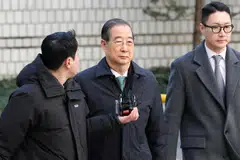
Yoon himself showed little emotion in court. After his sentence was read aloud, a television camera showed him averting his gaze from the judge.
But his supporters and political adversaries were clearly not satisfied with the verdict.
Yoon’s lawyers called the sentence political theatre, saying in a statement that the judges had ignored the truth and “knelt before the political force that wanted to purge its enemy.” They also vowed to “fight to the end.”
“It’s unbelievable,” Kim Sook Min, a Yoon supporter in her 60s, said outside the courthouse as she held a South Korean flag in support of the former president. “I am at a loss for words.”
On the other side of the political divide, Jung Chung Rae, the leader of the governing Democratic Party, expressed disappointment that the sentence had fallen short of the death penalty. He described the outcome as “a ruling that defied the South Korean public’s sense of justice.” NYTIMES
Decoding Asia newsletter: your guide to navigating Asia in a new global order. Sign up here to get Decoding Asia newsletter. Delivered to your inbox. Free.
Share with us your feedback on BT's products and services