

EC raises growth forecasts as oil prices dip
GDP in euro area will rise by 1.3% in 2015 and 1.9% next year, it says
Frankfurt
THE European Commission raised its euro-area growth forecasts and cut its inflation outlook as cheaper energy proves both a blessing and a curse for the currency bloc's economy.
Gross domestic product (GDP) in the euro area will rise by 1.3 per cent in 2015 and 1.9 per cent next year, up from November projections of 1.1 per cent and 1.7 per cent, the European Union's executive arm in Brussels said. It predicts consumer prices will drop 0.1 per cent this year, marking the first annual decline since the introduction of the euro in 1999, before increasing 1.3 per cent in 2016. The European Central Bank (ECB) aims to keep inflation just below 2 per cent.
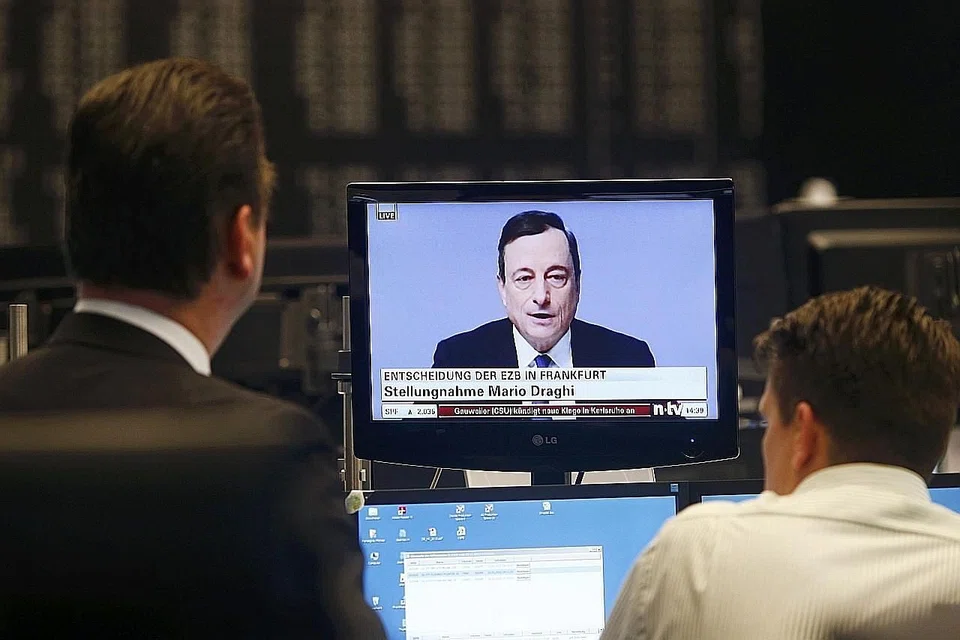
ECB president Mario Draghi has warned that the slump in the cost of oil could lead to a deflationary spiral of falling prices and households postponing spending, a risk that prompted the central bank to commit to asset purchases of at least 1.1 trillion euros (S$1.7 trillion). At the same time, cheaper energy bolsters economic activity as it leaves consumers and companies with more money to spend.
"Europe's economic outlook is a little brighter today," and "the fall in oil prices and the cheaper euro are providing a welcome shot in the arm for the EU economy," said Pierre Moscovici, EU commissioner for economic and financial affairs. "The ECB's important recent decisions will help create a more supportive backdrop for reforms and smart fiscal policies. But there is still much hard work ahead to deliver the jobs that remain elusive for millions of Europeans."
Euro-area unemployment will drop to 11.2 per cent this year and 10.6 per cent in 2016, the commission predicts.
Joblessness in Greece and Spain is still seen above 20 per cent next year, while the rate in Germany is forecast to fall to 4.8 per cent.
High unemployment as a result of EU-imposed austerity was a driving force in the election victory of anti-bailout party Syriza in Greece on Jan 25. Greek Prime Minister Alexis Tsipras and his finance minister Yanis Varoufakis are travelling through Europe before a leaders' summit next week to win support among governments to lighten the country's debt load.
"In Greece, uncertainty about the direction of policies is affecting confidence and may dent the speed of the recovery," the commission said. It cut the country's growth forecasts to 2.5 per cent this year and 3.6 per cent next, from 2.9 per cent and 3.7 per cent, respectively. The ECB heaped pressure on Greece on Wednesday by restricting access to its direct liquidity lines, citing concerns about the country's commitment to existing reform pledges.
After Mr Draghi committed to asset purchases of 60 billion euros a month, including sovereign debt, through September 2016, he said the euro area's economic recovery "is likely to continue to be dampened", with risks remaining on the downside. Since then, business confidence has improved and a gauge of manufacturing and services activity indicated the fastest growth since July.
"Recent news from the eurozone supports the view that domestic healing continues and is being aided by a boost to households' spending power from the decline in the oil price," Ben May, an economist at Oxford Economics in London, said before the report. "The consensus has somewhat glossed over the improving outlook for consumer spending and this is a key factor for our relative optimism."
Brent crude, the benchmark for more than half of the world's oil, fell below US$50 last month for the first time in more than five years. The plunge contributed to downward revisions of inflation forecasts in all euro-area countries but Cyprus, according to the report.
The Brussels-based commission cut its euro-area deficit forecasts to 2.2 per cent this year and 1.9 per cent in 2016, from 2.4 per cent and 2.1 per cent, respectively.
Projections for general-government debt were lowered to 94.4 per cent of GDP and 93.2 per cent.
"The right economic conditions are in place for sustained growth and job creation," European Commission vice-president Valdis Dombrovskis noted. "Following the difficult policy choices governments have made due to the crisis, the effects of reforms are emerging. We have to step up the reform momentum to strengthen the recovery and make sure it translates into money in people's pockets." BLOOMBERG
TRENDING NOW

Gas Supply may pursue remedies if contract breached following Indonesia’s export cuts: Tan See Leng

Why the biggest business decision about AI isn’t which model to choose

If Europe goes to war, the fallout will be felt in East Asia

Singapore expects all parties to honour commitments, says PM Wong after Indonesia cuts gas exports

