
ECB hikes pull business lending down for first time since 2015
 Add BT as a preferred source
LENDING to euro-area businesses fell for the first time in eight years – adding to evidence that steep European Central Bank interest-rate hikes are weighing on the economy.
Credit to non-financial corporations shrank by an annual 0.3 per cent in October, data showed on Tuesday (Nov 28). That’s the first contraction since 2015, when longer-term ECB loans known as targeted longer-term refinancing operations or TLTROs, alongside the start of quantitative easing, ended three years of declines.
Meanwhile, M3 – a broad measure of money in circulation – retreated for a fourth month.
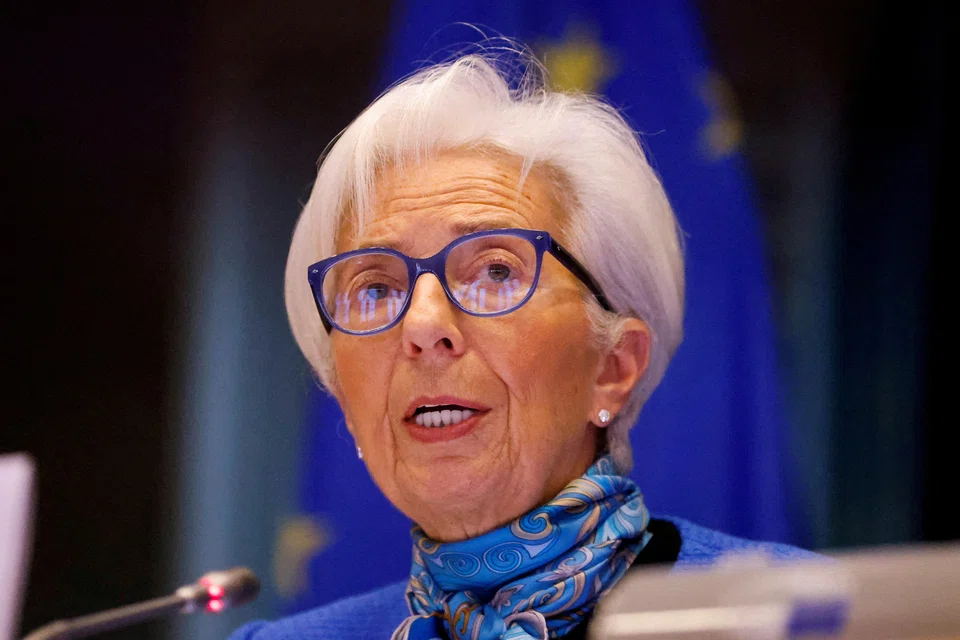
The figures, which come just over two weeks before the ECB’s final policy meeting of 2023, highlight how severely the run of 10 back-to-back rate increases has hit demand in the 20-nation bloc. Gross domestic product fell 0.1 per cent in the third quarter and President Christine Lagarde said on Monday that she expects it to remain sluggish.
New ECB projections due Dec 14 will show whether that trend is likely to continue into next year. Some analysts already fret that it might.
“The significant deceleration in credit to the private sector is worrying,” said Piet Christiansen, chief strategist at Danske Bank. “Looking into 2024, we’ll likely see weak lending dynamics similar to the episode before TLTROs were launched.”
Navigate Asia in
a new global order
Get the insights delivered to your inbox.
Banks have repaid such loans rapidly in the past year, shaving more than US$1.6 trillion off assets held by the ECB and its national counterparts. Officials have also stopped reinvesting the proceeds of some maturing bonds.
Monetary aggregates also reflect softer demand for credit and more interest in savings, while a separate ECB survey showed banks tightening lending conditions for euro-area firms.
M1, a measure of currency in circulation plus overnight deposits, has shrunk throughout 2023 and sank by 10 per cent in October as money shifts into higher-yielding term deposits. This year marks the first period of contraction since the mid-1980s, when data begin.

A bigger drag from longer-term financial liabilities, along with a drop in lending to governments, also contributed to the pullback in M3. That measure has seen declines once before – in six of seven months through May 2010 – and may continue to do so.
“As the ECB is reducing its balance sheet, you would expect a natural decline in M3,” Credit Agricole’s Louis Harreau said. “It will continue over 2024, as TLTRO repayments will continue reducing the ECB’s balance sheet relatively quickly.” BLOOMBERG
Decoding Asia newsletter: your guide to navigating Asia in a new global order. Sign up here to get Decoding Asia newsletter. Delivered to your inbox. Free.
Share with us your feedback on BT's products and services

