

ECB officials say peace in Iran isn’t enough to fix energy shock
The main concern is that it will take time to restore production capacity, repair infrastructure and get ships sailing again
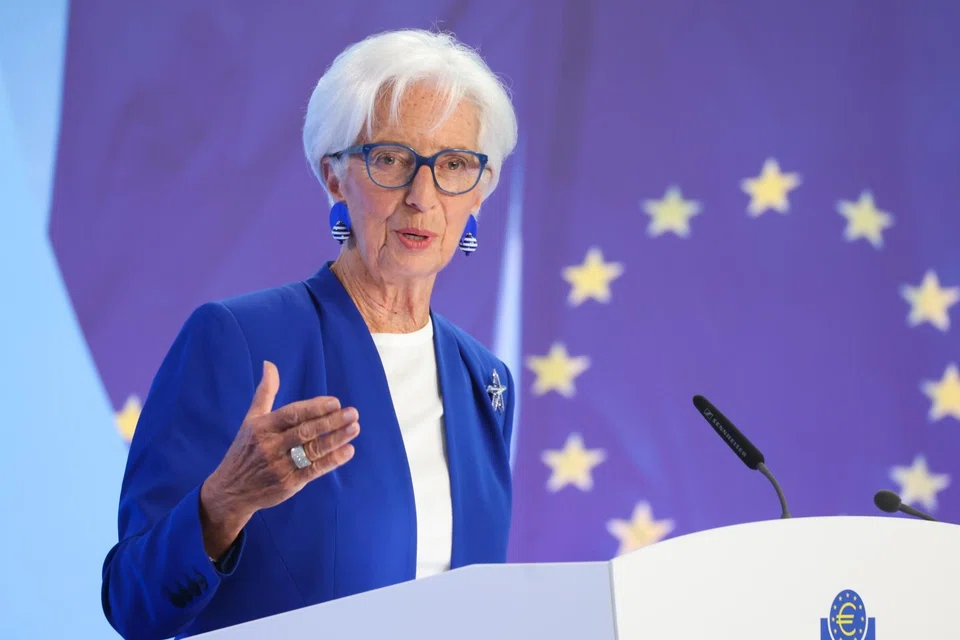
[FRANKFURT] European Central Bank (ECB) officials are signalling that a US-Iran peace accord will not necessarily stop them lifting interest rates further, even if it prevents a more pronounced overshoot in inflation.
While policymakers, including President Christine Lagarde, welcome the prospect of oil shipments resuming through the Strait of Hormuz, they say significant economic havoc has already been inflicted and have no regrets about last week’s decision to hike.
“Higher energy costs are likely to remain with us longer than many had hoped,” Governing Council member Peter Kazimir said. “Even with the just-announced US-Iran peace framework, the damage in the Middle East cannot be undone overnight.”
The main concern is that it will take time to restore production capacity, repair infrastructure and get ships sailing again. Meanwhile, efforts to rebuild inventories will keep crude prices elevated.
The risk for the 21-nation euro area is that companies and workers respond by raising selling prices and demanding higher pay, keeping inflation far above the 2 per cent target.
Most analysts still expect policymakers to do more, and traders are also betting on at least one additional quarter-point increase in the deposit rate this year, to 2.5 per cent.
The chance of a peace deal “is reducing some pressure on the ECB”, according to Greg Fuzesi, an economist at JP Morgan. “That does not, however, mean that pressure to hike has been reduced very significantly.”
He still expects one more step in September after last week’s hike and wrote in a note to clients that risks are “modestly skewed towards a third one being delivered” before the end of the year.
Comments by a number of officials seem to reinforce his view.
SEE ALSO




Portugal’s central bank chief Alvaro Santos Pereira argued that it will take time for the situation around energy to normalise. His Latvian colleague Martins Kazaks pointed to a trend for multiple shocks to follow and build on top of each other and said: “We also see that this current shock has not played out yet.”
Bundesbank President Joachim Nagel added that expiring fiscal policy measures aimed at lowering energy prices may still bolster inflation in the months to come.
“An end to the conflict does not necessarily mean an immediate end to the shock,” Governing Council member Gabriel Makhlouf said on Tuesday in Dublin. “It remains to be seen how quickly supply chains normalise and energy prices adjust.”
Oil prices have fallen below US$80 a barrel from about US$110 a barrel at the peak of the war. Bloomberg Economics predicts they could ease further to a US$70 to US$75 range if the deal is finalised and implemented.
That’s still higher than before the war and ECB Chief Economist Philip Lane expressed concern that a reversal now will not prevent stronger inflation pressures.
“Four months of elevated energy prices means we can see in the pipeline of inflation coming up that inflation will be above 3 per cent,” Lane said Tuesday. “There’s going to be indirect effects on food, on goods, on services this year and into next year.”
While the ECB’s baseline foresees price gains falling back to the 2 per cent target in 2028, Lane’s favourite gauge to check how severely price pressures are affecting consumers, inflation excluding energy but not food, is set to exceed that rate at least through that year.
That should signal at least some discomfort for the Irishman, who proposes policy to his colleagues when the Governing Council meets to set rates.
Goldman Sachs’ chief European economist Jari Stehn also highlighted that the need to react is probably higher for the ECB than for the US Federal Reserve or the Bank of England, which both meet this week. That’s because it already cut rates to a neutral level before the outbreak of the Iran war, and must raise them if it wants to have a dampening effect on the economy.
“Historically, the ECB has also reacted much more consistently to energy shocks,” Stehn added. “When headline inflation has risen significantly above the 2 per cent target, the ECB has usually responded. This is partly because, unlike the Fed, it has only one mandate: price stability.”
However, France’s new central banker, Emmanuel Moulin, called on his colleagues to honour an agreement not to pre-commit.
“While there was unanimity on raising interest rates, there was also a consensus that we were not signalling the start of a new tightening cycle,” he said in Les Echos.
Even within the camp of economists, there are some questioning the need for additional rate increases or at least arguing that September would be a better time than July to assess.
“The deal should take some of the momentum out of the hiking campaign by increasing the option value of waiting,” said Spyros Andreopoulos at Thin Ice Macroeconomics. “The decline in the oil price will take some of the edge out of headline inflation and should help maintain the anchoring of inflation expectations. This should buy some time to await more information.”
Lagarde herself suggested that she will not be distracted by talk of a deal.
“If this news is confirmed by developments in the coming days and the signature of a memorandum of understanding, it’s good news,” she said on Monday. “But I have to kill inflation if it awakens because if inflation gets out of the bottle, getting it back in again will be much more difficult and costly, and a long-term inflation situation is unacceptable.” BLOOMBERG
Decoding Asia newsletter: your guide to navigating Asia in a new global order. Sign up here to get Decoding Asia newsletter. Delivered to your inbox. Free.
Share with us your feedback on BT's products and services
TRENDING NOW

MSCI proposes standalone status for Indonesia; Jakarta stocks plunge 8%
Palm oil stocks slide after Singapore begins looking into which firms responsible for haze
High Court rules against Julius Baer’s Singapore trust arm in US$50 million family trust dispute
Why is the haze so bad in South-east Asia this year?

