

ECB raises rates to 23-year high; keeps options open for September
 Add BT as a preferred source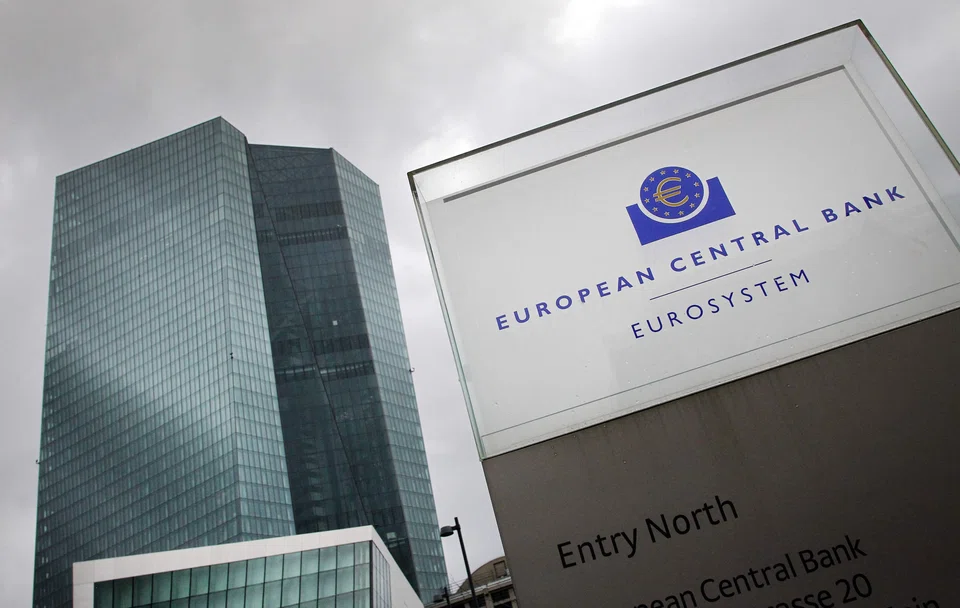
The European Central Bank (ECB) raised interest rates for the ninth consecutive time on Thursday (Jul 27) and kept the door open to further tightening, as stubborn inflation and a growing risk of a recession pull policymakers in opposing directions.
Fighting off a historic surge in prices, the ECB has now lifted borrowing costs by a combined 425 basis points (bps) since last July. The central bank has been worried that excessive price growth could be perpetuated through wage rises as the job market remains exceptionally tight.
With Thursday’s 25-bp move, the ECB’s deposit rate stands at 3.75 per cent, its highest level since a similar level set in 2000, before euro banknotes and coins had even been put into circulation. The main refinancing rate was set at 4.25 per cent.
ECB president Christine Lagarde told a press conference that what comes next was still in the balance, although the central bank, which was widely criticised for a slow response to last year’s initial surge in inflation, is determined to cool it.
“We are not in the domain of forward guidance but we are very strongly rooted in our determination to break the back of inflation,” Lagarde said.
“There is the possibility of a hike (next time). There is the possibility of a pause. It’s a decisive maybe,” she said, adding the bank was “open-minded”.
The ECB’s problem is that inflation is coming down too slowly and could take until 2025 to fall back to 2 per cent. This comes as a price surge initially driven by energy has seeped into the broader economy via large mark-ups and is fuelling the cost of services.
While overall inflation is now just half its October peak, harder-to-break underlying price growth is hovering near historic highs and may have even accelerated this month.
The labour market is also exceptionally tight, with record-low unemployment raising the risk that wages will rise quickly in the years ahead as unions use their increased bargaining power to recoup real incomes lost to inflation.

That is why many investors and analysts are looking for the ECB to pull the trigger again in September and stop only if autumn wage data delivers relief.
Recession?
But the mood is clearly changing as the economy of the 20-country eurozone slows. While markets had fully priced in another rate hike just a few weeks ago, a growing number of investors are betting that Thursday’s move will be the last.
More tightening would however be consistent with comments from a host of policymakers, including ECB board member Isabel Schnabel, that raising rates too far would still be less costly than not lifting them high enough.
On Wednesday, the US Federal Reserve raised borrowing costs and kept the door open to further tightening, though Fed chair Jerome Powell gave few hints about September, a stance the ECB is likely to copy.
But rapidly fading economic prospects should temper any hawkishness.
Indicators of business, investor and consumer sentiment and bank lending surveys point to a continued deterioration after the eurozone skirted a recession late last year.
And with manufacturing in a deep recession and a previously resilient services sector showing signs of softening despite what is likely to be a superb summer holiday season, it is hard to see where any rebound would come from.
Such weakness, exacerbated by a loss of purchasing power after inflation eroded real incomes, could push down price pressures faster than some expect, leaving less work for the central bank to do.
This is a key reason why the balance of expectations has started to shift away from another rate hike, with economists increasingly focusing on how long rates will stay high.
Decoding Asia newsletter: your guide to navigating Asia in a new global order. Sign up here to get Decoding Asia newsletter. Delivered to your inbox. Free.
Share with us your feedback on BT's products and services
TRENDING NOW

MedPark’s assistant CEO runs a hospital where patients, physicians precede profits

E-commerce is killing ‘real’ commerce, says China’s beverage king Zhong Shanshan

Laos-China Railway picks up steam, but S-E Asian country struggles to capture gains
NDR 2026: Singapore to create new Western island to support 'new generation of industries'

