

ECB sees weaker growth, inflation in eurozone, hints QE could be extended
Frankfurt
THE European Central Bank cut its inflation and growth forecasts for the eurozone on Thursday and its president said things could get worse.
The bank, which left interest rates unchanged, pledged to beef up or prolong its bond-buying programme if the picture indeed darkened further, although no one on the bank's Governing Council had argued for it now.
The ECB said the chances of missing its medium-term inflation target had increased due to lower oil prices, weaker growth in China and other emerging markets and an appreciating euro.
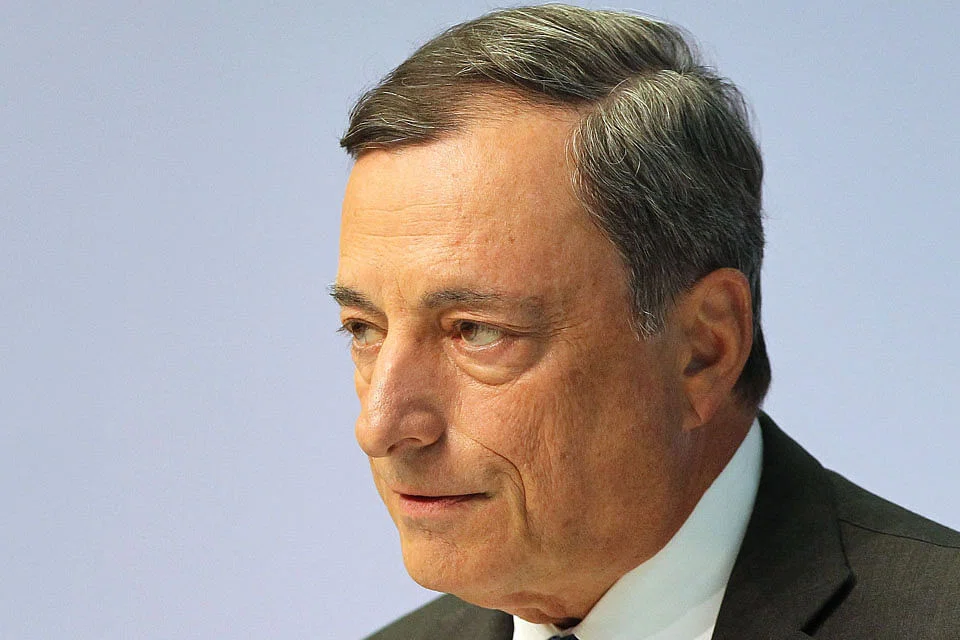
Mario Draghi, the ECB president, said the bank's one trillion euro (S$1.6 trillion)-plus asset-buying programme was working smoothly, if slowly, and the policy-making Governing Council was ready and willing to take further policy action but decided it would be premature to do so now.
"In particular (the Council) recalls that the asset purchase programme provides sufficient flexibility in terms of adjusting the size, composition and duration of the programme," he told a news conference.
In one small change to the quantitative easing programme, the bank agreed to increase the share of any sovereign bond issue it could buy to 33 per cent from 25 per cent, provided that did not give it a blocking minority among bondholders.
The ECB forecast that inflation would be a mere 0.1 per cent this year, 1.1 per cent in 2016 and 1.7 per cent in 2017, compared with its June projections of 0.3, 1.5 and 1.8 per cent respectively.
It lowered its forecast for growth in the 19-nation euro-area to 1.4 per cent in 2015, 1.7 per cent next year and 1.8 per cent in 2017, from June projections of 1.5, 1.9 and 2.0 per cent respectively.
The forecasts, meanwhile, were compiled based on data taken before Aug 12 and did not take into account the latest sharp economic deterioration in China, which posed "downside risks to the projections themselves", Mr Draghi said.
However, he said the council tended to think the weaker inflation outlook was due to "transitory effects" but would closely monitor all relevant factors.
Mr Draghi confirmed the ECB had cut Emergency Liquidity Assistance to Greek banks for the second time in two weeks.
The ECB launched its 60 billion euro per month quantitative easing programme in March to boost consumer prices after a short bout of deflation. It is due to run until September 2016 but Mr Draghi clearly hinted it could be extended.
"We may see negative numbers of inflation in the coming months. Is that deflation? The Governing Council tends to think that these are transitory effects mostly due to oil price effects. However, as I said before, we will closely monitor all incoming information."
He added that ". . .the Governing Council wanted to emphasise in the discussion we had today its willingness to act, its readiness to act and its capacity to act, its ability to act".
The International Monetary Fund argued on Thursday that the ECB should consider extending QE, citing a rise in downside risks to the global economy due to a combination of threats, including China's slowdown and rising market volatility. REUTERS
TRENDING NOW

Nvidia reinstates Jensen Huang as CEO; Trump says move poses no national security risk

Beyond the greenback, Vietnam’s big borrowers turn to Asian-currency bonds

Indonesia’s coal tycoon Low Tuck Kwong replaced as Bayan Resources president-director

Six workers file employment claims against Crystal Jade Food Manufacturing

