
ECB won’t be able to declare rate peak anytime soon, Lagarde says
 Add BT as a preferred source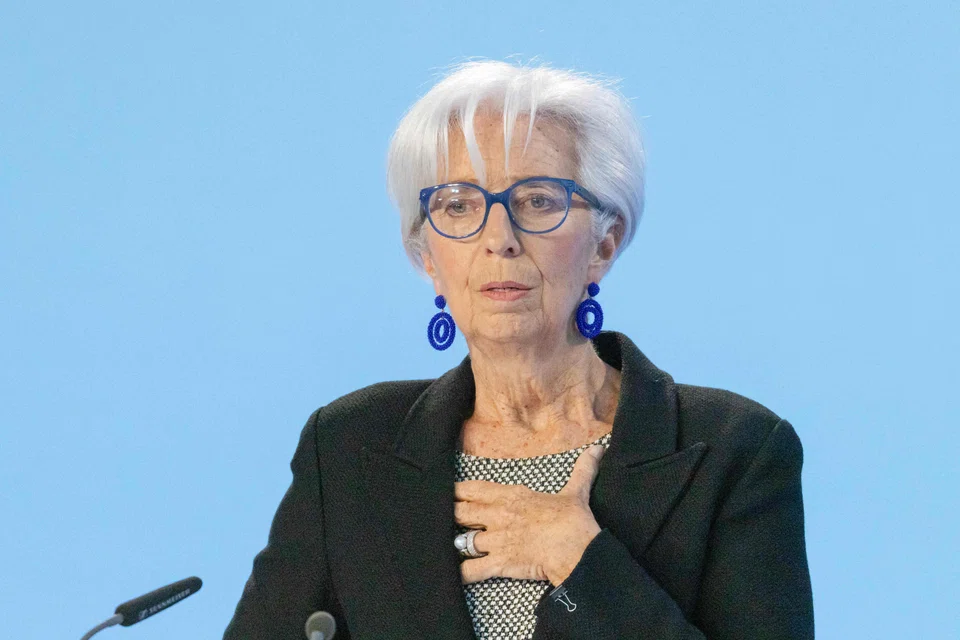
THE European Central Bank (ECB) will probably not be able to declare the end of its historic cycle of interest-rate increases anytime soon, according to its president Christine Lagarde.
Signalling that officials in Frankfurt will retain a bias towards monetary tightening even if they pause their hiking campaign in the coming months, Lagarde also reiterated that July will bring a ninth straight boost to borrowing costs, in a bid to bring down inflation.
“It is unlikely that in the near future the central bank will be able to state with full confidence that the peak rates have been reached,” Lagarde said on Tuesday (Jun 27). This came in a speech to kick off the ECB’s annual retreat in Sintra, Portugal.
“Barring a material change to the outlook, we will continue to increase rates in July.”
The final stages of the ECB’s rate push are the focus, as headline inflation fades but underlying price pressures prove stubborn.
A majority of economists expect officials to pause after next month with a deposit rate of 3.75 per cent, though money markets are pricing a peak of about 4 per cent later this year.
Navigate Asia in
a new global order
Get the insights delivered to your inbox.
“Right now policymakers just have to err on the side of saying ‘we have lots of options, options are on the table, and we will keep hiking if needed,’” Morgan Stanley chief global economist Seth Carpenter told Bloomberg TV. “I don’t think they have a chance anytime soon to declare victory.”
One big question is how rapidly rising rates, which act with a lag, are filtering through to the economy.
“How strong transmission turns out to be in practice will determine the effect of a given rate hike on inflation, and this will be reflected in the expected policy path,” said Lagarde.
She added that the early results are becoming visible in sectors including manufacturing and construction, which are more sensitive to rate changes.
Lagarde and her colleagues are gathering amid a worsening economic backdrop. Data last week signalled activity in the 20-nation eurozone almost stalled in June. On Monday, figures showed an unexpectedly large drop in Germany’s business outlook.
While economic expansion is “on the soft side”, Latvian central bank governor Martins Kazaks told Bloomberg TV earlier on Tuesday that it is not weak enough to bring down inflation by itself, leaving the door open to rate hikes beyond July.
Wherever rates settle, they are likely to remain there for some time.
“We need to communicate clearly that we will stay ‘at those levels for as long as necessary’,” Lagarde said. “This will ensure that hiking rates does not elicit expectations of a too-rapid policy reversal and will allow the full impact of our past actions to materialise.”
That is all the more important as what she describes as the “second phase of the inflation process” gains strength, with workers seeking a “catch-up” in wages to recover lost income.
“Faced with a more persistent inflation process, we need a more persistent policy – one that not only produces sufficient tightening today, but also maintains restrictive conditions until we can be confident that this second phase of the inflation process has been resolved,” Lagarde said.
Decoding Asia newsletter: your guide to navigating Asia in a new global order. Sign up here to get Decoding Asia newsletter. Delivered to your inbox. Free.
Share with us your feedback on BT's products and services

