
ECB’s Kazaks warns against cutting rates too early
 Add BT as a preferred source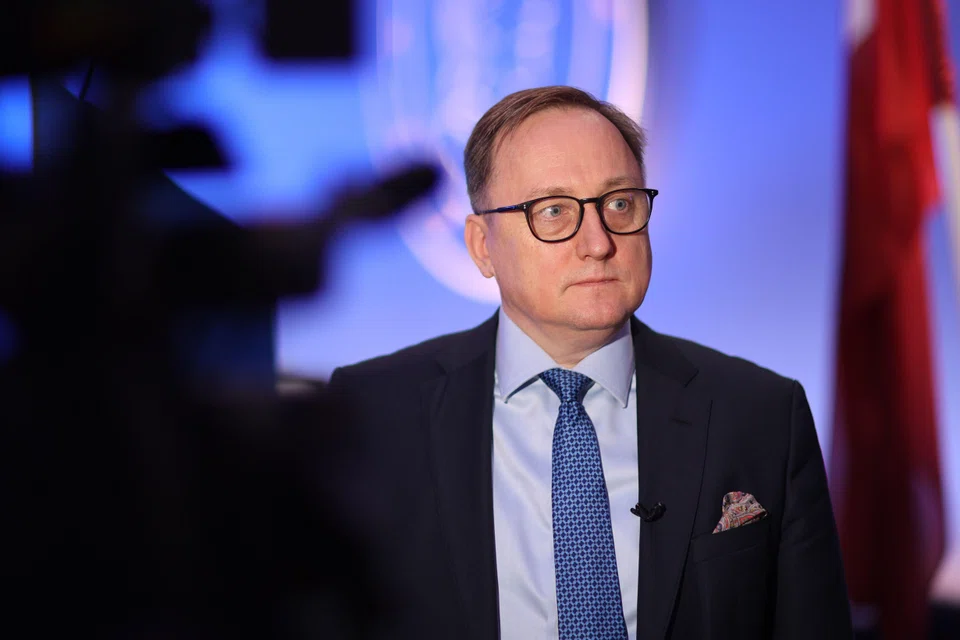
EUROPEAN Central Bank Governing Council member Martins Kazaks urged patience in determining monetary policy, warning that the gravest error would be a premature easing that allowed inflation to bounce back.
While interest rates “should start to go down,” barring any major shocks, the ECB should be in no rush to begin the process, the Latvian official told Bloomberg Television.
“That would be by all mean worse than waiting just a bit,” he said on Friday (Jan 26) in Riga. “We’ve seen from the 70s and 80s that if one starts to be relaxed too early, then there’s the risk that inflation starts to come back and then one would need to raise rates much more.”
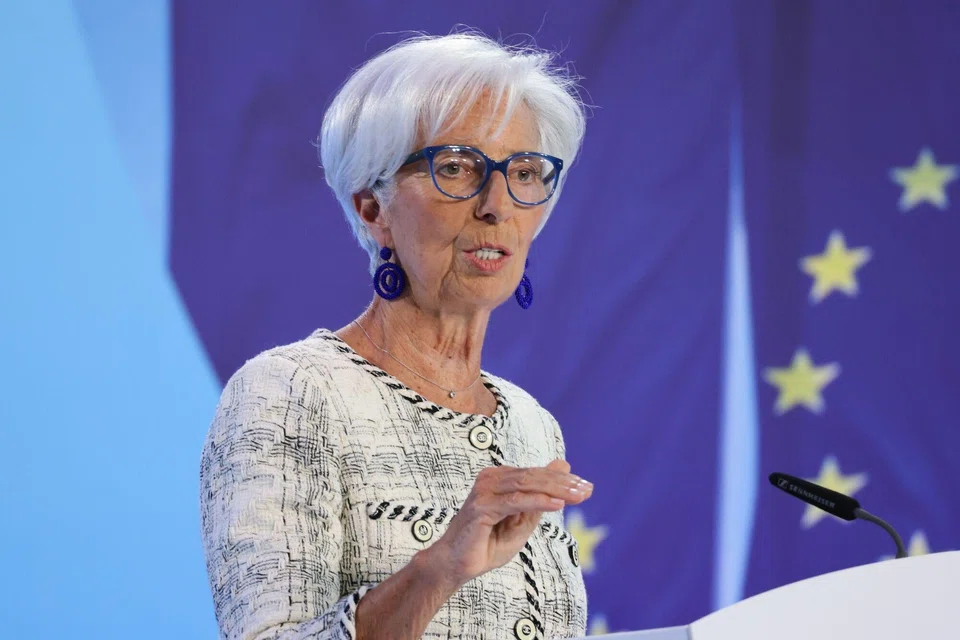
The remarks come less than a day after the ECB kept its deposit rate at a record 4 per cent for a third straight meeting. With President Christine Lagarde pushing back less forcefully than expected against market bets for a cut as early as the spring, investors stepped up their April wagers. Policymakers have appeared to be converging around a June move.
Traders brushed off Kazaks’ warning and bonds extended gains on Friday morning. Money markets are still pointing to a near 90 per cent chance of a quarter point cut by April, with 143 basis points of easing expected for the whole year. The German two-year yield – among the most sensitive to monetary policy – is two basis points lower at 2.60 per cent, its lowest in 10 days.
Despite a sharp retreat in inflation last year, officials aren’t ready to declare victory and are particularly worried that strong wage growth could sustain price pressures.
Navigate Asia in
a new global order
Get the insights delivered to your inbox.
Labour-market risks remain at the forefront as unemployment remains low, according to Slovenian central bank chief Bostjan Vasle.
“All of this is partially reflected in wage growth, which is currently significantly above the level that would be consistent with 2 per cent inflation,” he told radio station RTVSLO on Friday.
While price gains in the 20-nation euro zone re-accelerated in December – to 2.9 per cent from a year ago – this was mainly due to base effects and the ECB expects the slowdown to resume in 2024, albeit more moderately.
At the same time, the economy is struggling and may have suffered a mild downturn in the second half of last year. An estimate for the final three months of 2023 is due on Tuesday from Eurostat. Kazaks acknowledged that a recession is a possibility.
Returning to interest rates, he said that the starting point for any easing cycle will shape the increments in which borrowing costs are reduced.
“There are many ways to get to 2 per cent – you could do earlier smaller steps or you could somewhat later larger steps – that will be all data dependent,” Kazaks said. BLOOMBERG
Decoding Asia newsletter: your guide to navigating Asia in a new global order. Sign up here to get Decoding Asia newsletter. Delivered to your inbox. Free.
Share with us your feedback on BT's products and services

