

ECB’s Schnabel says she’d be ‘ready’ to succeed Lagarde if asked
While the German’s term is non-renewable, ECB lawyers believe it is an obstacle surmountable via a loophole found in 2018
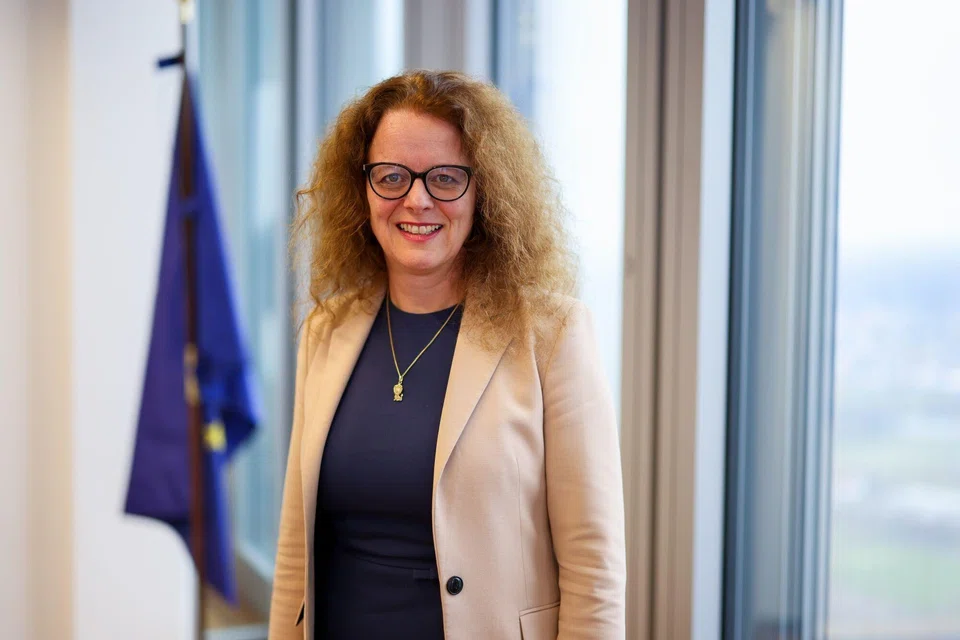
[FRANKFURT] European Central Bank (ECB) executive board member Isabel Schnabel said that she would be willing to take over as president when Christine Lagarde’s term ends in less than two years.
When asked about views that it is time for a German to lead the ECB and whether she could be that person, Schnabel said that “if I was asked, I would stand ready”.
Current front-runners for the role are thought to include former Dutch central-bank chief Klaas Knot, Spain’s Pablo Hernandez de Cos, who currently leads the Bank for International Settlements, and Bundesbank president Joachim Nagel.
While Lagarde’s tenure lasts until October 2027, chatter about her succession is intensifying as politicians search for a replacement for vice-president Luis de Guindos, who leaves next May.
The top jobs are part of a shake up that will replace two-thirds of the six-strong executive board, a delicate process that will seek to maintain a balance between large and small countries, north and south, hawks and doves, and – ideally – gender.
Schnabel and Lagarde are the only women on the ECB’s governing council. Member-states’ central banks are all run by men – as are the current candidates for the vice-president’s job.
Germany has had a board seat since the ECB’s creation in 1998, but never the presidency, which has been held twice by France, and once each by Italy and the Netherlands.
Despite the Germans currently leading the European Commission and the ECB’s supervisory board, some analysts reckon that Germany has a shot at the presidency if it really targets it. So far, Chancellor Friedrich Merz has steered clear of the issue.
Lars-Hendrik Roeller, a former adviser to Chancellor Angela Merkel and chief competition economist at the European Commission, said in October that the time has come for his homeland to lead the ECB, though conceded that “it’s complicated”.

Schnabel’s executive board term, which expires two months after Lagarde’s, is non-renewable. While this could pose as an obstacle, ECB lawyers believe it is surmountable via a loophole they identified in 2018.
Perhaps a trickier hurdle to clear is her tough monetary-policy stance, which would not be universally welcomed by all eurozone members. She is deemed the most hawkish voice on the governing council since Austria’s outspoken Robert Holzmann left in August.
Even so, the 54-year-old Schnabel – a former member of the German government’s panel of independent economic advisers – was identified by economists in a 2024 Bloomberg survey as more important than Lagarde for remarks on interest rates.
Another obvious German candidate is Nagel, thanks to his efforts to stake out middle-ground policy positions with broader appeal. In an interview last month with Spiegel, he signalled that he can envisage replacing Lagarde.
However, his path to the job is tricky as well, because of his ties to the Social Democratic Party, rather than Merz’s party.
When asked about potential candidates, Roeller in October called ex-finance minister Joerg Kukies “a good person”, though not the only one. BLOOMBERG
Decoding Asia newsletter: your guide to navigating Asia in a new global order. Sign up here to get Decoding Asia newsletter. Delivered to your inbox. Free.
Share with us your feedback on BT's products and services
TRENDING NOW

He built the Vingroup empire. Now South-east Asia’s richest man is handing some key roles to his sons

US dollar falters after Iran’s offer to reopen Hormuz sends oil lower

Temasek’s Wan Chee Foong to helm PIL, Lars Kastrup to be board adviser

Despite the de-dollarisation debate, demand for dollar liquidity in Asia is growing

