

Egypt’s Sinai mountain mega project threatens the people of St Catherine
Egypt wants to draw mass tourism to the once serene mountain town of Saint Catherine
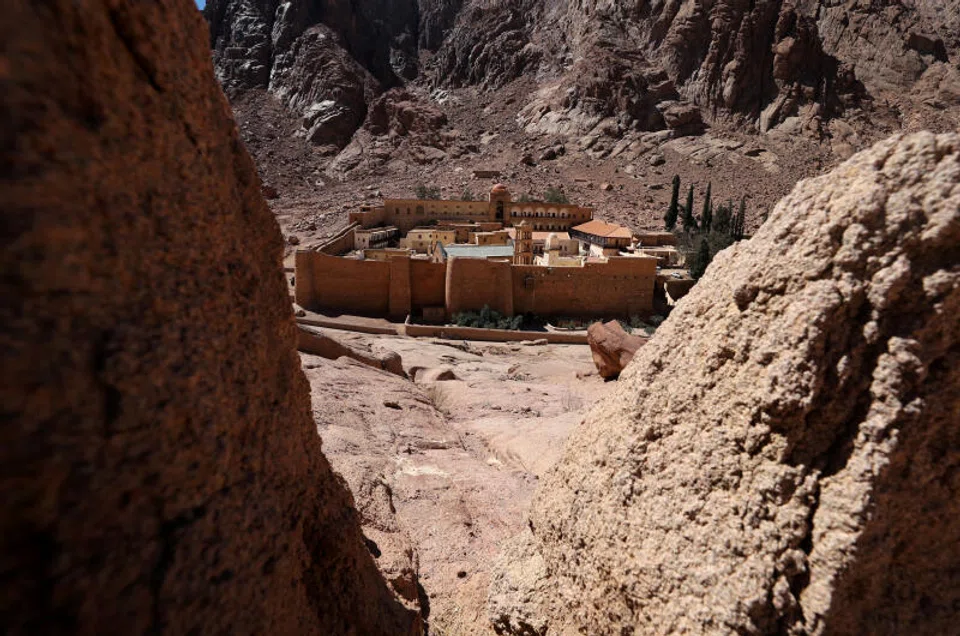
[SAINT CATHERINE] Atop one of Egypt’s Sinai mountains, near where the three Abrahamic faiths say God spoke with Moses, another unmistakable sound rings out: the incessant drilling of construction work.
In the remote, rugged terrain of southern Sinai, Egypt has undertaken a vast megaproject aimed at drawing mass tourism to the once serene mountain town of Saint Catherine.
Heritage experts and locals say the state’s bulldozers have already damaged the nature reserve and Unesco World Heritage Site, home to the world’s oldest functioning Christian monastery and Bedouin who fear for their ancestral land.
“The Saint Catherine we knew is gone. The next generation will only know these buildings,” said a veteran hiking guide from the Jabaliya tribe, as a five-star hotel loomed overhead and the beeps of a reversing bulldozer drowned out the songbirds.
Like others AFP interviewed about the nearly US$300-million “Great Transfiguration” or “Revelation of Saint Catherine” project, he requested anonymity for fear of retaliation.
“We should call this what it is, which is the disfigurement and destruction” of the site, John Grainger, the former manager of the European Union’s Saint Catherine protectorate project, said.
From above, bright lights and concrete overpower the town’s red-brick homes and orchards, in the form of hotels including a sprawling Steigenberger resort, a conference centre and hundreds of housing units.
In July, World Heritage Watch urged Unesco to list the area as a World Heritage Site in danger.
Last month, Unesco elected Egypt’s former tourism and antiquities minister Khaled El-Enany as its chief.
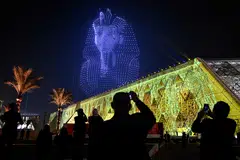
During his tenure, Egypt launched the Saint Catherine project and demolished swathes of Cairo’s historic City of the Dead cemetery, which is also a Unesco site as well as an active burial place.
Just beyond the site of the new project on biblical Mount Sinai, or Jebel Moussa, two dozen monks in black vestments tend a small cluster of ancient shrines.
In May, an Egypt court ruled the Saint Catherine monastery sits on state-owned land and that the Greek Orthodox monks are merely “entitled to use” it, sparking a diplomatic row with Greece and uproar from Orthodox patriarchates.
Egypt has defended the ruling, which critics say leaves the monastery dependent on authorities’ goodwill for its survival.
In September, Saint Catherine’s archbishop resigned, reportedly after an unprecedented mutiny.
Each morning, the monks still open their gates to visitors, mostly sunrise hikers accompanied by local Jabaliya guides.
The Jabaliya, whose name derives from the Arabic word for “mountain”, have lived here for 1,500 years, and are said to descend from the Roman soldiers who came to guard the monastery.
Each year, they guide hundreds of thousands of worshippers and adventurers, drawn to the sacred sites and the austere but magnificent landscapes.
They have for decades called for better services and infrastructure to lift their community out of poverty.
Long marginalised, they now fear that rapid development has come at their expense – even disturbing the dead.
In 2022, bulldozers levelled the town’s centuries-old cemetery, forcing people to exhume hundreds of bodies.
“They just came in one day without saying anything and destroyed our cemetery,” said the hiking guide.
The gravesite is now a car park.
The South Sinai governor’s office did not respond to AFP’s questions about the cemetery and the local impact of the project.
Government officials tout its economic benefits and say decisions were taken in consultation with the community, but locals told AFP their concerns had been ignored.
“No one knows what will happen tomorrow. Maybe they’ll tell us to get out, that there’s no room for us any more,” the guide added.
Many still hope tourism will bring prosperity, even as they navigate life around bulldozers and struggle to keep up with soaring prices.
“Did you hear they tore down half my house?” a 70-year-old casually told a friend.
Across the country, many who have had their homes demolished in recent years for tourism or infrastructure projects, including overpasses and real-estate developments in Cairo, say state compensation does not meet their needs.
After uproar from conservationists over Saint Catherine, Unesco requested in 2023 that Egypt “halt the implementation of any further development projects”, conduct an impact evaluation and develop a conservation plan.
Construction continued unabated, and the government said in January the project was 90 per cent complete.
Gesturing across the monastery’s grapevines and cypresses towards a nearly finished five-star hotel, a local official laughed.
“These hotels are huge, the costs astronomical. Are they even going to be full? That’s the real problem, but we can’t say anything,” he said. AFP
Decoding Asia newsletter: your guide to navigating Asia in a new global order. Sign up here to get Decoding Asia newsletter. Delivered to your inbox. Free.
Share with us your feedback on BT's products and services
TRENDING NOW

Government to bring forward raising of retirement age, give employers more financial support to create flexi-load jobs
Former minister Maliki Osman, Revolut chairman join Asia Gulf Holdings advisory board

Is Manila Asia’s new dining hot spot?

Simba at risk of losing operating licence over spectrum misuse

