

Embrace volatility and uncertainty as a friend: SCCCI panel tells business leaders
 Add BT as a preferred source
DeeperDive is a beta AI feature. Refer to full articles for the facts.
DESPITE the rising costs and uncertainty, firms should embrace volatility as a friend, refine their business models and take the opportunity to scale, panellists told business leaders on Wednesday (Apr 6).
"If you embrace volatility and uncertainty as your friend, then you would be able to surf the waves while looking for where are the more challenging waves to come, then you'll have a different mindset altogether about how you want to approach problems," said OCBC chief economist Selena Ling.
"If you are too concerned and bogged down with the day-to-day survival, how to manage the rising costs, how to manage the manpower availability, all these things, you cannot be able looking ahead (at) where the next growth opportunity is or where the market you're going to make your next big business strategy is," she added.
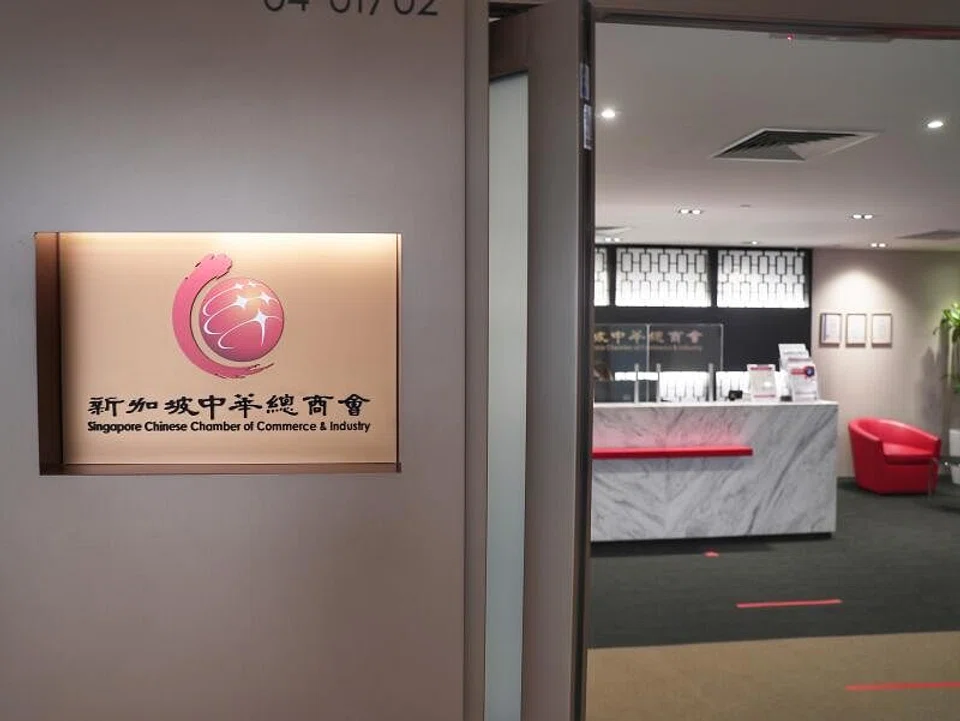
Ling was speaking to over 450 participants at the Singapore Chinese Chamber of Commerce and Industry's (SCCCI) annual global outlook forum, which took on a hybrid format this year.
Fellow panellist Wilson Chew, partner for strategy, entrepreneurial and private business at PwC Singapore, said now is the time for businesses to review their business models, which would be a refined version of what they have before the Covid-19 pandemic, adding that they have a window of about 12 to 14 months, with more markets opening up.
"It is also a great time to choose your markets well, but you must go for scale... because of the rising cost of uncertainty," said Dr Chew.
Navigate Asia in
a new global order
Get the insights delivered to your inbox.
A clear indication for companies to relook their business model is when their marginal revenue and marginal costs start to cross, he said.
"You need to relook at how your product and services mix can help you to again re-propel the marginal revenue faster than other costs, which will hopefully widen those margins," he said.
He added that such business remodelling will widen the margin for businesses focused on the right kinds of markets.
But such decisions cannot be made with business acumen alone, like in the past, said Dr Chew, adding that they must now be backed by data.
Vasu Menon, executive director for investment strategy at OCBC and also a panellist, said investors should tread carefully and take "the middle ground", adding that they should "definitely not" stay out of the market altogether, since crises can present opportunities.
On the whole, the 3 panellists struck a cautiously optimistic tone, even as businesses fret over supply chain disruptions, inflation and geopolitical tensions.
Asked about bright spots, Ling said there are many: there is unlikely to be a recession in the region, Asean regions are emerging from the Omicron wave and China is on track to reach its target 5.5 per cent growth.
She added the services sector is expected to "pick up very strongly" with Singapore relaxing its Covid-19 restrictions.
At the same time, the Asean region is poised to be a key beneficiary of the strategic rivalry between the US and China, with Singapore "well-positioned" to benefit from the China+1 strategy.
One participant raised the risk of secondary sanctions in China, given its close links to Russia, which is now facing heavy sanctions from the West for invading Ukraine.
Ling said the concern of secondary sanctions is less, noting that Chinese officials have said they are not siding Russia in the conflict.
Noting that China is very integrated with the global economy and global trading system, she said it does not make sense for them to withdraw from the global financial accounting system.
"They'll be quite careful not to overstep the line such that they get into a position where secondary sanctions will be going against them. They have too much to lose," she said, adding that China is likely to value stability ahead of the 20th National Congress of the Chinese Communist Party later this year.
The panel was also asked how small and medium-sized enterprises (SMEs) can diversify their risks or scale their operations.
Ling said trade associations like SCCCI play an important role in fostering an ecosystem and rallying the perspectives of businesses to garner support from the government.
"My advice is don't always think you are small," said Ling. " Actually the government listens a lot to the local enterprises and a lot to the SMEs because they recognise that these are the key elements of the Singapore economy."
Decoding Asia newsletter: your guide to navigating Asia in a new global order. Sign up here to get Decoding Asia newsletter. Delivered to your inbox. Free.
Copyright SPH Media. All rights reserved.
TRENDING NOW

StarHub hands Ensign InfoSecurity control back to Temasek in S$115 million deal, books S$200 million gain

Singaporeans can now buy record amount of yen per Singdollar

Air India asks Tata, Singapore Airlines for funds after US$2.4 billion loss

Keppel DC Reit posts 13.2% higher Q1 DPU of S$0.02833 on strong portfolio performance

