

EU approves US$2.2t stimulus package backed by joint debt
Leaders resolve stand-off with Hungary and Poland, which threatened to delay budget amid fresh wave of Covid-19 infections
 Add BT as a preferred source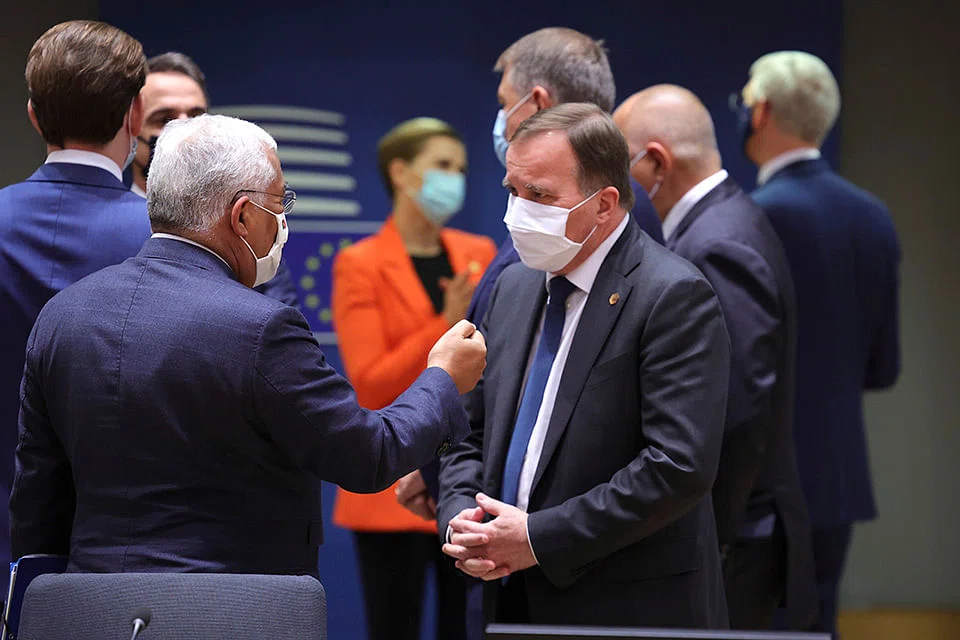
Brussels
EUROPEAN Union (EU) leaders meeting in Brussels resolved a stand-off with two eastern member states that had threatened to delay a historic US$2.2 trillion budget and stimulus package just as the latest wave of coronavirus infections ravages the continent's economies.
A deal was agreed on Thursday with Hungary and Poland, which had angrily protested a mechanism tying funding to upholding democratic norms.
The agreement paves the way for the EU to put into effect not just its seven-year budget but also a 750-billion-euro (S$1.21 trillion) pandemic relief package that will be financed by joint debt, a landmark move by the bloc.
All the same, the leaders struggled to reach an accord on a related proposal for steeper cuts in carbon emissions over the next decade.
That policy is supposed to be at the heart of their strategy for rebuilding the European economy after the pandemic, but Poland again raised objections and the talks were still ongoing in the wee hours of Friday morning in Brussels.
Navigate Asia in
a new global order
Get the insights delivered to your inbox.
The German-brokered compromise on the budget offers reassurances over how the new conditions will be applied, but the rule-of-law provision will remain in place.
The dispute was the culmination of years of clashes between Brussels and the two countries over everything from political meddling in the judiciary to LGBTQ rights.
Under the compromise, the conditionality will only kick in from Jan 1 and relate to commitments under the new budget. Penalties, meanwhile, will only be enacted after the European Court of Justice has had its say, which could take months.
In truth, Hungarian Prime Minister Viktor Orban and Polish counterpart Mateusz Morawiecki had backed themselves into a corner by repeatedly decrying the linkage between EU financing and democratic standards.
That mechanism, agreed on in the summer between the European Parliament and Germany - which holds the bloc's rotating presidency - was supported by the rest of the EU, in particular states like the Netherlands that want more scrutiny over how cash is spent.
Dutch Prime Minister Mark Rutte called the rule-of-law provision "historic". The reaction, however, was mixed in Budapest and Warsaw.
Gergely Gulyas, Hungary's minister in charge of the premier's office, said the deal prevents the budget being used for "political attacks" and includes all guarantees that Hungary and Poland requested.
But the junior coalition party of Poland's hardline justice minister, Zbigniew Ziobro, questioned whether the agreement will allow his country to remain "sovereign".
Swedish Prime Minister Stefan Lofven said that the declaration that allowed for the agreement didn't change the original rule-of-law mechanism that had been agreed by member states.
"There's no compromise on the content, no compromise on the text," he told reporters in Brussels before the start of the summit. "We declared things we needed to declare."
There was a lot at stake for Hungary and Poland. The pair are the biggest net beneficiaries of EU cash, helping their economies close the gap on their richer neighbours to the west, and are in line for at least 180 billion euros from this spending package.
Had they gone ahead with their vetoes, the EU would have switched to an emergency budget from 2021.
That would have seen funding plunge in almost all areas and potentially put Poland and Hungary at the back of the line for even the limited development aid that would be available.
Investors cheered the deal, with the zloty and the forint among top performers against the euro on Thursday, marking a third straight day of gains. BLOOMBERG
Decoding Asia newsletter: your guide to navigating Asia in a new global order. Sign up here to get Decoding Asia newsletter. Delivered to your inbox. Free.
Share with us your feedback on BT's products and services
TRENDING NOW

Middle East-linked energy supply shocks put Asean Power Grid back in focus

‘We’re not a bubble tea brand’: Chagee aims to double Asia-Pacific footprint to 600 stores by 2027

Meet the women who run one of Singapore’s most trusted hotel brands

Family office for US$12 billion Tetra Pak Fortune exits Hong Kong

