

EU dials back talk on US climate law to focus on home turf
 Add BT as a preferred source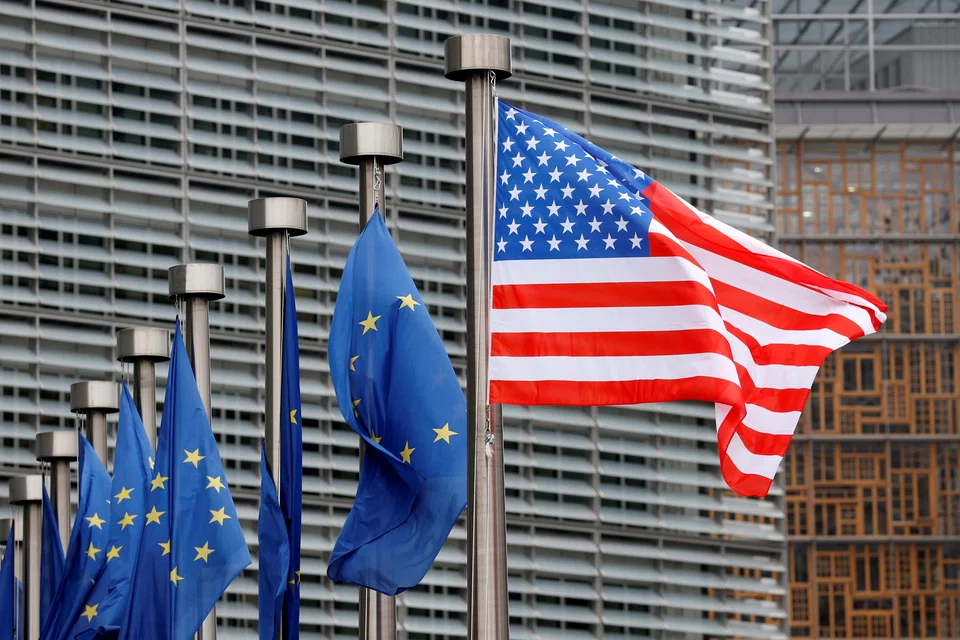
DeeperDive is a beta AI feature. Refer to full articles for the facts.
LEADERS in the European Union (EU) have scaled down rhetoric aimed at Washington over its massive green subsidy plan, instead turning their attention to making European companies more competitive against the US and China.
The EU’s 27 heads of state and government will discuss the loosening of subsidy rules at their meeting in Brussels, Belgium on Thursday (Feb 9). This will pave the way for member states to offer more support to green-technology companies; it will also create ways for them to establish regulatory clarity and attract domestic investment.
Less than two months ago, French Finance Minister Bruno Le Maire said that the US’ Inflation Reduction Act (IRA) was the global power’s way of adopting an industrial policy that echoed the Chinese model of doling out subsidies. The law includes roughly US$500 billion in new spending and tax breaks over a decade, to benefit US companies.
Some lawmakers in the EU threatened to file a complaint with the World Trade Organization over the IRA, but tensions have since moderated.
“We will ask our American friends not to discriminate against European countries in the measures they take,” German Chancellor Olaf Scholz told reporters in Brussels on Thursday. “And I am quite confident that we will succeed in this.”
Last week, European Commission President Ursula von der Leyen unveiled the Green Deal Industrial Plan, which seeks to accelerate the development of the EU’s clean-technology sector by relaxing state-aid rules, simplifying regulations and speeding up permits for new projects.
Navigate Asia in
a new global order
Get the insights delivered to your inbox.
US Treasury Secretary Janet Yellen applauded the proposed European effort.
“If Europe takes action to put in place subsidies similar to ours, this is good,” she told reporters in Tennessee on Wednesday. “This is good climate policy, and there’s plenty of business for all of us to be able to benefit from the clean-energy transition. So we’re going to work with them.”
The EU’s competition chief, Margrethe Vestager, previously proposed loosening state-aid rules. But many member states expressed concern that this could create an uneven playing field.
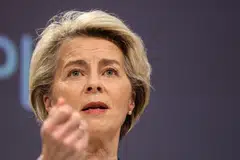

Vestager herself cautioned that too much national support for companies could disadvantage smaller and poorer countries with less fiscal capacity. The rules were relaxed following Russia’s invasion of Ukraine; since then, Germany and France have accounted for more than 70 per cent of the state-aid measures that were flagged to the European Commission.
The EU is also focusing on easing regulatory red tape, by speeding up permitting processes, and the time it takes to get state aid approved.
Swedish Deputy Prime Minister Ebba Busch said: “The long permitting processes that we have within the EU diminishes our competitiveness. We need to find a way to shorten that if we want to increase our competitiveness.”
Critics said the commission’s package did not go far enough and that EU-wide funding would be needed to help smaller countries.
Earlier this month, the EU’s internal market commissioner, Thierry Breton, said: “We are also continuing to explore additional solutions to make sure to achieve greater common financing at EU level, so that all member states have access to necessary financing, catering for their different needs and preserving a level playing field.”
But EU countries have little appetite to put these bigger fights over the EU budget and joint funds on the table right now. The commission’s idea to create a sovereignty fund – a far more contentious idea that will be tied to the EU’s budgetary review – will not be debated until the summer.
Germany’s Scholz said: “This is a central topic that we will discuss, and where we will also describe a closing of ranks on the question of how we will use our existing opportunities to act together, and at the same time, how we will ensure that Europe can survive in international competition.” BLOOMBERG
Decoding Asia newsletter: your guide to navigating Asia in a new global order. Sign up here to get Decoding Asia newsletter. Delivered to your inbox. Free.
Share with us your feedback on BT's products and services
TRENDING NOW
From intern to C-suite: JPMorgan’s Teresa Heitsenrether on building a fully AI-powered ‘megabank’

Richard Eu on how core values, customers keep Singapore’s TCM chain Eu Yan Sang relevant

South-east Asian markets account for 8.8% of global capital inflows from 2021 to 2024: report
Higher costs, lower returns: Why are Singaporeans still betting on real estate?

