

EU pledges 500 million euros to boost ammunition output in Europe
 Add BT as a preferred source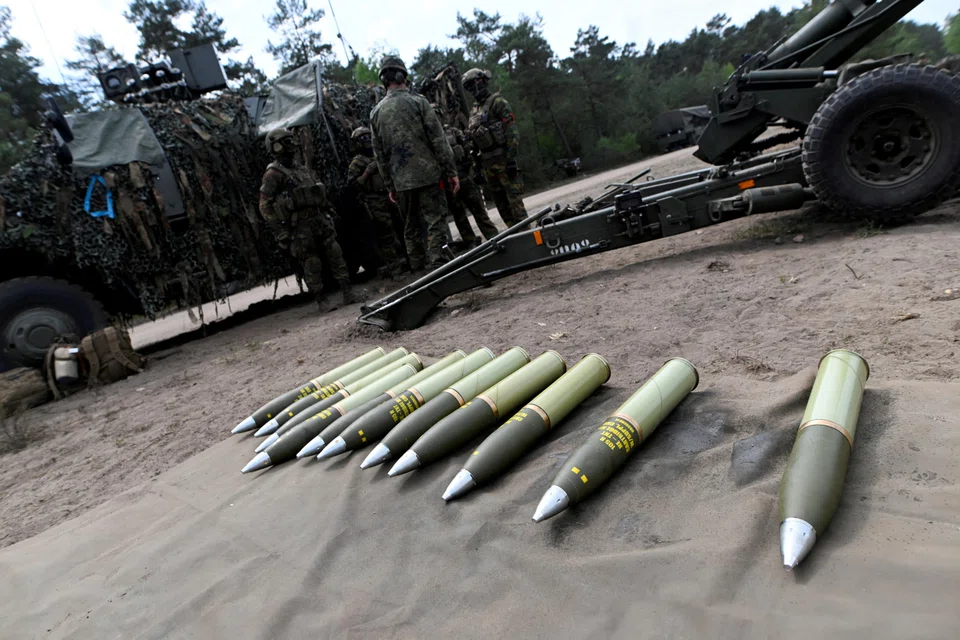
THE European Union is setting aside 500 million euros (S$735.2 million) to boost manufacturing of artillery shells, missiles and gunpowder in an effort to speed up production of ammunition for Ukraine and galvanize the bloc’s defence industry.
Among a raft of measures, the European Commission proposed the funds to co-finance projects alongside EU governments. It offered around half of the funding for companies to ramp up output capacity or refit old stocks of ammunition to make them operational again.
“The Act we are proposing is unprecedented,” Thierry Breton, the internal market commissioner, said in comments shared ahead of the proposal. “It aims to directly support, with EU money, the ramp-up of our defence industry for Ukraine and for our own security.”
The EU is looking to jump-start the bloc’s defence industry after years of lower spending following the Cold War, which caused firms to scale back production. Artillery ammunition has become an urgent need in light of the large volumes used every day by both Russia and Ukraine.
The bloc wants to boost supply of the shells to Ukraine as it continues to fend off Russia’s invasion and prepares its own counter-offensive. Member states are also keen to stock up their own supplies to prepare for any potential future conflict.
Separately, the bloc’s foreign ministers in March backed plans to spend 1 billion euros from its European Peace Facility to reimburse around 50% of the modern and Soviet-era ammunition that member states send to Ukraine from their own stockpiles. Over 600 million euros worth of missiles and shells have already been delivered as part of this effort, the EU’s foreign policy chief Josep Borrell said in April.
The ministers had also signed off on plans to spend another 1 billion euros from the same fund to jointly buy ammunition, but the effort has since stalled in technical talks as diplomats discuss legal terms. Whether non-EU companies can benefit has nagged negotiators, especially since some firms jointly own manufacturing facilities with European counterparts. EU diplomats said the file should soon be finalised.
Under the act proposed on Wednesday (May 3), which still needs the approval of the European Parliament and member states, the commission said it would also use around 50 million euros of the money to launch a so-called Ramp-Up Fund to improve defence firms’ access to financing. This would provide potential subsidies to compensate firms for the higher level of interest rates banks give them, as well as potentially offering preferential-rated loans to companies ready to increase production.
The EU hopes the loans will address complaints by European defence firms. The industry has warned of difficulties to clinch funding from banks and investors amid a rising trend of socially responsible investing, which has continued despite Russia’s war in Ukraine and government plans to increase defence spending.

In its proposal, the commission called on the bloc’s own lending arm, the European Investment Bank, to step up its support for the defence industry. The EIB currently invests in systems with dual civilian and security uses, but doesn’t offer loans to finance weaponry, ammunition and explosives. Changing this would need the backing of the EU’s 27 member states.
The commission also proposed measures aimed at clearing governing obstacles with temporary regulatory waivers ending in 2025. The move would absolve companies from some national laws such as those that forbid night shifts, which force companies to close factories at night. The EU also said it could decide, along with a company’s national government, to require a firm to reorient its production for Ukraine or for member states.
The commission said it would seek to fast track negotiations with member states and Parliament to finalise the act as soon as the end of June. BLOOMBERG
Decoding Asia newsletter: your guide to navigating Asia in a new global order. Sign up here to get Decoding Asia newsletter. Delivered to your inbox. Free.
Share with us your feedback on BT's products and services
TRENDING NOW

When every phone becomes a satellite phone, what happens to Asia’s telcos?

Bessent’s bond manoeuvres giving global debasement trade new life

Laos-China Railway picks up steam, but S-E Asian country struggles to capture gains

Too little, too late? Manila’s billion-dollar bid to ignite its sputtering EV industry

