EU registering protection for F&B goods as FTA with Singapore nears

Singapore
WITH the EU-Singapore free trade agreement (EUSFTA) set to come into force by the end of the year, the European Union (EU) has submitted 138 mostly food and beverage-related geographical indications (GIs) for approval here, with 100 successful registrations received to date.
As a form of intellectual property, GI applications are approved by the Intellectual Property Office of Singapore (IPOS), which opened its GI registry in April. The EUSFTA requires that Singapore recognise some of the EU's GIs.
While GIs protect products by name, they differ from trade marks in that their protections are related to the regionally specific production techniques and environments of products' geographical origins.
Winemakers using a technique identical to that used in the Champagne region of France, for example, are prohibited from marketing their wine as "champagne" if their winemaking does not actually take place in the Champagne region.
While the EU's unregistered GIs already receive some protection here under the World Trade Organisation Agreement on Trade-Related Aspects of Intellectual Property Rights, registering GIs with IPOS confers additional protections within Singapore.
With registered GIs, even phrasing like "Roquefort-style cheese" would be prohibited if the cheese was not in fact produced in Roquefort.
Further, registered GIs cannot be used even where the actual origination is clearly indicated so as not to mislead.
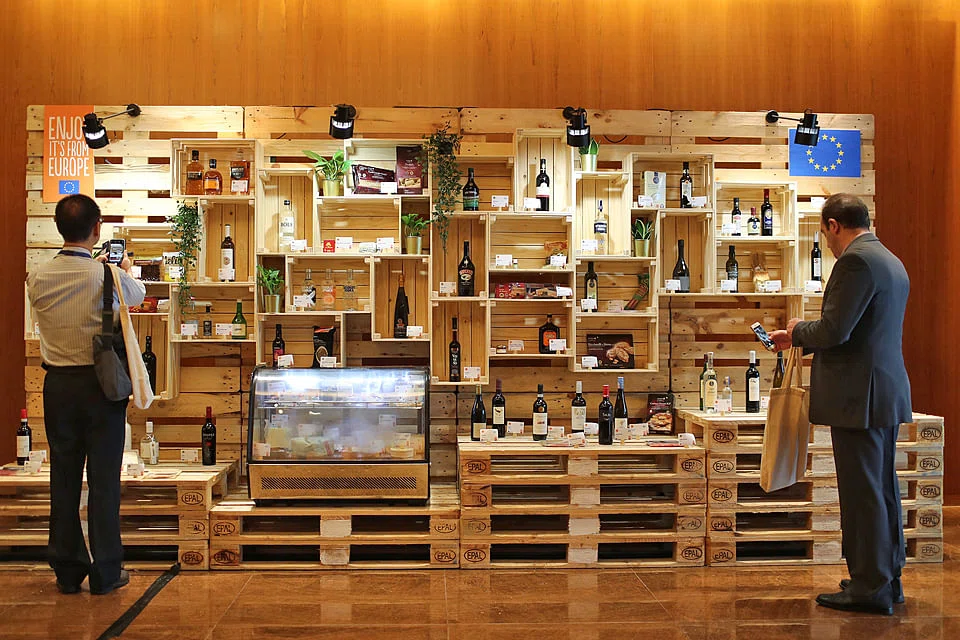
GIs such as Cognac and feta cheese go beyond branding and indicate quality, said EU ambassador to Singapore Barbara Plinkert.
They are "symbols of traditions, cultures and the creative know-how of centuries", she said at a seminar for agri-food products on Tuesday.
At the same event, United Nations Food and Agriculture Organisation GI consultant Stephane Passeri said GIs can benefit both consumers and producers in a wider Asian economy shifting in emphasis from food security to food quality.
Pointing to explosive growth in middle-class populations in China and India, he said "in the coming years, more than 50 per cent of the world's customers will be middle class", with higher expectations for food quality.
While "quality" can refer to taste and nutrition, it comes to be "more and more at the level of information you get when you consume the food", he said. "A GI is part of this quality scheme that food is involved in."
The GI's indication of quality will also allow producers to charge a significant premium, which Mr Passeri said would boost rural incomes and development goals as a result.
Where Asia entirely lacked GI legislation when Mr Passeri moved to the region 21 years ago, the number of registered Asian GIs is now poised to exceed European ones for the first time.
All GI submissions to IPOS thus far have been from the EU. However, parties from other regions are eligible to apply for GI registration here, provided they already have GI protections in their own country of origin.
Correspondingly, IPOS opening a GI registry here means Singapore applicants can now register GIs domestically before registering them abroad.
The IPOS GI registry is the latest in a series of steps towards the EUSFTA beginning in April 2014, when Singapore passed the Geographical Indications Act, followed by the Geographical Indications Rules in March this year.
In a process similar to that for other intellectual properties like patents, applying for GIs begins with an application that IPOS examines and then publishes for third party opposition. GI registration is valid for and renewable in 10-year increments. The application carries a S$1,000 fee.