

Eurozone inflation could stay high even with peace deal, says ECB official
The European Central Bank will take a ‘calibrated response’, says Philip Lane
 Add BT as a preferred source
Sharon Lee
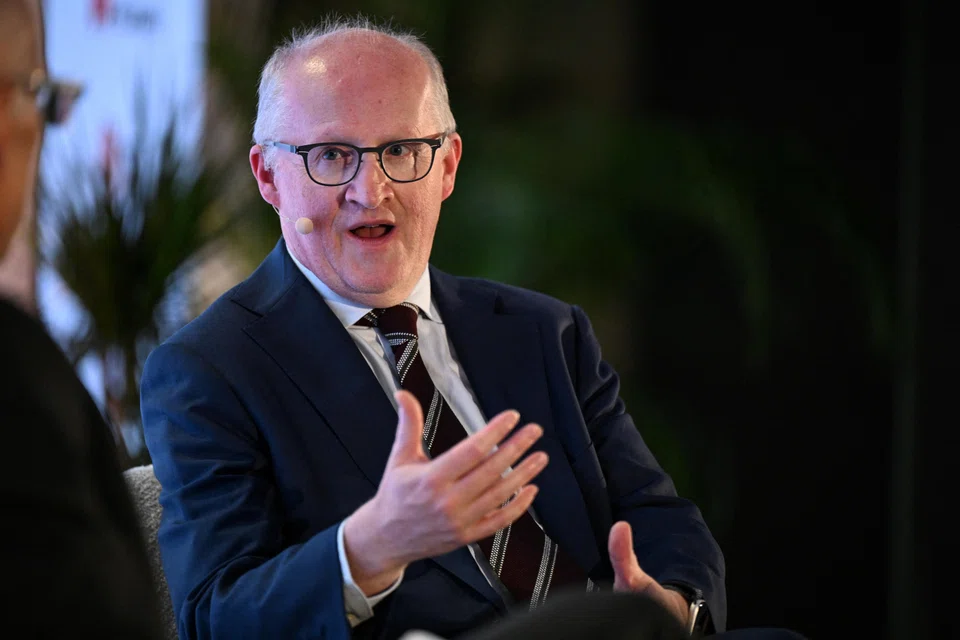
[FRANKFURT] Eurozone inflation could stay above the European Central Bank’s 2 per cent target for some time, even if peace in the Middle East holds, but this shock still only requires a measured policy response, ECB chief economist Philip Lane said on Tuesday (Jun 23).
The ECB raised interest rates this month to prevent higher energy prices from pushing up longer-term inflation expectations. Financial markets see at least one more move towards the end of the year, even as energy prices have fallen well below recent highs.
Speaking to European lawmakers in Brussels, Lane said that inflation could remain well above target into the first half of 2027, after rising above 3 per cent last month.
“While recent progress towards a resolution of the conflict in the Middle East is welcome, uncertainty remains elevated and there are continued risks for inflation to stay above our 2 per cent medium-term target for quite some time,” Lane said.
“We’re taking a measured approach,” he told the European Parliament’s Econ committee. “This is not a kind of huge, gigantic response. It’s a calibrated response to what we see.”
However, charts published along with Lane’s speech also showed that the recent fall in prices now puts oil more firmly between the bank’s “baseline” and “milder” scenarios.
While these scenarios do not directly foreshadow the next policy decision, a move towards the milder outcome lowers any urgency for the ECB to follow its June hike already next month.
Indeed, markets see just a one in five chance of a hike in July and the next move is fully priced in only for December.
Still, Peter Kazimir, Slovakia’s central bank chief and one of the most hawkish voices on the ECB’s governing council, said the ECB’s job was not yet done because peace will not instantly reverse the inflation damage.



“I think the direction is clear and I think we still have work to do,” he said at a Slovak central bank news conference.
An argument for early action is that unless inflation is nipped in the bud, it risked setting off a self-reinforcing wage-price spiral that could be harder to extinguish later.
Lane added that high inflation and expensive energy will weigh on economic activity but the impact will be muted given a solid labour market, heavy investment into artificial intelligence, and public spending on defence and infrastructure.
“It’s lower growth than we had hoped for but this is far above a stagnating economy,” Lane said. “There is a fair amount of momentum in the economy.” REUTERS
Decoding Asia newsletter: your guide to navigating Asia in a new global order. Sign up here to get Decoding Asia newsletter. Delivered to your inbox. Free.
Share with us your feedback on BT's products and services
TRENDING NOW

Simba ordered to pay S$700,000 in damages to indoor skydiving operator Altitude Xperience for trespass
Lazada cuts about 5% of workforce, a sign of maturing e-commerce sector in S-E Asia

What’s wrong with Orchard Road? Experts weigh in on the street’s cachet and its future
DBS tops list of employers sought by Singapore’s fresh graduates: survey

