

Europe seeking ‘balance’ in review of capital rule ditched by US
Top official hints at more temporary changes to address the immediate needs of the continent’s economy
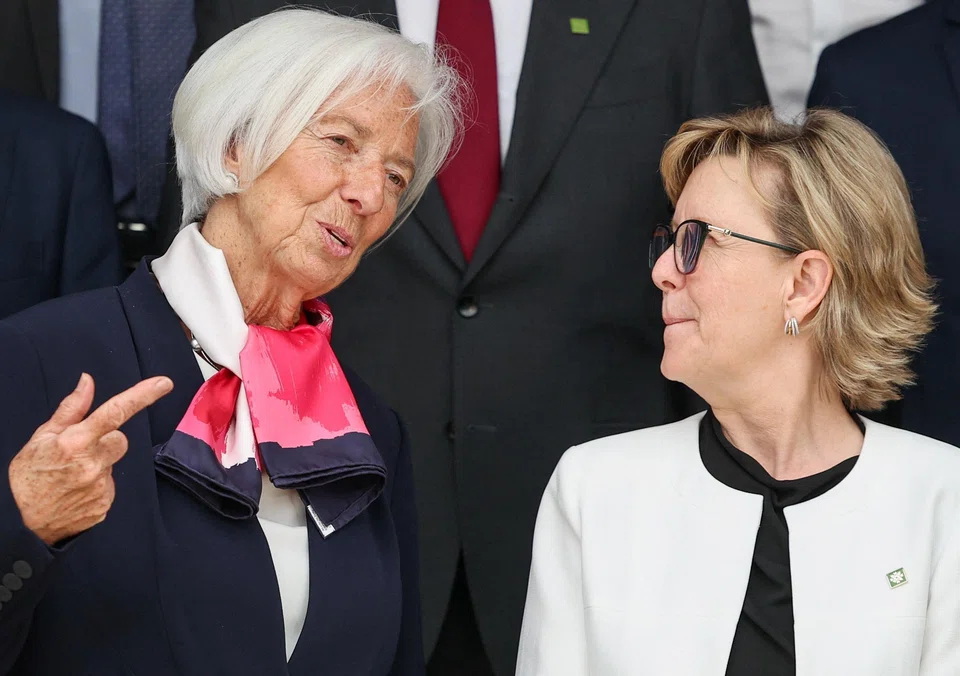
[BRUSSELS] The European Union’s (EU) top financial services official has downplayed the prospect of completely axing a contentious bank capital rule slated for review, hinting instead at more temporary changes to address the immediate needs of Europe’s economy.
One of the biggest surprises from the European Commission’s grand plan for tackling banking competitiveness was a commitment to advance “clear proposals” to reform the “output floor”, a new global rule introduced so banks couldn’t game their models to cut capital charges.
The US announced in March that it will not implement the output floor when it finally adopts the rules agreed in Basel almost a decade ago, while the EU had promised to introduce it on a phased basis despite protests from its banks.
In an interview after unveiling Friday’s (Jul 17) report, financial services commissioner Maria Luis Albuquerque said that the output floor is particularly onerous for European lenders because so many of the region’s businesses don’t have credit ratings and rely on bank financing.
Europe is trying to “incentivise” companies to reduce their dependence on bank lending, Albuquerque noted. The work on the output floor will seek to “balance the short-term needs” of Europe’s economy, which are hurt by the output floor, “with a more strategic perspective” toward reducing bank funding.
The European Central Bank’s supervisory arm, which oversees eurozone lenders, supports the output floor and Albuquerque said that officials would “need to have a proper dialogue with them” on the topic, as well as with those at the Basel Committee on Banking Supervision that set the rules.
The Center for European Policy Studies think tank had urged Europe against weakening the measure, arguing that it would “forfeit the EU’s standing to demand faithful implementation from others” on globally agreed rules.
“It’s not Europe is doing something and everybody else is faithfully implementing Basel,” Albuquerque said on whether tweaking the rules could compromise Europe’s standing globally. “I would not focus too much on the element of how good we look.”
She also hinted that the door remains open for other reforms not mentioned in Friday’s package, as Europe works toward concrete legislative proposals by the end of the first quarter. “Some are not mentioned which doesn’t mean that they are not important or that we will not take them into account,” she added.

Albuquerque pointed out that Europe’s parliament and council would decide whether to sequence the various proposals, but that her preference was that they be done together, since they are inter-connected.
An obvious concern is that progress on the most contentious topic, Europe’s deposits scheme, could prove impossible and thus put the whole effort in jeopardy. “That’s something that we will explain to the co-legislators,” she said, adding that she disagrees with “the idea that there is something, some challenge, we cannot overcome”. BLOOMBERG
Decoding Asia newsletter: your guide to navigating Asia in a new global order. Sign up here to get Decoding Asia newsletter. Delivered to your inbox. Free.
Share with us your feedback on BT's products and services
TRENDING NOW

The only common thing in S-E Asia is that we all eat rice: Cisco’s Asean president

‘How many will survive?’: Bubble fears arise as China’s humanoid robotics face reality check

Green fuels, autonomous ships: How Singapore is future-proofing its shipping industry

Could stablecoins be the future of money?

