

Europe is trying to gauge how much pain it can take from China
Market share lost to Chinese manufacturers cost the EU nearly US$150 billion in 2025
[BERLIN] It was a bittersweet moment for Sönke Siegfriedsen when his revolutionary design for a floating offshore wind turbine was pitched to Spain’s prime minister in April.
The German engineer had spent seven years developing his idea. But Pedro Sanchez was in China, and the innovative twin-rotor platform was presented to him by Zhongshan-based Ming Yang Smart Energy, which had bought the patent from the German inventor under a per-unit licence.
Most painfully, Siegfriedsen’s own company had shut down three months earlier after failing to find European partners.
“A Chinese businessman was able to build his company’s success with the help of my design,” Siegfriedsen said in an interview.
Ming Yang did not respond to a request for comment.
The episode illustrates one of the myriad ways EU companies are increasingly outmatched, outsmarted or outfunded by Chinese competitors.
Such complaints in Europe are not new. In solar energy, too, China built up its know-how by importing equipment from Europe and figuring it out before scaling up production to crush European competitors.
But the issue is becoming increasingly urgent for leaders across the EU who are aiming to respond with a mix of new tariffs tools, export controls and investment screens at a summit in Brussels next month.
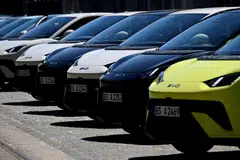
A new analysis from Bloomberg Economics shows that the market share lost to Chinese manufacturers in recent years cost the 27-nation bloc 0.7 per cent of its gross domestic product – or almost US$150 billion – in 2025. A year earlier, the estimated impact was 0.5 per cent.
“Rising rapidly”
“China’s dominance of advanced manufacturing sectors is rising rapidly,” said BE trade economist Nicole Gorton-Caratelli who authored the report along with Maeva Cousin.
During the first China shock 25 years ago, sharp advances in labour-intensive, low-value production hit producers of textiles, toys and home appliances.
In contrast, exporters of industrial and transport equipment – notably Germany – benefited from China’s growing imports.
This time around, advanced sectors like autos and machinery sit in the eye of the storm: They are losing sales in China just as the Chinese push deeper into Europe, and they are being squeezed out by Chinese rivals in other markets.
“European firms are losing market share to China in the Chinese market, in Europe itself, and in the rest of the world,” Gorton-Caratelli said.
With Washington adding its own protectionist measures, EU leaders have found themselves in the path of the Chinese export juggernaut.
They are struggling to come up with a response due to concerns about the prospect of retaliation against the bloc’s 18 trillion euro (US$21 trillion) economy.
One EU diplomat said they essentially have to choose between the current, lower-intensity shock that threatens to wipe out some industries or to embrace more short-term pain in a bid to preserve those jobs for the future.
That is a view shared in Beijing, and Chinese officials are confident in their position.
“The basic logic of a trade war isn’t about who wins or loses – it’s about the ability to inflict pain,” said Tu Xinquan, a former adviser to China’s Commerce Ministry.
“Ultimately, it tests which side has a greater capacity to withstand that pain.”
Nevertheless, there has been a flurry of activity among Europe’s China experts spurred by a significant shift in Germany.
Policymakers and executives in Europe’s biggest economy have consistently opposed tougher measures against Beijing for fear of reprisals targeting its exporters.
But that resistance has softened as the threats to German jobs and companies have become more acute.
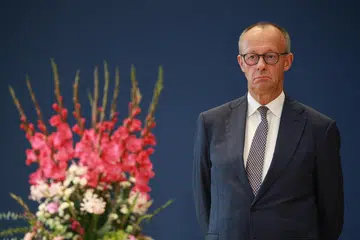
Chancellor Friedrich Merz’s changed his view after a meeting in June where both industry groups and unions called for tougher action, according to a person familiar with his thinking.
Volkswagen chief executive officer Oliver Blume told analysts in July that the EU should extend the tariffs on Chinese electric vehicles to hybrid cars.
In 2024, he had led opposition from German automakers to such measures. But since then the competition from Chinese rivals has intensified and earlier this month Volkswagen agreed on plans to cut 50,000 jobs, roughly 8 per cent of its global workforce.
That shift has brought Germany closer to France. President Emmanuel Macron, also in July, said the two countries have “never been so convergent on China”. Since then officials from the two capitals have been working to forge a common position.
The package EU officials are aiming to have ready for leaders in October could ultimately include a mechanism to force companies to shift away from Chinese suppliers and a new instrument to impose tariffs on entire industries, matching the US’ Section 301 tool, according to people involved in the talks.
Such an option, demanded by countries like France, would be more agile than anything in the bloc’s existing toolbox.
“Made in Europe”
The EU Commission is also seeking to curb Chinese dominance through new “Made in Europe” rules designed to reduce EU dependence on Chinese investment and revised provisions around public procurement, which will allow authorities to exclude Chinese firms.
The German government, however, remains divided on just how far it should go and is still seeking to avoid a retaliation from China.
What is more, the victory of the far-right in a state election earlier in September has shaken the Berlin establishment and risks distracting senior officials from the China question.
For those reasons, some European officials privately doubt the more hawkish rhetoric will translate into meaningful action in the fall.
The commission, which represents the EU in trade negotiations, still holds out hope that China can be persuaded to help rebalance trade with the EU and will be holding talks with Beijing through September, the people said. But there is little sign of progress.
Beijing, for its part, has made clear that China is prepared to respond forcefully to any escalation in trade tensions.
Chinese officials have also been reaching out to sympathetic member states who might push back against decisive action, people familiar with the matter said.
China rejects the EU’s central argument that state subsidies and excess capacity are distorting competition, pointing to European and US trade surpluses in sectors such as aviation, pharmaceuticals and advanced technology as evidence that competitive advantages do not necessarily reflect unfair practices.
In recent years, China has expanded its legal and economic retaliatory toolkit and has seen how effective those measures could be in its trade disputes with the US.
In July, Beijing responded to EU sanctions on Chinese companies accused of supporting Russia’s war in Ukraine by blacklisting an equal number of European organisations, including German defence giant Rheinmetall.
In August, China barred organisations from complying with the EU’s probe of Chinese retailer JD.com’s planned acquisition of Germany’s Ceconomy, saying the bloc’s requests for information were unlawful.
Those warning shots, though, are minor in comparison to the prospect of a renewed squeeze on rare earth supplies.
China dominates supply of the crucial magnets that are used in a wide range of European products from cars to drones and robots.
In 2025, some production lines were close to shutting down when Beijing imposed restrictions on their export.
The Chinese have been emboldened by their success in forcing US President Donald Trump to back down in his tariff offensive in 2025, one senior European official said.
“If European countries engage in a trade war with China, they must fully anticipate the consequences,” Cui Hongjian, a former Chinese diplomat and director of the Center for EU Studies at Beijing Foreign Studies University, said.
“China holds significant leverage.”
The European Commission, meanwhile, has been gaming out potential asks that Beijing might make in the talks and working through the EU’s potential responses.
They range from suspending existing investigations into Chinese goods to allowing Chinese companies unfettered access to the European market – a stark reversal of EU policies, according to people briefed on the conversations.
But before EU leaders gather in Brussels on Oct 15, Trump himself is due to meet with China’s Xi Jinping in Washington at the end of September.
The two leaders are expected to extend their existing, if fragile, trade truce at the meeting. That would strengthen China’s position in any clash with the EU and likely prove a further deterrent to effective EU action, according to people familiar with European discussions.
While the policy machinery grinds on, many European manufacturers are either retrenching or shifting their investments outside the bloc.
Christophe André, the CEO of Belgian plastics maker Vynova, cited “strong pressure due to global overcapacity” in announcing in July to shutter a facility in the Netherlands that employed about 100 workers.
Others, like Germany’s Schaeffler Group or BASF are seeking to protect themselves by deepening their ties to China or Chinese companies.
“Everybody can see the intensity of the competition there,” Mercedes CEO Ola Källenius told analysts in July.
“But it is and remains the biggest car market in the world. It is an ecosystem that you need to be in.”
For Siegfriedsen, the wind turbine engineer, the danger is that other European firms suffer the same fate.
Since its licencing deal with him, Ming Yang has deployed one 17-megawatt generator in the South China Sea and has developed initial plans for another one three times as big. BLOOMBERG
Decoding Asia newsletter: your guide to navigating Asia in a new global order. Sign up here to get Decoding Asia newsletter. Delivered to your inbox. Free.
Share with us your feedback on BT's products and services
TRENDING NOW
Government to bring forward raising of retirement age, give employers more financial support to create flexi-load jobs
If Europe goes to war, the fallout will be felt in East Asia
Former minister Maliki Osman, Revolut chairman join Asia Gulf Holdings advisory board

Small nuclear reactors could boost the Asean Power Grid: GE Vernova executive

