
Europe's automakers need to boost domestic industry to face US IRA
 Add BT as a preferred source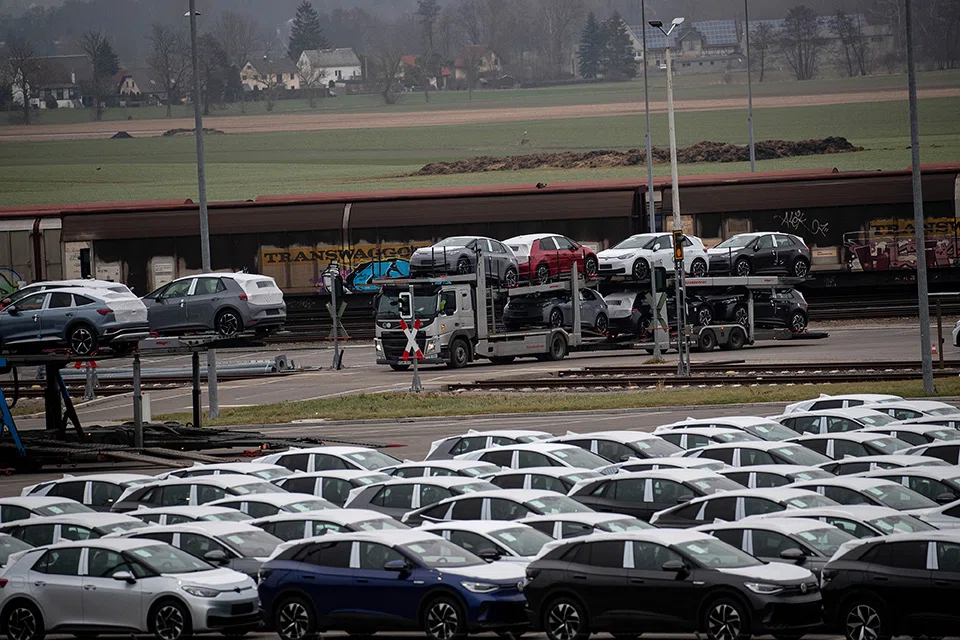
EUROPEAN automakers and associations urged policymakers for stronger counter-measures to boost domestic industry in response to the US Inflation Reduction Act (IRA), but warned that the region should not respond with protectionism.
Assurances by German Economy Minister Robert Habeck that there was a chance de facto free-trade status could be reached in the area of critical minerals provided little comfort, one European carmaker who declined to be named told Reuters.
Under IRA rules, at least 40 per cent of critical minerals in US-made EV batteries must come US miners or recycling plants or mines in countries with free trade deals with the US, rising to 80 per cent in 2027.
Given Europe has little industrialised supply of critical minerals for batteries and with mining projects struggling to get off the ground, the impact for the industry would be minimal, the carmaker said.
What Europe needs is a major revamp of licensing processes and energy pricing to attract key suppliers like battery makers, they added.
The European Council will meet later this week to discuss the region’s response to the IRA, following from the green industrial plan laid out last Wednesday.
Navigate Asia in
a new global order
Get the insights delivered to your inbox.
Habeck said on Tuesday he sensed great willingness on Washington’s part to engage with Europe’s concerns about the US IRA, but didn’t provide details.
Speaking to French radio on Tuesday, Renault CEO and president of Europe’s auto association Luca de Meo said: “I don’t much like the word protectionism, because it leads to inflation and inefficiency.”
“But I think the European community must react... you need to find counter-measures to protect industry,” he added, without elaborating.
With transport and logistics costs rising, European carmakers are already moving to localise production of EVs in the United States, from Volkswagen’s ID.4 built in Tenessee to the Mercedes EQS SUV and EQE SUV in Alabama.
BMW plans to produce at least six fully electric models in its plant in North Carolina by 2030.
Carmakers are increasingly also seeking to source batteries close to their plants but a large proportion of the raw materials inside them are still likely to come from or pass through China, spelling trouble under IRA rules.
Rearranging supply chains to take China out of the picture is complex and would take a long time, the carmaker said.
Cars assembled in North America were already at an advantage via the USMCA passed under the Trump administration, which gives tax-free status to vehicles with 75 per cent regional content, Germany’s auto association VDA said.
“It is important to prevent US practises resulting in a spiral of protectionism,” it said. REUTERS
Decoding Asia newsletter: your guide to navigating Asia in a new global order. Sign up here to get Decoding Asia newsletter. Delivered to your inbox. Free.
Share with us your feedback on BT's products and services

