

Eurosceptics threaten to oust British Premier May
They want Foreign Secretary Boris Johnson as prime minister and Environment Secretary Michael Gove as deputy PM
London
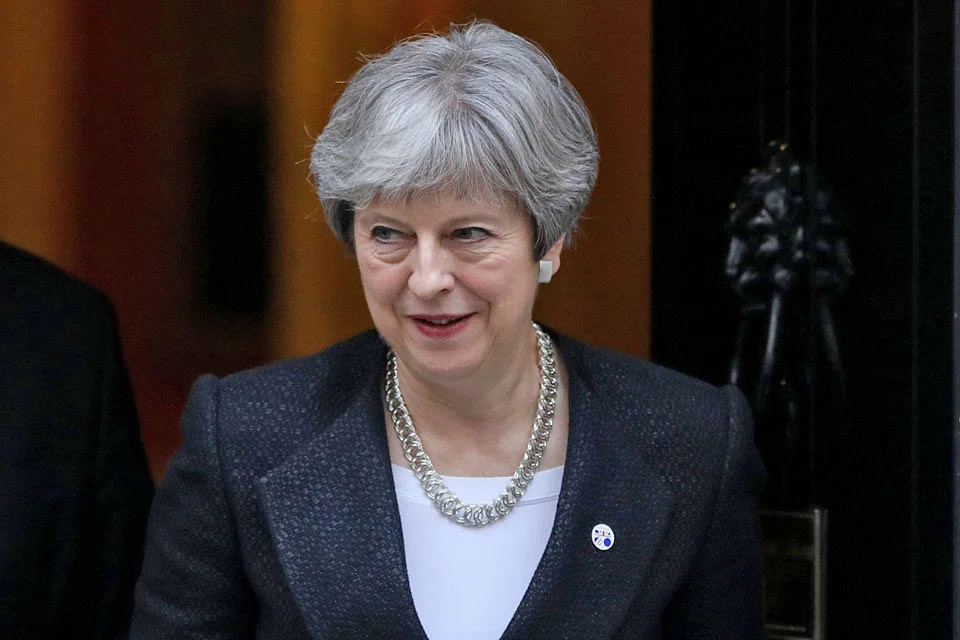
EUROSCEPTICS intend to oust British Prime Minister Theresa May if she opts for a Brexit that comprises the EU's customs union.
Such is the dissatisfaction with Mrs May's leadership that more than 40 Tory MPs have reportedly given notice that a new leadership election should be held.
In terms of the Conservative Party's rules, 48 protests would trigger a leadership battle.
Dominic Grieve, the former Attorney General, warns that the UK is at the brink of "a political crisis", just as negotiations with the EU are renewed on Monday.
The Sunday Times reported that eurosceptics contacted Foreign Secretary Boris Johnson and urged him to agree to a pact with Michael Gove, the Environment Secretary and Jacob Rees-Mogg, an MP who effectively heads the back bench Brexitiers.
The eurosceptics want Mr Johnson as Prime Minister, Mr Gove as his deputy and Mr Rees Mogg as his chancellor.
A coup, however, cannot take place, as there has to be a leadership election within the party.
The key worry of the eurosceptics is that almost two thirds of Mrs May's cabinet, including herself, backed remaining in the European Union (EU) during the election.
In particular, Chancellor of the Exchequer Philip Hammond and Home Secretary Amber Rudd are in favour of a so called "soft Brexit" - a continued close single market and customs union relationship.
EU negotiators and leaders, however, have repeatedly said that the UK government "cannot cherry pick".
The single market requires free movement of people and labour and the EU Customs Union would prevent the UK from negotiating independent trade deals.
Brexit takes place in only 13 months and David Davis, the Brexit Secretary, wants an "implementation period" that will tie up loose ends. This would last two years.
Michel Barnier, the EU's chief Brexit negotiator, met with Mr Davis on Monday to discuss the next phase of talks.
On Tuesday, Oliver Robbins, Mrs May's most senior Brexit official, will travel to Brussels to discuss transition and the future relationship.
The Prime Minister's Cabinet sub-committee on Brexit will hold meetings on Wednesday and Thursday.
Mrs May will have the unenviable task of seeking a compromise between Remainers and Brexitiers in the cabinet.
Liam Fox, the International Trade Secretary, emphasised on Friday that Britain should not be part of a Customs Union.
He emphasised that such a deal would prevent the nation from striking free trade deals with American, Asian and other nations.
Mr Johnson and Mr Gove are also vigorously against any EU customs plan for the UK.
Mrs May herself, initially indicated that she was prepared to compromise over customs regulations because of the border between Northern Ireland and Ireland.
But in a press conference in China, she backtracked saying that she was against staying in the customs union.
The key issue is that a so-called "soft Brexit" implies that the UK effectively remains in the Union as a " vassal state" without any voting rights or say.
This is the Brexit that remainer Tories and the Labour Party supports. A hard Brexit implies that the UK's businesses, banks, insurance companies, pharmaceutical companies and academic institutions are subject to known and unknown risks.
Former Attorney-General Grieve, with 10 other Conservative colleagues voted against the government to ensure that parliament has a meaningful vote on the terms of the Brexit deal with the EU. He believes that the only solution is that the UK remains in the union.
"I do see this as a defining moment in modern British history. We are facing a political crisis. It is completely unresolved, and I can't predict how it is likely to be resolved," he said in a lengthy interview with The Independent.
"The six months we have between now and the autumn are so important," he said.
"It is going to be decision time. And decision time in the sense of what happens in the next six months being a final decision. If people do want to change their mind, and they could, if they wanted to, the time is now. It cannot be after March 29, 2019, and frankly it cannot be after the end of the autumn of this year."
Many commentators and politicians regret that former prime minister David Cameron called a referendum on such a complex, divisive issue ,as leaving the EU.
Growing numbers contend that the people should be able to vote on a Brexit deal in a new referendum.
TRENDING NOW

He built the Vingroup empire. Now South-east Asia’s richest man is handing some key roles to his sons
China’s Pinglu Canal likely to benefit Singapore, other South-east Asia ports in the long term
Suntec Reit to increase Singapore focus, sell three Australia properties
Despite the de-dollarisation debate, demand for dollar liquidity in Asia is growing

