Eurozone business activity edges up on manufacturing surge
The Composite Purchasing Managers’ Index compiled by S&P Global rose to 52.1 from 52 in July
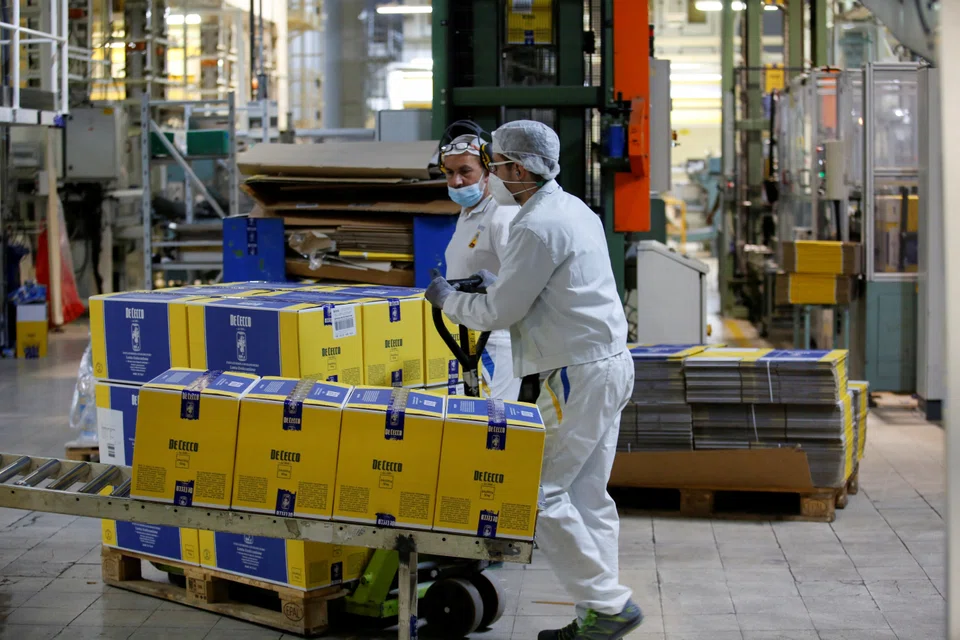
[BRUSSELS] Private-sector activity in the euro area unexpectedly improved slightly in August, thanks to the strongest manufacturing growth in more than four years.
The Composite Purchasing Managers’ Index compiled by S&P Global rose to 52.1 from 52 in July, staying well above the 50 threshold separating growth from contraction. Analysts in a Bloomberg survey had expected a slight decline to 51.7.
The region’s two largest economies both fell short of estimates, indicating that other parts of the region were behind Friday’s positive surprise. While Germany stayed well above the growth threshold, France sank deeper into contraction.
“The manufacturing sector is again the star performer,” Chris Williamson, chief business economist at S&P Global Market Intelligence, said in a statement. As well as precautionary stock building, “there are also encouraging signs of rising demand for AI-related tech goods and rising equipment demand thanks to higher defence spending, notably helping Germany in particular achieve increasingly impressive production gains.”
The 21-nation economy is defying the headwinds created by the Middle East conflict, brushing aside rising energy costs and shaky confidence with surprising strength. Second-quarter output grew 0.4 per cent, stronger than expected.
Whether such a performance can continue hinges mainly on how the situation between Washington and Teheran evolves. The full effect of the initial energy shock “has yet to play out,” the European Central Bank warned last month.
Officials in Frankfurt are weighing the need for another rate hike to curb consumer-price gains following June’s quarter-point increase. Inflation picked up slightly in July, to 2.9 per cent, moving further away from the ECB’s 2 per cent target.
European bonds edged higher on Friday, sending the German 10-year yield one basis point lower to 3.25 per cent. Bunds gave back some of their gains following stronger-than-expected eurozone PMIs but remained higher on the day.
Traders trimmed wagers on the extent of ECB interest-rate hikes through next year, though a quarter-point hike is still seen as all but certain next month, based on swaps pricing.



According to S&P Global, price pressures showed signs of further easing in August, for both services and goods.
“However, with the flash PMI signaling solid third quarter GDP growth, a return to hiring by companies for the first time this year, and inflation remaining elevated by historical standards, a hawkish bias is likely to be maintained and further imminent rate hikes cannot be ruled out,” Williamson said.
PMIs are closely watched by markets as they arrive early in the month and are good at revealing trends and turning points in an economy. A measure of breadth of changes in output rather than depth, business surveys can sometimes be difficult to map directly to quarterly GDP. BLOOMBERG
Decoding Asia newsletter: your guide to navigating Asia in a new global order. Sign up here to get Decoding Asia newsletter. Delivered to your inbox. Free.
Share with us your feedback on BT's products and services