

Eurozone business activity up on German manufacturing revival
It expands for the first time in more than 3½ years as the government ramps up expenditure on defence and infrastructure
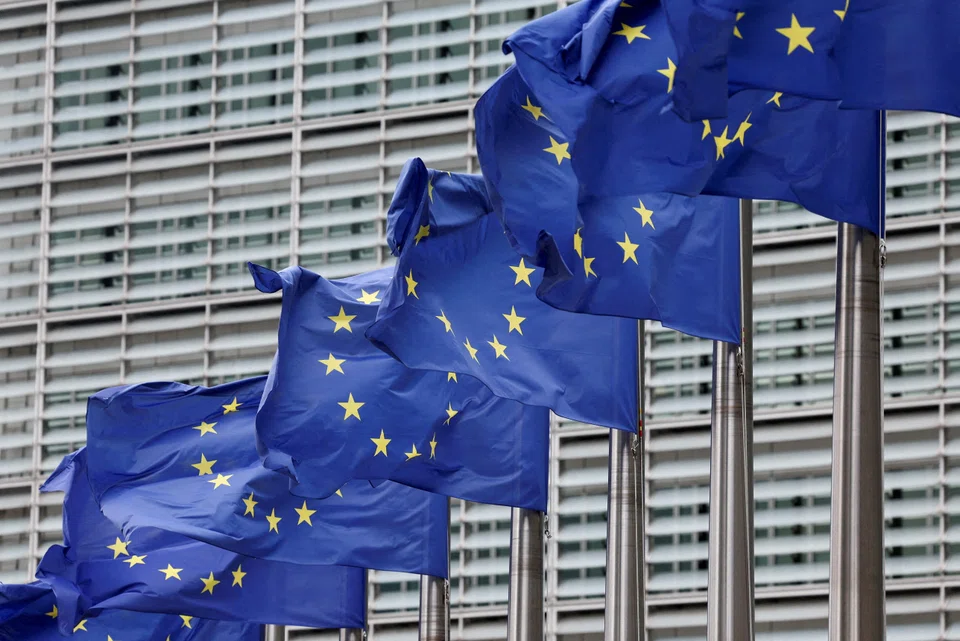
[BERLIN] Private-sector activity in the euro area surpassed expectations, as manufacturers recorded their best performance since 2022 due to surprise growth in Germany.
The Composite Purchasing Managers’ Index (PMI) compiled by S&P Global rose to 51.9 in February from 51.3 the previous month, holding above the 50 threshold that separates growth from contraction.
Analysts had predicted a smaller improvement, to 51.5.
Germany, the region’s biggest economy, was the main driver, with manufacturing expanding for the first time in more than 3½ years as the government ramps up its expenditure on defence and infrastructure.
While France’s reading improved, it fell just shy of 50.
“It might be premature, but this could be the turning point for the manufacturing sector,” Cyrus de la Rubia, an economist at Hamburg Commercial Bank, said on Friday (Feb 20).
Industries in the sector are “on a more stable footing and could contribute to overall growth this year, instead of being a drag”.
Europe’s economy is performing solidly, if unspectacularly, in the aftermath of US President Donald Trump’s tariff spree.
Growth this year – expected to be just over 1 per cent – is set to be buoyed by Germany’s spending splurge, while low and stable interest rates have helped lift consumer confidence to its highest since late 2024.
While the manufacturing sector grew for only the second time since 2022, services continued to expand at a moderate rate, S&P revealed. But compared with the fourth quarter, “overall growth dynamics have lost some momentum”, he said.
The European Central Bank (ECB) is showing no appetite to tweak monetary policy, satisfied that inflation is in line with its 2 per cent goal.
It has deemed that structural reforms – rather than lower borrowing costs – are necessary to make the economy more dynamic.
De la Rubia highlighted that price pressures in the closely watched services sector abated a bit in February.
However, he said that costs are still increasing rapidly.
“Given the stable expansion of economic activity and a still-elevated service inflation, the ECB does not seem to be inclined to change its view to stay put with respect to their key policy rates,” he said.
PMIs are closely watched by the markets as they arrive early in the month. They are good at revealing trends and turning points in an economy.
A measure of breadth of changes in output rather than depth, business surveys can sometimes be difficult to map directly to quarterly gross domestic product.
Composite readings due later in the day from the UK and US are expected to remain well above 50. BLOOMBERG
Decoding Asia newsletter: your guide to navigating Asia in a new global order. Sign up here to get Decoding Asia newsletter. Delivered to your inbox. Free.
Share with us your feedback on BT's products and services
TRENDING NOW

Malaysian king buys stake in Singapore-listed mining firm expanding into rare earths

Grab CEO’s wife Chloe Tong on life with Anthony Tan and finding her purpose

Once staunchly pro-China, Malaysian Chinese businesses are now distancing themselves from Beijing

Longer wait times expected as S’pore healthcare institutions report system disruptions

