EU's plodding stirs ECB concerns as US delivers stimulus
European officials fear that without the same fiscal effort in Europe, the output gap is going to remain in place
 Add BT as a preferred source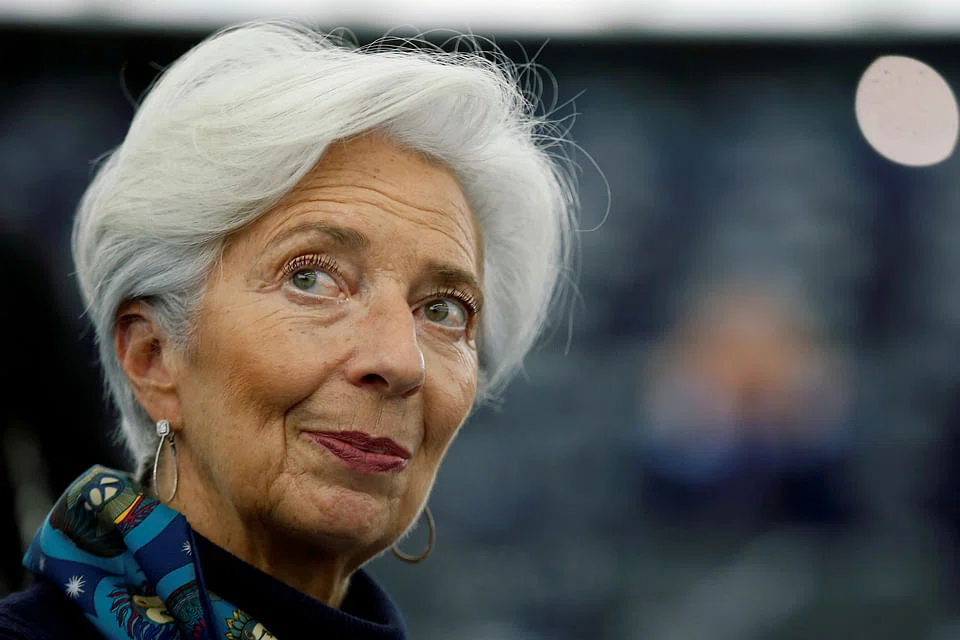
DeeperDive is a beta AI feature. Refer to full articles for the facts.
Brussels
THE European Union's path to joint fiscal stimulus is looking less assured than its monetary guardians would like, casting further clouds over an outlook already stunted by the bloc's botched vaccination drive.
European Central Bank (ECB) president Christine Lagarde last week gave a hint of alarm to lawmakers on the slow roll-out of the 750 billion-euro (S$1.2 trillion) pandemic recovery fund. That heaps pressure on the EU's leadership to get its flagship tool right, especially with other parts of its crisis response faltering.
The US's more advanced immunisation push and President Joe Biden's US$1.9 trillion stimulus that is already posting cheques to citizens highlight Europe's contrasting shortcomings. While America's consumption-boosting splurge isn't directly comparable to the EU's longer-term and investment-focused fund, it'll still fuel a visibly quicker rebound.
Federal Reserve chair Jerome Powell reinforced the point last week when he declared that he would "love to see Europe growing faster". ECB officials might wholeheartedly agree, knowing that the onus will be on them to stimulate the economy more if fiscal help isn't there.
"They're looking at what's going on on the other side of the Atlantic and it becomes clear that what Europe is doing is inadequate," said Nick Kounis, an economist at ABN Amro Bank in Amsterdam. "There's a concern that without the same fiscal effort in Europe, the output gap is going to remain in place."
Navigate Asia in
a new global order
Get the insights delivered to your inbox.
Ms Lagarde noted the difference in strategy from the US in the European Parliament last Thursday, but also suggested it's a good reason why governments shouldn't dawdle. ". . . All of us should put all the energy we have in making sure that we deliver, and that implementation follows through as quickly as possible without too much procrastination," she said. "It matters for the confidence effect."
Payments under the recovery fund should start around the middle of 2021 and are stretched over several years, focused on investing to retool the bloc for a greener and more-digitised future. Most governments' submissions to the EU still need work before an April 30 deadline, said sources.
Just 13 of the 27 member states have approved a provision that allows the Commission to finance the fund in the bond market.
Observers insist the process is still within a long-planned timeline. "The agreement was not just to give money to countries and let them do what they want," said Zsolt Darvas, a senior fellow at the Bruegel think-tank in Brussels. "If you don't just want to throw the money out the window, but have sensible investment and spending, you need to prepare detailed plans."
Confidence in the fund is all the more important because the bloc's slow vaccination roll-out has meant extended restrictions and almost certainly another economic contraction this quarter, a predicament that will focus minds at an EU summit on Thursday.
Resurgent coronavirus outbreaks threaten to prolong that pain, with Germany's rate of infections reaching the highest in almost two months on Sunday. The eurozone economy is currently projected to return to its pre-pandemic size only in the middle of 2022, a year behind the US.
"My concern is that, compared with the enormous US fiscal impulse, the effects of the European one will kick in with a major delay," ECB Governing Council member Peter Kazimir said in an interview published last Wednesday. "The joint fiscal reaction is lagging behind and needs to pick up its pace to support the recovery."
In comments to Les Echos the same day, ECB executive board member Isabel Schnabel also wondered if the EU effort may be inadequate. "The US measures are bigger," she said. "It may be that the European support will turn out to be insufficient."
The longer the vaccine crisis drags on, the more important the recovery fund becomes, because in the meantime, almost all fiscal aid comes from national measures applied unevenly across the region.
Morgan Stanley economists say that unless innoculations pick up soon, a second summer could suffer lockdowns hitting tourism-dependent southern countries hardest. The fund is "designed to support a synchronised recovery by targeting support on the worst-hit areas", they wrote in a report. BLOOMBERG
Decoding Asia newsletter: your guide to navigating Asia in a new global order. Sign up here to get Decoding Asia newsletter. Delivered to your inbox. Free.
Share with us your feedback on BT's products and services