Expected Xi visit to Hong Kong boosts optimism in city's stocks
 Add BT as a preferred source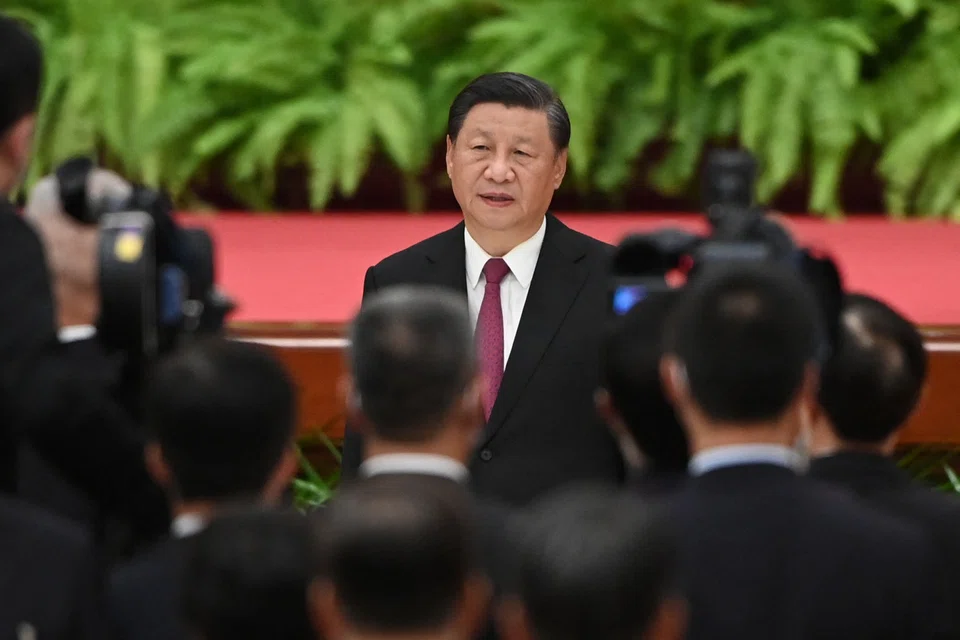
DeeperDive is a beta AI feature. Refer to full articles for the facts.
HONG KONG'S stocks are already rebounding at the fastest pace in the world, and a possible visit by Chinese President Xi Jinping in a few weeks may provide even more buying momentum.
Signs are growing that Xi will join a Jul 1 ceremony to swear in new leader John Lee as well as celebrate 25 years of Chinese rule following the handover from Britain in 1997. The South China Morning Post reported this week that Hong Kong is preparing to isolate some 1,000 people involved in the city's handover anniversary in anticipation of Xi's arrival, including Lee and current leader Carrie Lam.
An upbeat mood in financial markets is key for the troubled financial hub, where more than half of individuals say they own stocks - one of the highest proportions globally. The appearance of investor optimism also matters for Beijing, which tends to lend support to markets around key anniversaries or high-profile events in China.
The Hang Seng China Enterprises Index has gained 15 per cent since a mid-May low, outperforming every major benchmark in the world. It's beating MSCI's global gauge by about 9 percentage points. While the end of Shanghai's strictest lockdown and a better outlook for the heavyweight tech industry have contributed to the gains, they've also coincided with US$4.7 billion worth of inflows from the mainland.
"Everything seems to be getting just that little bit better in Hong Kong ahead of Jul 1," said Samuel Tse, an economist at DBS Bank in Hong Kong. "People are going out more, spending more, and generally have a more positive attitude toward the economy and markets. Government policies in Hong Kong and mainland China have helped improve the mood."
China hasn't confirmed that Xi will visit Hong Kong, but past leaders have tended to make the trip every fifth year since the handover anniversary to swear in new leaders. It would be Xi's first visit since 2017 when he warned pro-democracy activists to avoid crossing China's "red line". Sometimes-violent street protests erupted 2 years later that paralysed the city for months, prompting China to impose a sweeping national security law used to put key activists in jail.
Navigate Asia in
a new global order
Get the insights delivered to your inbox.
The protests followed by the pandemic halted the daily influx of mostly Chinese shoppers, hurting retail sales and small businesses, while Beijing's crackdown on dissent and strict Covid Zero measures prompted an exodus of residents. In May, the government cut its 2022 growth forecast to a range of just 1 per cent to 2 per cent, compared with a 6.3 per cent expansion last year.
Hong Kong is tolerating hundreds of local daily Covid infections per day, showing a clear divergence with the mainland. Still, the city remains unable to eliminate the 7-day mandatory hotel quarantine that has cut down business travel and prompted companies to shift workers elsewhere in Asia.
"Increasing signs that Xi may come on Jul 1 is one part of the reason markets have been doing well," said Dongshu Liu, assistant professor specialising in Chinese politics at the City University of Hong Kong. "If Xi comes and makes some speech unless he says something very clearly about national security and Zero Covid, it will indicate that the central government still supports Hong Kong."
Investors in the stock market are nursing heavy losses. Last year's 14 per cent drop in the benchmark Hang Seng Index was its worst versus the world since the Asian financial crisis of 1997. Portfolio outflows topped US$100 billion for only the second time since annual records began that year, the first after the former British colony returned to Chinese rule.
This year didn't start off any better in markets, with the Hong Kong gauge closing in March at a 6-year low. Capital flight meant the local monetary authority in May intervened to prop up its pegged currency for the first time since 2019.
Such losses can take a toll on residents. About two-thirds of Hong Kong respondents said the performance of their investments was having an impact on their mental health, according to a survey published by Schroder Investment Management (Hong Kong).
Sentiment is now improving. Chinese authorities have showered stock traders with gifts in the past week, including freeing the majority of Shanghai's residents from a Covid Zero lockdown, stepping in to rescue a private property developer and approving a second batch of online games - a sign that regulatory oversight of the tech industry is entering a more predictable phase. The moves attracted inflows into Hong Kong stocks and helped stabilise the local dollar.
On Thursday (Jul 9), Bloomberg reported that Chinese financial regulators have started early stage discussions on a potential revival of Ant Group's initial public offering, which was thwarted almost 2 years ago in a move that kicked off a crackdown on the tech industry. The China Securities Regulatory Commission said it wasn't conducting such work.
When Xi last visited the city for the 20-year handover anniversary in 2017, Chinese government funds were told to stand by if needed to create a positive atmosphere in markets.
"The Chinese economy seems to be more optimistic," Liu said. "The state council and top officials indicated their wishes to boost the economy." BLOOMBERG
Decoding Asia newsletter: your guide to navigating Asia in a new global order. Sign up here to get Decoding Asia newsletter. Delivered to your inbox. Free.
Share with us your feedback on BT's products and services