

Fed says US economy showing progress but 'not fully recovered'
 Add BT as a preferred source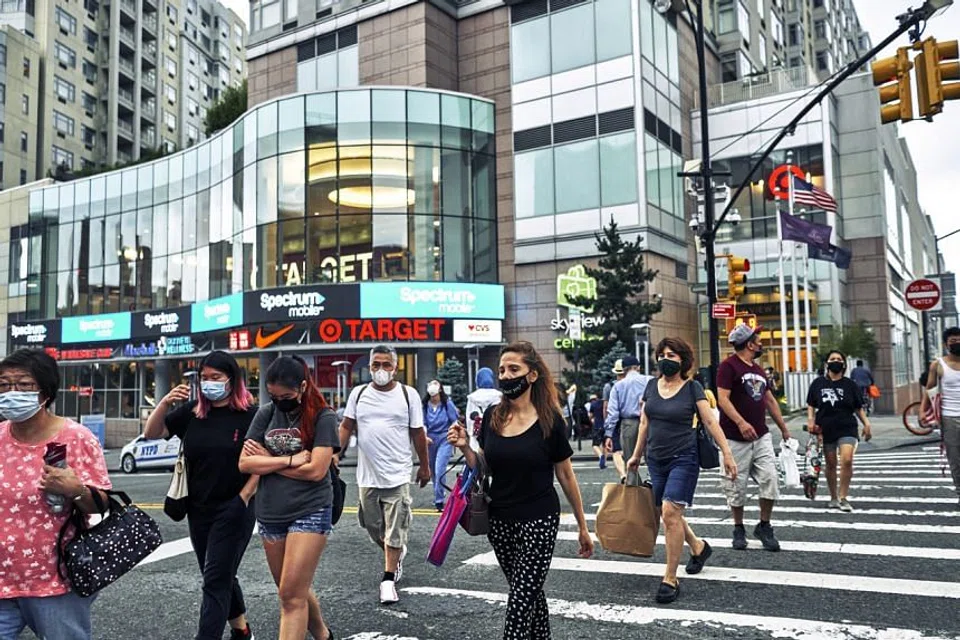
Washington
THE US economic recovery is showing signs of progress, but the Federal Reserve said on Wednesday that it is not yet ready to end the easy money policies it implemented as the pandemic began last year.
Widespread vaccinations have helped boost business activity and employment, though the sectors hardest hit by the Covid-19 pandemic "have shown improvement but have not fully recovered", the Fed's policy-setting Federal Open Market Committee (FOMC) announced following its two-day meeting.
The US central bank cut its benchmark lending rate to zero at the start of the Covid-19 pandemic and implemented a massive bond-buying programme aimed at providing liquidity to help the world's largest economy weather the damage.
The FOMC cautioned that "risks to the economic outlook remain" and again pledged to keep those policies in place until it sees "substantial further progress" on its maximum employment and inflation targets.
While the US economy has recovered millions of jobs and brought the unemployment rate down, it also has seen inflation surge.
Fed chair Jerome Powell again tried to tamp down concerns about the price spikes he described as mostly temporary and limited to certain sectors. "The process of reopening the economy is unprecedented, as was the shutdown at the onset of the pandemic," he said.
Central bankers met during an uncertain moment for the world's largest economy. The fast-spreading Delta variant of Covid-19 has prompted some parts of the US to reimpose mask-wearing rules and sparked worries it could undermine the recovery.
Speaking to reporters after the policy meeting, Mr Powell was alternately upbeat and cautious, but seemed untroubled by the impact of rising infections on the economy.
However, he acknowledged that inflation has already risen well above the Fed's 2 per cent goal - the annual consumer price index (CPI) hit 5.4 per cent in June, the highest since August 2008 - and recognised inflation could continue higher.
"As the reopening continues, other constraints could continue to limit how quickly supply can adjust, raising the possibility that inflation could turn out to be higher and more persistent than we expect," he said.
Mr Powell said the price increases are not widespread and largely the result of supply bottlenecks such as the semiconductor shortage that has hit the auto industry.
"We think that some of it will fall away naturally as the process of reopening the economy moves through. It could take some time."
Still, the central bank will be ready to act if needed to bring prices under control. "If inflation expectations were to move up, we would use our tools to guide inflation back down to 2 per cent," Mr Powell said.
The central bank has committed to allowing inflation to exceed its 2 per cent target for some time to allow the economy to return to full employment in the wake of the Covid-19 damage.
The economy is on track for a "very strong labour market" and "it shouldn't take that long - in macroeconomic time - to get there," Mr Powell said.
He said he wants to see more strong employment gains and it is too soon to talk about raising the Fed's benchmark borrowing rate. But committee members are looking at when to take the first step to pare back its bond-buying programme.
The Fed currently is buying at least US$80 billion a month in Treasury debt and at least US$40 billion in agency mortgage-backed securities.
Mr Powell has pledged to give advance warning before making any changes to the asset purchases, but gave few hints on when that might happen. "There's a range of views on what timing will be appropriate," he said. "No decisions were made."
Many analysts had expected him to lay out a roadmap at the annual central banking conference in Wyoming in late August, but he declined to commit to that.
Diane Swonk of Grant Thornton noted the statement "suggests that committee members have decided to wait until at least September to make a decision on a tapering". AFP
Decoding Asia newsletter: your guide to navigating Asia in a new global order. Sign up here to get Decoding Asia newsletter. Delivered to your inbox. Free.
Share with us your feedback on BT's products and services
TRENDING NOW
Oiltek, Marco Polo Marine, Nam Cheong, OKP – Singapore boutique fund bets big on SGX small caps
CDL, Hong Realty trump 3 other bidders with S$542.4 million offer at S$1,865 psf ppr for Peck Hay plot

‘I felt like dying’: Thai Singha beer scion speaks up after disclosure of alleged sexual abuse
SpaceX IPO raises US$75 billion in biggest debut of all time, firm valued at US$1.77 billion

