

Fewer employees, job seekers facing discrimination now: MOM survey
 Add BT as a preferred source
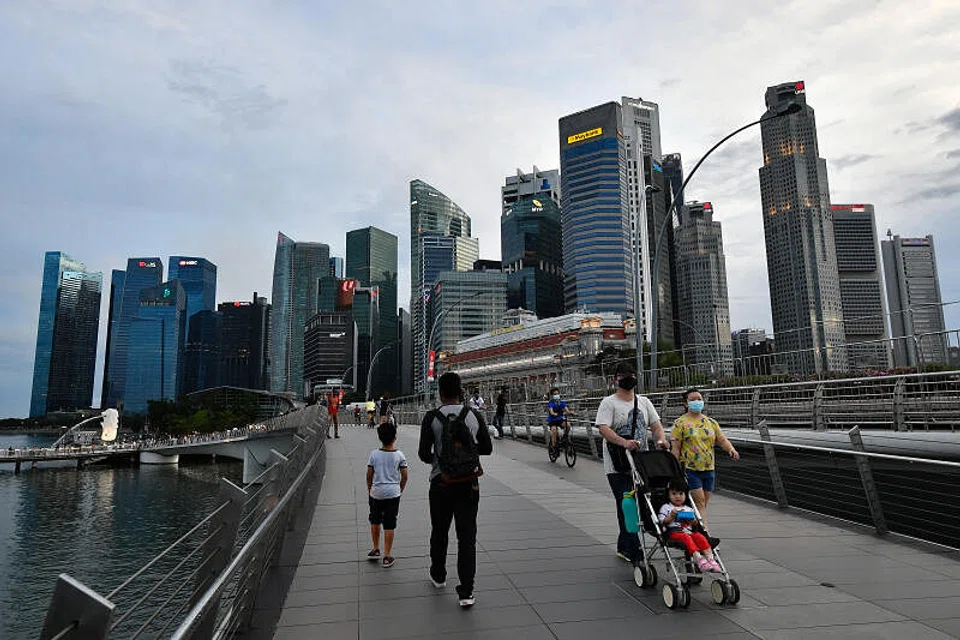
FEWER workers and job seekers reported facing discrimination in 2021, compared to 3 years before, according to the latest Ministry of Manpower (MOM) survey on fair employment practices.
The survey, released on Wednesday (Mar 23), found that 8 per cent of employees had experienced discrimination in the workplace, down from 24 per cent from the previous survey in 2018.
Fewer job seekers faced discrimination during their job search, too: 25 per cent, down from 43 per cent in 2018.
In a media briefing on the survey results, Ang Boon Heng, director of manpower research and statistics at MOM, attributed the drop to efforts by the ministry and the Tripartite Alliance for Fair and Progressive Employment Practices (Tafep) to raise awareness on discrimination in the workplace, as well as to the tighter labour market in 2021.
The latter meant that employers focused on looking for candidates with the right skill set and placed "less emphasis" on employing within a certain demographic, said Ang.
The survey, covering Singaporean residents' experiences in the last 12 months, was sent to a representative sample of around 4,000 residents and achieved a response rate of around 85 per cent. (see Amendment note 1)
The incidents of discrimination were mainly related to career development, salary and promotion.
Age was also the prevailing form of discrimination faced by job seekers, although it was reported by fewer of them in 2021: 18.9 per cent, down from 30.4 per cent in 2018.
Discrimination against women with children was the second most common at 6.9 per cent.
Discrimination based on pregnancy status, which had been the second most common form faced by job seekers in 2018 at 23.1 per cent, fell to 4.2 per cent in 2021. But it was the second most common form at the workplace, reported by 3.7 per cent.
One in 5 employees who experienced workplace discrimination sought help, mostly by reporting the incident to their organisation or union.
Those who remained silent were concerned about possible repercussions at work or in their careers, or felt the issue was not severe enough to warrant a report.
Slightly more than half of those surveyed in 2021 said they were aware of their employers having formal procedures to manage workplace discrimination, a small increase from 49.6 per cent in 2018.
Such procedures include a prevention policy, reporting and response procedures, and internal feedback channels. MOM's Ang noted that some companies may have informal or non-structured ways of dealing with discrimination when they receive a complaint, which were likely not reflected in the survey results.
MOM added that the survey does not specifically address the Covid-19 pandemic. Working from home - the prevalent mode of working during the pandemic - may have "some effect" on discrimination in the workplace, but it is unclear if this would be positive or negative, he added.
The effects of working from home may be further examined in future surveys, which MOM intends to conduct annually from this year. Up till this edition, the surveys were conducted once every 3 to 4 years. (see Amendment note 2)
Dr Koh Poh Koon, Senior Minister of State for Manpower, said that while the survey affirms the progress made over the decades, it shows that there are still incidents of discrimination occurring.
"We need to look at how we design legislative measure to focus on some of these frequently reported (forms of) discrimination," said Dr Koh at a virtual Reach dialogue on workplace fairness legislation on Tuesday. It was previously announced in August 2021 that Tafep's guidelines will be enshrined in law.
The dialogue discussed ideas such as the benefits of legislating the guidelines for employers and employees, and creating awareness for mental health conditions that could result in workplace discrimination.
Tafep is also considering ways to create "a safe environment" where employees are comfortable coming forward to report discrimination, and avenues for companies to implement formal grievance-handling processes, said Dr Koh.
However, he cautioned that mediation should continue to be "the first port of call" for handling incidents of workplace discrimination.
READ MORE:
- Manpower Minister champions Workfare minimum income, tighter foreign worker policy
- Women still under-represented in semiconductor industry: forum
- Labour MPs call for foreign manpower tweaks, expanded training to support local workers
Amendment note 1: A previous version of the article reported that the survey sample size was 4,000 resident employees. It was in fact around 4,000 residents.
Amendment note 2: The article also reported that the survey was conducted every 3 years. It is in fact conducted every 3 to 4 years.
Decoding Asia newsletter: your guide to navigating Asia in a new global order. Sign up here to get Decoding Asia newsletter. Delivered to your inbox. Free.
Copyright SPH Media. All rights reserved.
TRENDING NOW

Yeoh Pei Xien: YTL’s third-gen scion with a pastor’s heart

Singapore banks’ battle for wealth talent goes beyond private bankers

Car dealer charged in S$1.1 million tax evasion case involving Porsches, Ferraris, Rolls-Royces

Vietnam’s island megaproject races towards Apec deadline, but demand test looms

