

Finance watchdogs raise alarm as their dire warnings ignored
 Add BT as a preferred source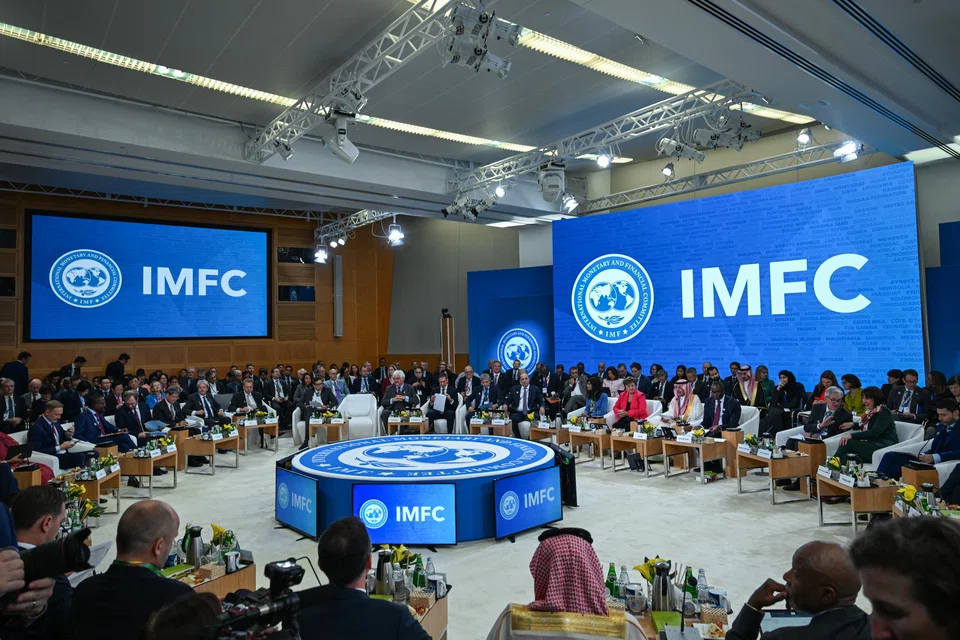
REGULATORS were once the top dogs at annual meetings of the International Monetary Fund (IMF), with audiences hanging on to their every word that potentially signalled measures to end multibillion-dollar bailouts and devastate bank share prices.
Not anymore.
At the recent gathering of the finest from the worlds of policy, politics and business in Washington DC, many global watchdogs and central bankers had the air of people who knew they were shouting into the void about the urgent need to avert another financial crisis with stronger regulations.
“If financial stability is gone, as a government you can forget about the other policy priorities,” Klaas Knot, chair of the Financial Stability Board, warned on Oct 22 at a Bloomberg event in New York before attending the IMF meetings in Washington. “You will spend most of your time drawing up rescue plans for an economy in free fall.”
Knot, who’s also the governor of the Dutch National Bank, was trying to elevate the financial stability agenda in the minds of leaders who he fears are prioritising other areas over implementing reforms already agreed and devising policies to deal with new risks. But privately, many senior policymakers expressed concerns that they are fighting a losing battle as the financial crisis sparked by Lehman Brothers’ 2008 implosion fades from the collective memory of global leaders fixated on growth.
Among those raising the alarm in public was Andrew Bailey, governor of the Bank of England, whose words echoed those of Knot’s the following day at a separate event in Washington, where he was attending the IMF meetings.
“As you get further and further away from a crisis, the memories recede, it’s disappearing in the rearview mirror and I get people saying to me, ‘you’ve done all this, you can move on’,” Bailey said. “You might think you’ve done it in terms of you think you’ve got a lot of regulations in place but you’ve never ‘done it’ in terms of ‘the risk has gone away’. We need to have that in mind.”
Nowhere is the issue more apparent than in the US, where the watering down and possible jettisoning of the final package of post-crisis banking reforms have become emblematic of what many fear could become a great global regulatory row-back.
The current administration in Washington has already dialled back a proposed package of rules significantly, with the eight US global systemically important banks now facing a 9 per cent increase in capital requirements as cushion against unexpected losses and financial shocks, instead of the original 19 per cent sought by the Federal Reserve, Federal Deposit Insurance Corp and the Office of the Comptroller of the Currency. The revision came in the wake of one of the fiercest lobbying campaigns by the lenders.

Even the watered down proposal has faced criticism that it could raise costs of lending, hurt the economy and put US banks on a weaker footing against international rivals.
Citigroup chair John Dugan said in Washington that he thought the latest package was unlikely to be finalised until after the next president is inaugurated. Some fear that the final version could be further weakened, particularly if former president Donald Trump takes back the White House.
“Nearly everybody I’ve talked to, and I’ll certainly put myself in this camp, is ‘look we’ve just got to get this done’,” Bailey said of the package, which was agreed by global regulators in the Swiss city of Basel after protracted haggling in 2017.
On the sidelines of the IMF meetings, several regulators privately told Bloomberg News that they had doubts about whether the US will implement the reforms at all in a Trump administration.
The European Union’s three biggest economies have already called on Europe to re-open part of its painfully agreed package. Several policymakers told Bloomberg News that those calls would receive wider support if the US does not hold up its end of the bargain. Speaking at an investment summit this month, Prime Minister Keir Starmer told the audience that his ministers will “rip out” the bureaucracy that blocks investment and added that he’d ensure every regulator in the UK “takes growth as seriously as this room does”.
Paweł Karbownik, Undersecretary of State in Poland’s Ministry of Finance, said EU financial regulation has gone “way too far” and his country will use its EU presidency next year to “roll back some” of it. He said the recent surge of “populism” in Europe shows how desperately it needs growth. He was speaking at an event in Washington.
Deutsche Bank chief executive officer Christian Sewing echoed those words on a panel later, saying Europe’s populism problem will get worse if growth doesn’t come back to the region. “We need to get bureaucracy under control,” he said, highlighting excessive “regulation” as a particular burden.
Beyond implementing what’s already been agreed, regulators worry about getting a mandate to tackle new risks, particularly from so called “non-bank financial institutions”, including hedge funds, whose bets on Treasury bonds could destabilise markets, and the private asset industry, where opaque valuations could threaten the broader financial system.
“We hear a lot in the context of these meetings about geopolitical fragmentation, I think if you look back and remember some of the lessons of the financial crisis, it was about global co-operation, addressing these risks together, and the idea that financial stability is a global public good,” Sharon Donnery, a member of the European Central Bank’s supervisory board said on Oct 23.
“It’s important that we don’t forget those lessons,” she said.
But such voices may be falling on deaf ears.
At a Semafor event on Oct 24, UBS Group CEO Sergio Ermotti said that it would be naivety to think there’d be a full alignment of regulations globally, citing the Basel impasse as an illustration of regulators’ difficulties in implementing co-ordinated approaches.
“The inability of policymakers and regulators to deploy the same standards globally – it’s a symptom that at the end of the day, national interest prevails, or regional interests prevail, versus the need for full global implementation,” Ermotti said.
Decoding Asia newsletter: your guide to navigating Asia in a new global order. Sign up here to get Decoding Asia newsletter. Delivered to your inbox. Free.
Share with us your feedback on BT's products and services
TRENDING NOW

Japan Home closing outlets; staff say Valu$ taking over operations

Timah Partners lands S$60 million facility from lenders including UOB, RHB

ComfortDelGro’s Zig to buy S$10 million worth of BYD cars for private-hire fleet

How BYD disrupted Singapore’s car market – and why the strategy is turning on itself

