Firms seek help to ease in next year's carbon tax
Some ask for gradual implementation while others look to possible grants for energy efficiency-related projects
Singapore
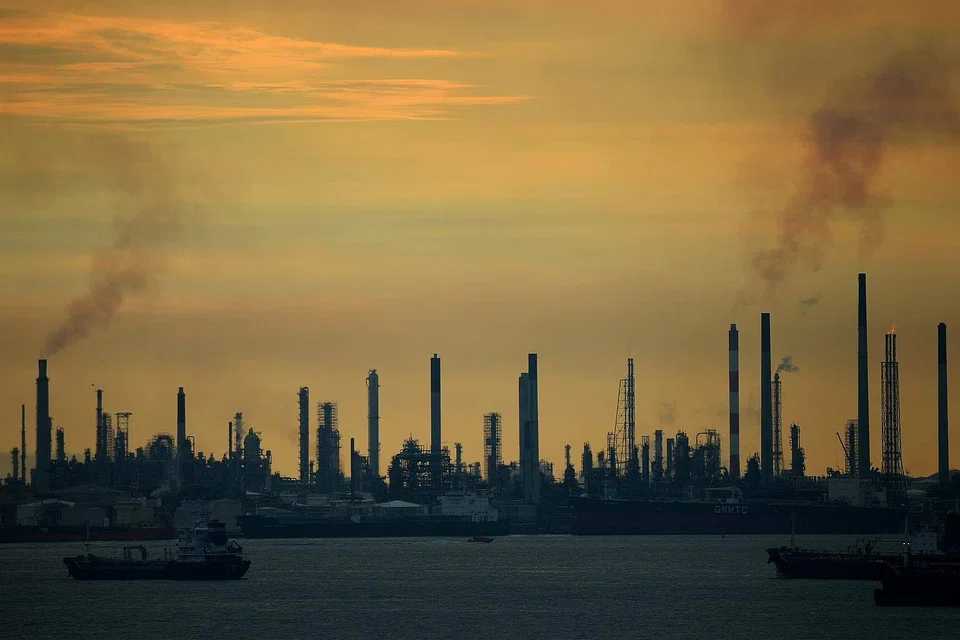
HEAVY greenhouse gas emitters in Singapore are hoping the government will provide assistance at the onset of the carbon tax, even as they wait for details on the specific carbon price in the upcoming Budget.
Singapore will implement the carbon tax from next year. The government has not yet confirmed the price it will set, though it said in last year's Budget that the tax will be between S$10-20 a tonne of greenhouse gas emissions.
YTL PowerSeraya, one of the top three power generation firms in Singapore, said it is expecting more details in next week's Budget announcements around the specific price, carbon credit pricing mechanism, transitional arrangements and assistance, and possible grants for energy efficiency-related projects.
Semiconductor fabrication firm Systems on Silicon Manufacturing Company (SSMC) is hoping for a gradual implementation of the tax in order that the industry can adapt.
The two are among 30-40 companies in the power generation, petrochemical and semiconductor sectors that are expected to be affected by the tax imposed on firms producing over 25,000 tonnes of carbon dioxide equivalent of greenhouse gases a year.
The carbon tax is a focus of the government's carbon measures this year, which has been designated the Year of Climate Action.
The government has said the carbon tax is not meant to be a fiscal measure to raise additional revenue, but is part of a suite of tools it is using to nudge both industries and end-consumers towards reducing greenhouse gas emissions.
A draft carbon tax bill released late last year showed that it is planning to use a credits-based mechanism for the carbon tax, in preparation for the possible integration into a wider carbon-trading market in future.
The burden of the tax will fall differently on power generation companies, compared to those which manufacture for exports such as petrochemical and semiconductor firms.
Power generation firms, which produce about 40 per cent of Singapore's total emissions, have said they will pass on the additional costs.
They are, however, calling for the carbon tax to be highlighted as a separate line item in consumers' utility bills so that its impact on the final bill will not be confused with oil price movements by consumers.
"If they don't see it they won't make a conscious effort to change the behaviour and adopt energy-efficient practices," power generation firm PacificLight Power chief executive officer Yu Tat Ming told reporters on the sidelines of a pre-Budget consultation session.
For oil giant Shell, which has its largest refinery and petrochemical complex in Singapore, the design of the tax will be important in ensuring its effectiveness as an incentive to cut emissions, and also support industry competitiveness.
Both of these are government goals, noted its chief economist Steven Fries.
"International experience has shown a good way to deliver on both objectives is for governments to set an appropriate carbon 'price' on emissions which exceed an acceptable industry performance," he said.
"This allows the government to set a carbon price high enough to incentivise companies to be more efficient, while safeguarding competitiveness by keeping the average carbon tax low."
Mr Fries' comments echo feedback by participants from various industries at the pre-Budget consultation session on Jan 23. Then, they said a uniform carbon tax will be too blunt an instrument to yield effective results.
Instead, they suggested that the government consider using industry benchmark targets, with companies which are more energy efficient than these benchmarks paying less or no tax, while those less efficient will pay a more hefty tax.
Said YTL PowerSeraya executive vice-president of retail, Low Boon Tong: "It is ideal if the final bill would encompass more specific details on the carbon credit pricing mechanism, while at the same time taking into account the impact the carbon tax would have on Singapore's economic competitiveness in the international arena and the long-term sustainability of the power sector."
Minister for the Environment and Water Resources Masagos Zulkifli also conceded at the event that it was inevitable a carbon tax imposed on power generation companies will trickle down to the rest of the economy.
But there are a few mechanisms in place to ensure that the generation companies do not pass down inflated costs, he told reporters.
One is through competition within the sector. The other is through alternative energy such as solar power, he said, adding that the liberalisation of the electricity market by the second half of this year to households will also help.