

France eyes petrol vouchers to ease energy price squeeze
 Add BT as a preferred source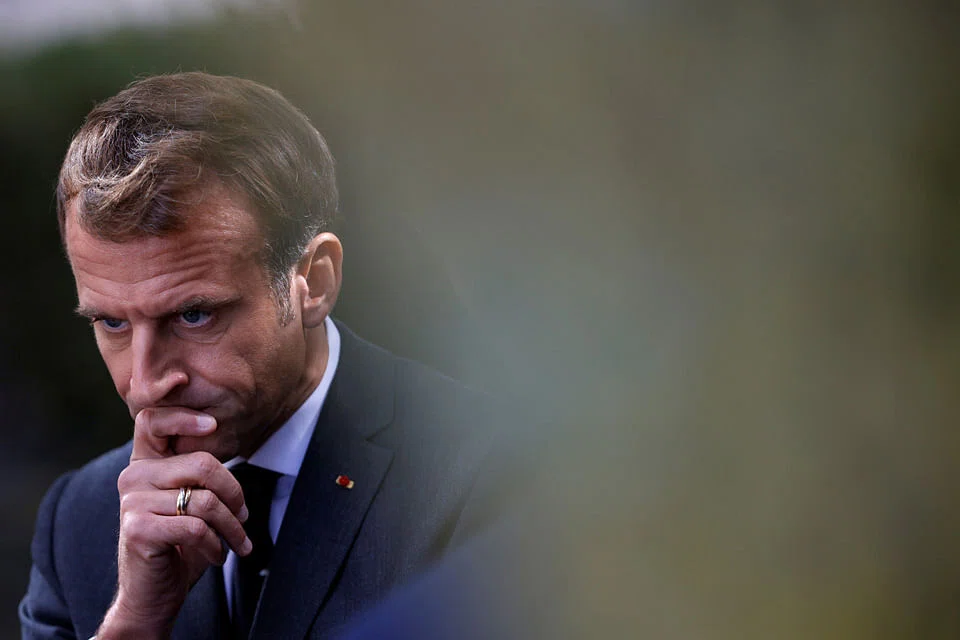
DeeperDive is a beta AI feature. Refer to full articles for the facts.
Paris
FRENCH ministers floated the possibility of petrol vouchers for low-income households on Monday, as President Emmanuel Macron's government seeks to limit the damage from surging energy prices to his economic record six months from a presidential election.
The government has already scrambled in recent weeks to cap gas and electricity prices and increase handouts to help the poor pay winter heating bills as energy prices jumped worldwide on the strength of the post-pandemic economic recovery.
With economic growth set to top 6 per cent this year as the Covid-19 crisis subsides, the economy had been viewed as Macron's strong suit heading towards the April election, in which he is widely expected to seek a second five-year term. But the price spike could hurt his record by eclipsing purchasing power gains during his presidency, which were fuelled largely by tax cuts.
As petrol prices have steadily climbed in recent weeks, the government has faced growing pressure to cut taxes paid at the pump, which can amount to up to 60 per cent of what drivers pay.
Finance Minister Bruno Le Maire said, however, that would not only be costly to public finances but would also amount to a subsidy for fossil fuels at a time when the government was trying to wean the economy off them. "I prefer 'petrol cheques' to a lowering of taxes," he told Europe 1 radio. Environment Minister Barbara Pompili also made the case for petrol vouchers on France 2 TV, but added that it was a complex process to put in place.
Navigate Asia in
a new global order
Get the insights delivered to your inbox.
With energy prices a big part of households' budgets, tax on them can be a sensitive issue in France and were at the heart of waves of weekly demonstrations by protestors known as "Gilets Jaunes" due to the bright yellow vests they wear. Once again, squeezed purchasing power has become a top theme at recent Yellow Vest protests.
"There are mothers-of-two who have to chose between paying their energy bill and feeding their children," one protestor told Reuters TV at a demonstration this month. "Therein lies the problem: what's left to live by after we've paid the energy bill?" The protests were triggered by a planned tax increase on fossil fuels in 2018, which set off some of the worst street violence seen in the French capital in decades.
After spiralling into a broader movement against Macron and general elitism, the protests slowly subsided as his government sought to boost households' purchasing power with a 5 billion euro (S$7.8 billion) cut in income tax. Thanks to this and other measures, disposable income is set to have grown twice as fast under Macron's presidency as under his predecessors Socialist Francois Hollande and conservative Nicolas Sarkozy, said the Treasury's annual economic and social report earlier this month.
Macron's office acknowledges that the numbers do not necessarily accord with the public's perception, with polls suggesting a majority of people think their purchasing power has been squeezed under his presidency. Against that background, the government capped retail gas prices this month until March, when it hopes the price spike will fade.
It also plans to cut a surcharge on electricity prices to limit a price increase to 4 per cent in the first half of 2022, instead of the 12 per cent that could otherwise have been expected. REUTERS
Decoding Asia newsletter: your guide to navigating Asia in a new global order. Sign up here to get Decoding Asia newsletter. Delivered to your inbox. Free.
Share with us your feedback on BT's products and services
TRENDING NOW

Shelving S$5 billion office redevelopment plan proved ‘wise’ as geopolitical risks mount: OCBC chairman

Eurokars Group introduces rental car franchises Enterprise Rent-A-Car, National Car Rental, and Alamo to Singapore

20 photos that show how dramatically Singapore has changed in two decades
Singapore’s key exports up 15.3% in March from electronics surge, exceeding forecasts

