
France hit by second nationwide strike against pension reform
 Add BT as a preferred source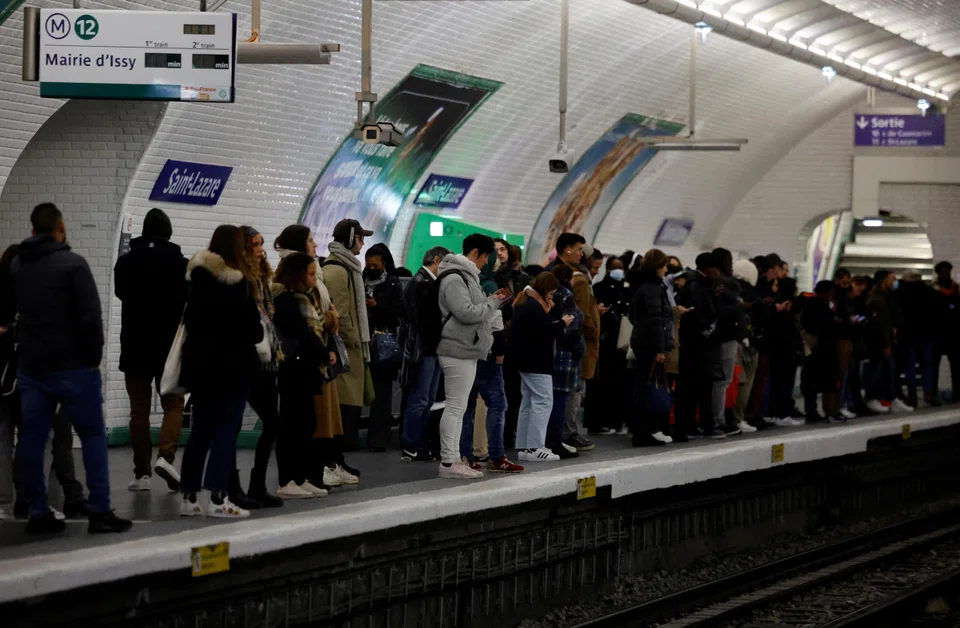

A SECOND nationwide strike disrupted electricity production, public transport and schools in France on Tuesday (Jan 31), in a backlash against the government’s plans to make people work longer before retirement.
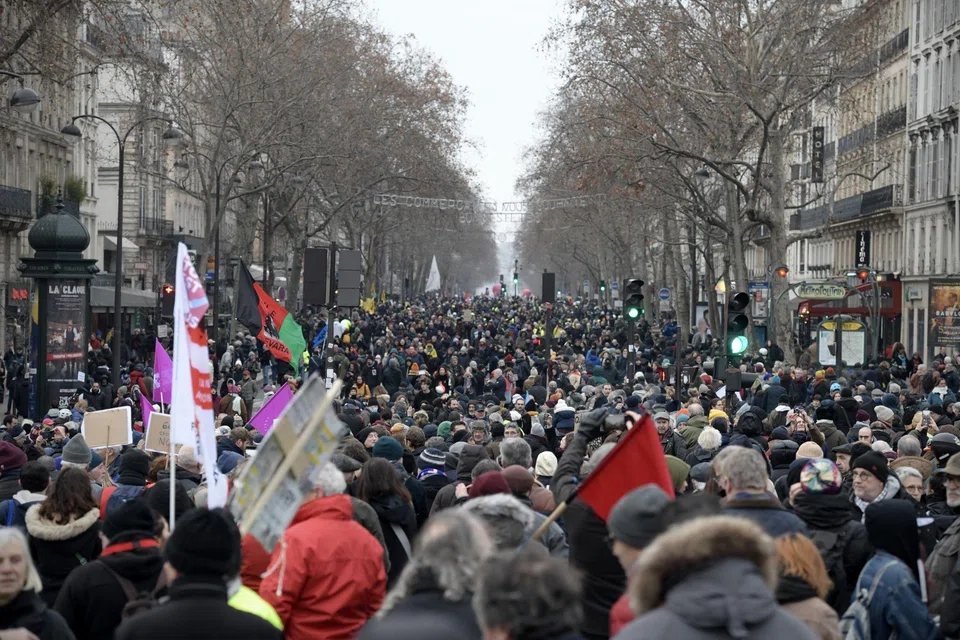
Unions, which have scheduled protests across the country throughout the day, want to keep the pressure on the government and hope to repeat the large turnout on Jan 19, the first day of nationwide protests.
That day, more than a million people marched in opposition to raising the retirement age to 64 from 62, a move that would accelerate a planned delay in the eligible age for a full pension.
“This reform is unfair and brutal,” said Luc Farre, secretary-general of the National Federation of Independent Unions’ civil servants’ division. “Moving (the pension age) to 64 is going backwards, socially.”
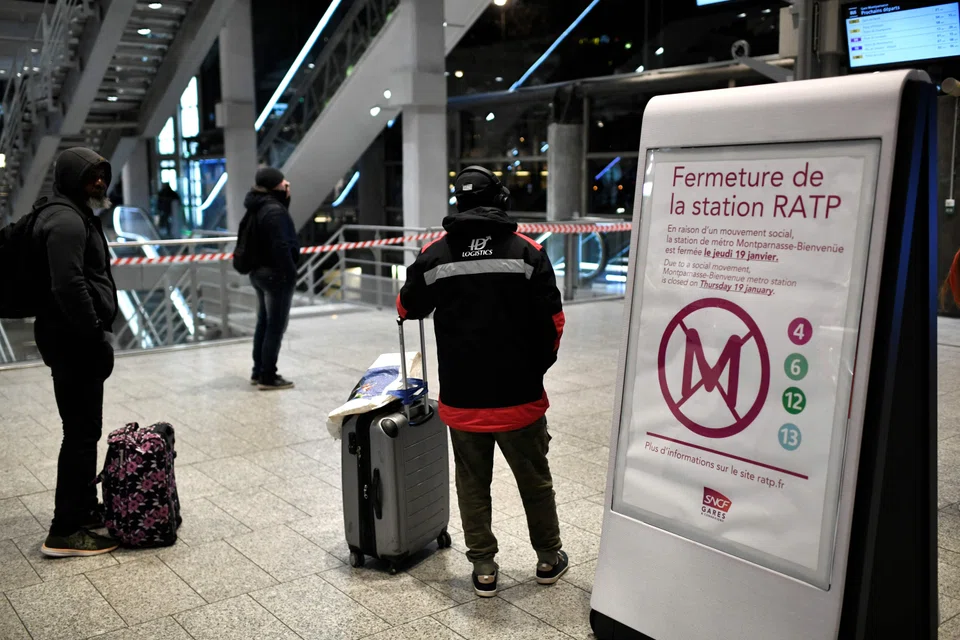
On Tuesday, only one in three high-speed TGV trains was running, with even fewer local and regional trains in operation. The Paris metro was seriously disrupted.
Half of all primary-school teachers will walk off the job, the relevant union said. Oil-refinery staff and workers across other sectors, including public broadcasters – which played music instead of news programmes – also went on strike.
Navigate Asia in
a new global order
Get the insights delivered to your inbox.
French power supply was down by 4.4 per cent, or 2.9 GW, as workers at nuclear reactors and thermal plants joined the strike, data from utility group EDF showed.
Energy company TotalEnergies said there was no delivery of petroleum products from its French sites because of the strike; it added that petrol stations were fully supplied and that customers’ needs were met.
Opinion polls show that most French people oppose the reform, but President Emmanuel Macron and his government intend to stand their ground. The reform is “vital” to ensuring the pension system keeps working, Macron said on Monday.

Pushing back the retirement age by two years and extending the pay-in period would yield an additional 17.7 billion euros (S$25.3 billion) in annual pension contributions, allowing the system to break even by 2027, estimated the labour ministry.
Unions say there are other ways to do this, such as taxing the super-rich, or asking employers or well-off pensioners to contribute more.
The government has made some concessions in the draft bill, such as setting the new pensionable age at 64 instead of Macron’s campaign pledge of 65, and agreeing to a minimum pension of 1,200 euros a month for all.
Prime Minister Elisabeth Borne said the age-64 threshold is “non-negotiable”, but the government was exploring ways to offset some of the impact, especially on women.
She said the government was looking at the impact of the reform on the additional pension rights for mothers.
As protesters rally across France, lawmakers will be debating the draft bill at committee-level. The unions said they were trying to persuade lawmakers not to back the bill.
“When there is such a massive opposition (to a reform), it would be dangerous for the government not to listen,” said Mylene Jacquot, the secretary-general of the French Democratic Confederation of Labour’s civil-servant branch. REUTERS
Decoding Asia newsletter: your guide to navigating Asia in a new global order. Sign up here to get Decoding Asia newsletter. Delivered to your inbox. Free.
Share with us your feedback on BT's products and services

