

France says inflation control is the main priority for 2023 budget
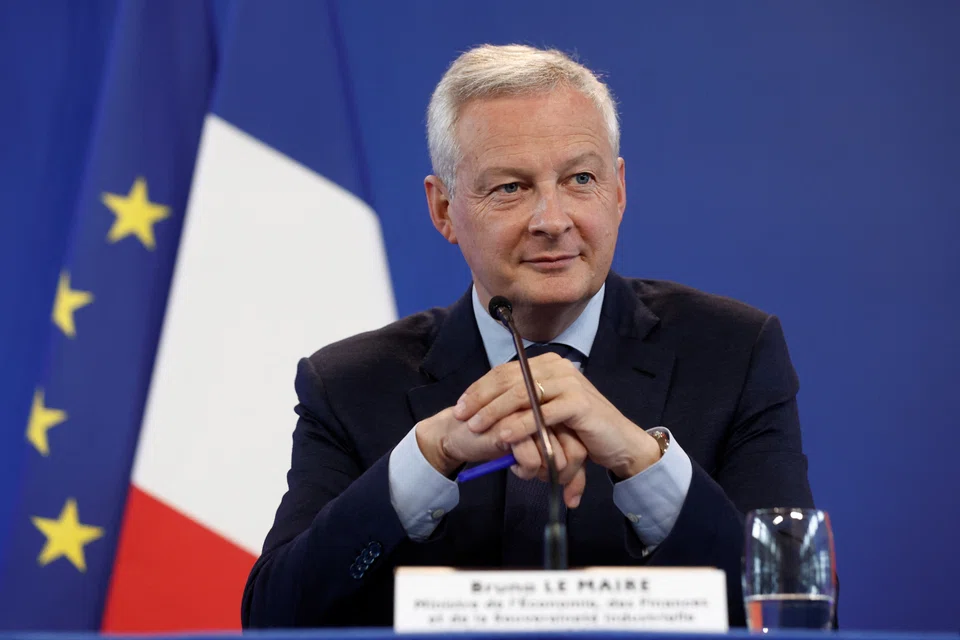
THE fight against inflation is the biggest priority, France’s finance minister said on Monday (Sep 26) as he delivered a 2023 budget subject to what he called unprecedented uncertainty due to the fallout from Russia’s war against Ukraine.
“The most important and most urgent challenge for France and other European nations is to bring down the inflation pressure,” Finance Minister Bruno Le Maire told journalists as he presented the 2023 budget bill.
The ministry said it had budgeted 45 billion euros (S$62.3 billion) next year to cap increases in gas and power prices at 15 per cent, although special levies on energy companies was expected to bring the net cost to 12 billion euros, lower than the 16 billion previously flagged.
Le Maire said that “uncertainty has never been greater” about the economic outlook for next year as the war in Ukraine continues to rage and Russia’s moves remained unpredictable.
Economic slowdowns in France’s main economic partners - the United States, Germany and China - further obscured the slowdown.
“Political movements in Europe can also impact the eurozone,” Le Maire said a day after voters in Italy put the debt-laden country on a path towards its most right-wing government since World War Two.
The Finance Ministry forecast earlier this month that the economy would grow 2.7 per cent this year before slowing to 1 per cent next year, while the central bank expects 0.8 per cent next year at best.
Despite the slowdown, the ministry expects to be able to keep the public sector budget deficit steady next year at 5 per cent of economic output, leaving the public finances on target to be within an EU-imposed ceiling by 2027.
It expects to be able to do that thanks to higher corporate tax income and by spreading the planned scrapping of a tax on companies’ turnover over 2 years.
However, the Haut Conseil des Finances Publiques, an independent body mandated by law to judge whether the economic assumptions underpinning the government’s budget are plausible, said the plans lacked ambition and its growth forecasts were optimistic.
The oversight panel also voiced regret that government plans to keep down spending growth were not being written into law and efforts to keep down debt were “modest and late”.
The government forecasts that public debt will hover around 111.5 per cent of GDP until 2026 before easing back. REUTERS
Decoding Asia newsletter: your guide to navigating Asia in a new global order. Sign up here to get Decoding Asia newsletter. Delivered to your inbox. Free.
Share with us your feedback on BT's products and services






