

GE2020: PAP defeats SPP in Bishan-Toa Payoh GRC with 67.26% of votes
 Add BT as a preferred source
Mindy Tan
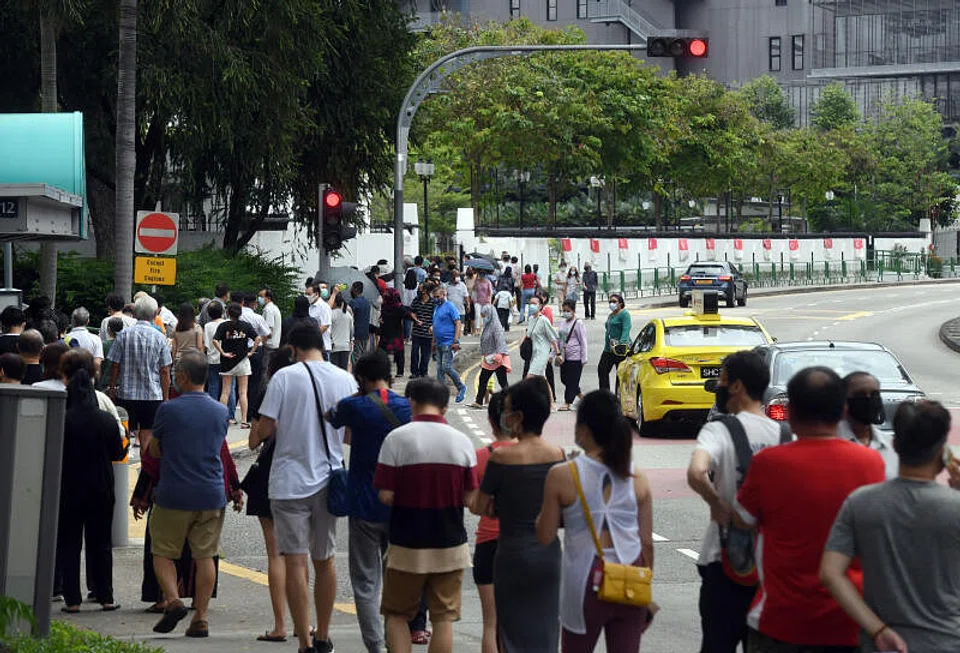
THE People's Action Party (PAP) won 67.26 per cent of the vote for the Bishan-Toa Payoh group representation constituency (GRC) over the Singapore People's Party (SPP).
PAP's vote share of 67.26 per cent translated to 62,853 votes cast for the party, while 30,594 votes were cast for SPP that represented 32.74 per cent of valid votes cast. The number of spoilt votes totalled to 2,043.
There were 95,490 votes cast by electors in this GRC.
The PAP fielded Defence Minister Ng Eng Hen, 61, Senior Minister of State for Trade and Industry Chee Hong Tat, 46, Saktiandi Supaat, 46 and Chong Kee Hiong, 54. The SPP's four candidates comprised secretary-general Steve Chia, 49, vice-chairman Williiamson Lee, 40, Osman Sulaiman, 45, and Melvyn Chiu, 40.
The PAP and SPP also squared off in the 2015 GE. The PAP team, led by Dr Ng, won 73.59 per cent of the vote for the constituency.
In 2015, the SPP team was co-led by then-Democratic Progressive Party (DPP) chief Benjamin Pwee and SPP's Bryan Long. DPP and SPP partnered up to contest this constituency in 2015, with Mr Pwee and another DPP member resigning from the party to join SPP. Mr Pwee is this year contesting for votes this year at Marsiling-Yew Tee GRC under the Singapore Democratic Party (SDP) banner, having joined SDP in 2019.
For more of our Singapore GE2020 coverage, go to bt.sg/ge2020
Decoding Asia newsletter: your guide to navigating Asia in a new global order. Sign up here to get Decoding Asia newsletter. Delivered to your inbox. Free.
Copyright SPH Media. All rights reserved.
TRENDING NOW

Think twice about rebuilding that old landed property into a super-big house to max out GFA

SpaceX’s US$1.75 trillion IPO: How retail investors, including those in Singapore, can buy shares

Yeo’s, Tiger Beer and now Gardenia – flight of food manufacturing from Singapore might be just as planned

Battle for Asia’s ultra-rich: ‘Singapore can’t afford to keep losing clients to Dubai, Hong Kong’

