

German economy chief to make first trip to China to talk trade
She is likely to press the Asian nation on its widening surplus with Germany, a source says

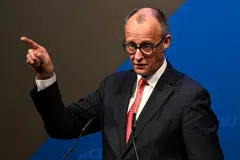
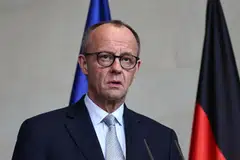
[BERLIN] German Chancellor Friedrich Merz is dispatching his economy minister to China in May.
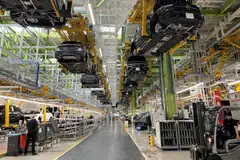
The move comes as officials in Berlin grow increasingly concerned over a widening trade deficit, access to raw materials and the regulation of artificial intelligence.
Katherina Reiche, whose portfolio covers economic affairs and energy, plans to make her first trip to China from May 26 to 29 – with visits to Beijing included, in addition to possibly the port city of Guangzhou in the south, sources said.
The details and timing of the trip are subject to change, the sources added.
The stance of Merz’s government regarding Beijing has come under scrutiny – given that his campaign involved taking a tougher position on German industrial exposure and the risk of dependence on China’s economy.
However, he came off a trip to China in February with a more conciliatory tone, saying he would seek to deepen a strategic partnership.
An economy ministry spokesperson declined to confirm the visit, adding that any trip would be announced only after it has been officially scheduled.
Reiche’s ministry plays a crucial role in Germany’s relations with China, overseeing many of the tools that would be deployed to mitigate supply chain risks or block Chinese investments in critical sectors.
However, as a member of Merz’s conservative Christian Democrats, she may not be inclined to use them, the sources said, who spoke on condition of anonymity as deliberations took place behind closed doors.

The minister, 52, champions a more market-based and less interventionist approach.
A controversial figure in Merz’s coalition, she has embraced that position in attacks on his Social Democratic coalition partners, drawing a rebuke in April from him as the government sought to craft a response to soaring fuel prices.
Still, Reiche is likely to press China on its widening trade surplus with Germany, as well as its industrial overcapacity, one of the sources said.
The country’s export-driven economy has been hit hard by deteriorating trade conditions worldwide and the fallout from geopolitical tensions such as the US-led war on Iran, which has driven up energy prices.
The dynamics compound concerns by European officials over a flood of Chinese exports, partly driven by a depreciated renminbi.
With US trade disrupted by President Donald Trump’s administration, the EU is more vulnerable to cheaper Chinese goods.
Should the dates for Reiche’s trip hold, it would follow soon after Trump’s planned visit on May 14 to 15 for closely watched talks with Chinese President Xi Jinping.
Anxiety among European officials is also growing over US efforts to cut deals with China for better access on critical minerals, trade and investment, which would leave Europe on the back foot.
That development has sent the continent’s leaders flocking to Beijing to reset ties. BLOOMBERG
Decoding Asia newsletter: your guide to navigating Asia in a new global order. Sign up here to get Decoding Asia newsletter. Delivered to your inbox. Free.
Share with us your feedback on BT's products and services
TRENDING NOW

Once staunchly pro-China, Malaysian Chinese businesses are now distancing themselves from Beijing

Britain’s mansion tax shows the difficulty of targeting wealth

Three hats, one goal: How Ng Kian Swan runs sustainability at NUHS

COE review: The gap between luxury and mass-market cars isn’t the only one worth bridging

