

German economy dodges recession as war, pandemic weigh
 Add BT as a preferred source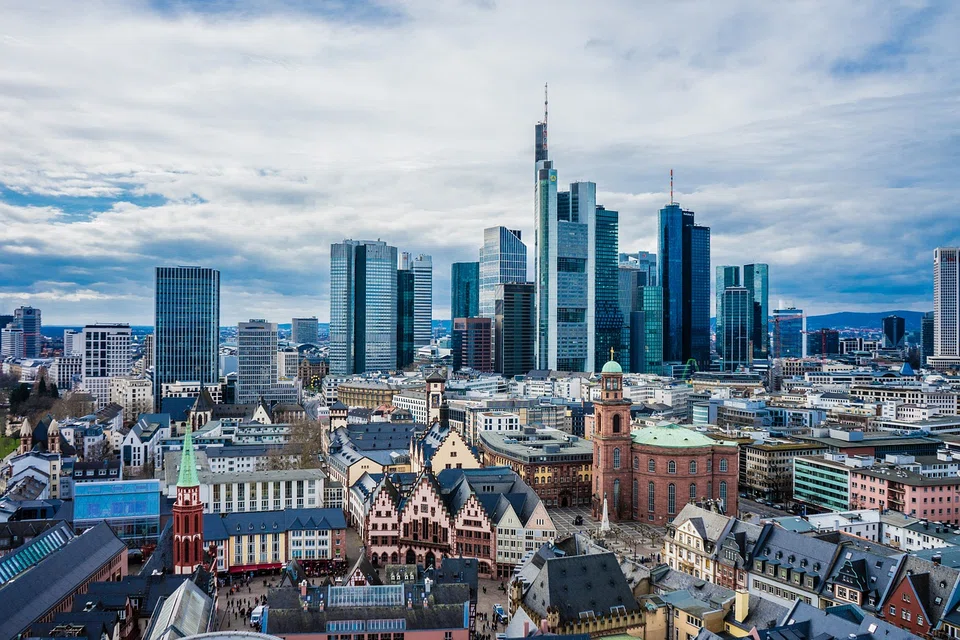
DeeperDive is a beta AI feature. Refer to full articles for the facts.
THE German economy grew slightly in the first quarter from the previous one, data showed, with higher investments offset by the twin impacts of war in Ukraine and Covid-19 that experts predicted would weigh more heavily in the 3 months to June.
Europe’s largest economy grew an adjusted 0.2 per cent quarter on quarter and 3.8 per cent on the year, the Federal Statistics Office said on Wednesday (May 25). A Reuters poll had forecast 0.2 per cent and 3.7 per cent, respectively.
The reading meant that Germany skirted a recession, often defined as 2 quarters in a row of quarter-on-quarter contraction, after gross domestic product (GDP) fell by 0.3 per cent at the end of 2021.
While household and government spending remained mostly at the same level as in the previous quarter and exports were down at the start of the year, investments grew.
Construction investments, boosted by mild weather, were up 4.6 per cent from the previous quarter, despite price increases, and machinery and equipment investments rose 2.5 per cent.
German business morale rose unexpectedly in May as its economy showed resilience, according to an Ifo institute survey published this week that found no observable signs of a recession.
Navigate Asia in
a new global order
Get the insights delivered to your inbox.
However, there is no upswing in sight either, and Sebastian Dullien, director of the Macroeconomic Policy Institute (IMK), predicted the effect of the war and pandemic-linked restrictions in China - Germany’s biggest trading partner last year, according to official data - would be much greater in the second quarter.
ING economist Carsten Brzeski said he was sticking with his baseline scenario of a slight GDP contraction in the second quarter after Wednesday’s reading.
“The build-up of inventories and weak consumption in the first quarter, as well as very weak consumer confidence, clearly dampen the optimism that traditional leading indicators are currently conveying,” he said.
A consumer sentiment index by the GfK institute inched up slightly heading into June from an all-time low in May, with household spending burdened by inflation.
The government forecasts economic growth of 2.2 per cent in 2022. REUTERS
Decoding Asia newsletter: your guide to navigating Asia in a new global order. Sign up here to get Decoding Asia newsletter. Delivered to your inbox. Free.
Share with us your feedback on BT's products and services
TRENDING NOW

Shelving S$5 billion office redevelopment plan proved ‘wise’ as geopolitical risks mount: OCBC chairman

Eurokars Group introduces rental car franchises Enterprise Rent-A-Car, National Car Rental, and Alamo to Singapore
20 photos that show how dramatically Singapore has changed in two decades
Singapore’s key exports up 15.3% in March from electronics surge, exceeding forecasts

