

German factory orders drop in sign of enduring weakness
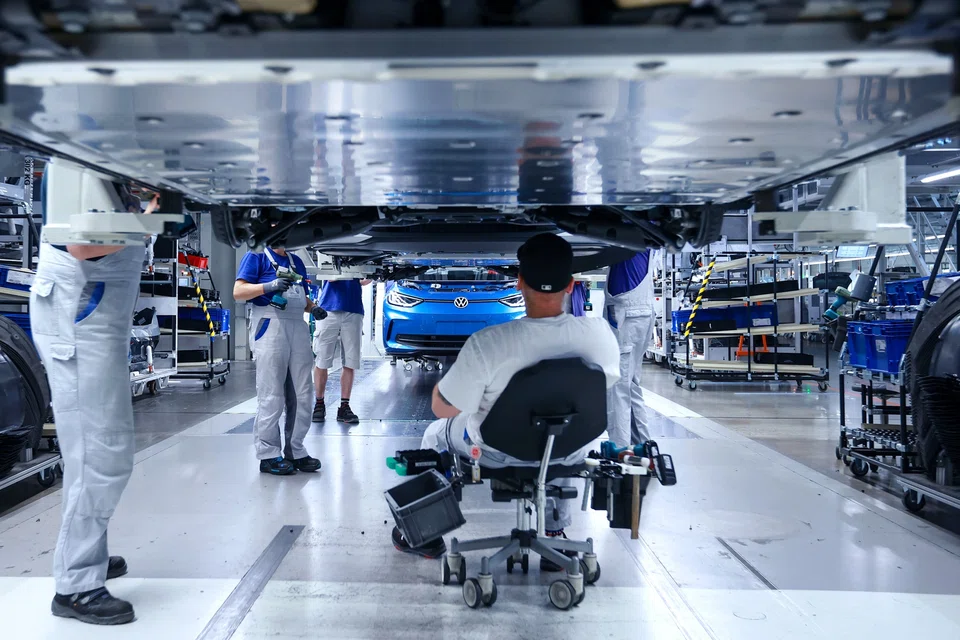
GERMAN factory orders unexpectedly dropped in March – pointing to persistent weakness in a sector that is already lagging behind the improvement in the wider economy.
Demand fell 0.4 per cent from the previous month, defying economists’ expectations for a 0.4 per cent gain. Major orders drove the decline, without which there would have been growth of 0.1 per cent, the statistics office said on Tuesday (May 7) in a statement.
February’s reading was also revised down to a 0.8 per cent decrease, it said.
The data shows the fragility of Europe’s biggest economy, despite its overall prospects having brightened after a contraction at the end of 2023. Sentiment indicators point to a more bullish mood among businesses and households, though an industry lobby survey also released on Tuesday revealed German companies operating abroad do not see the global upswing boosting their own situations.
Manufacturing, which plays a bigger role in Germany than in other countries in the region, remains troubled. Surveys by S&P Global showed the sector remained mired in contraction in April, while services activity grew at the fastest rate in 10 months.
Factories have been plagued by subdued global demand and high interest rates, which are weighing on investments. Energy-intensive industries like the chemical sector are also suffering from higher prices as a result of Russia’s war in Ukraine.


Daimler Truck Holding on Friday warned of a difficult environment, saying it would adjust its European production capacity to account for weaker demand. Automakers including Volkswagen and Mercedes-Benz Group also had a tough start to the year.
Some economists reckon Germany’s export-reliant manufacturers will benefit from improving global orders in the second half of 2024. Deutsche Bank last week raised its economic-growth forecast for this year to 0.3 per cent from minus 0.2 per cent.
Trade data also published on Tuesday was more upbeat, with exports rising 0.9 per cent and imports also seeing an unexpected advance. BLOOMBERG
Decoding Asia newsletter: your guide to navigating Asia in a new global order. Sign up here to get Decoding Asia newsletter. Delivered to your inbox. Free.
Share with us your feedback on BT's products and services
TRENDING NOW

He built the Vingroup empire. Now South-east Asia’s richest man is handing some key roles to his sons

Fed hike throws Singapore banks a margin lifeline; UOB likely to benefit more

Luxury properties seized in S$3 billion money laundering case fail to sell at auction

US stocks: Tech leads Wall Street to higher close as oil eases, Treasury yields dip

