

German finance minister cuts lonely figure backing debt brake
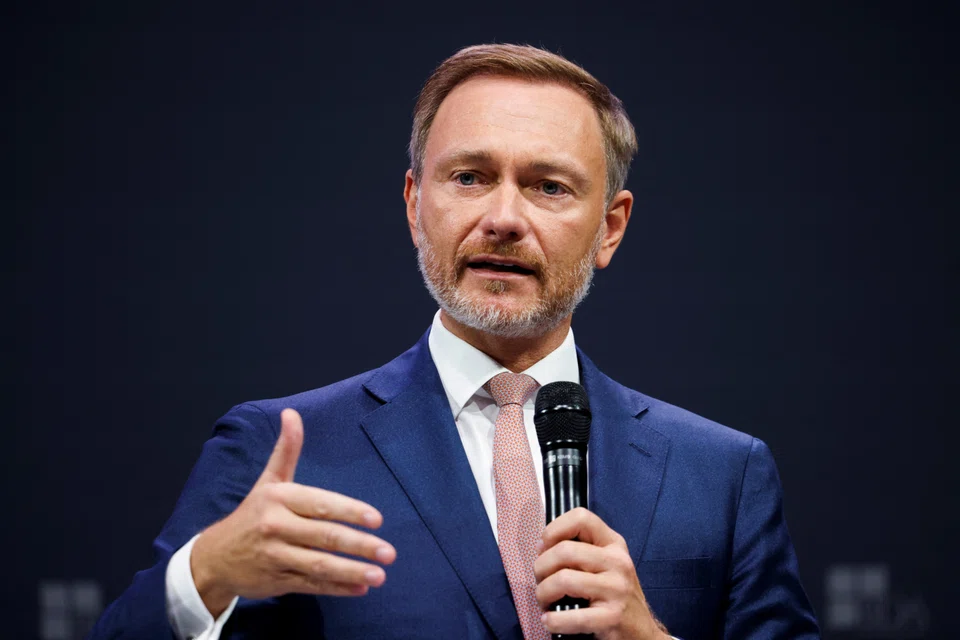
THE German finance minister is sticking to his plan to return to the nation’s constitutionally enshrined debt brake - even if it is a lonely position, he says.
“According to the current state of things, this is not only possible but also imperative,” Christian Lindner said on Thursday (Sep 22) at an insurance industry conference.
However, he said a further suspension of the borrowing limits - first set aside to allow state support during the Covid-19 pandemic - could be a “last resort” in the event of some unforeseen, catastrophic development beyond the state’s control.
Germany must not make a norm out of this, Lindner said, adding “even if it makes me feel a little lonelier”.
Lindner has previously said planned relief measures were possible within existing budget plans for 2022 and 2023 as inflation has recently given the state high tax revenues.
However, the costs are mounting for Europe’s largest economy to support households and businesses struggling with skyrocketing energy bills and some traditional supporters of the debt brake have raised questions about it given exploding energy costs.
A plan to prop up Uniper, for example, will now cost the government 29 billion euros (S$40.5 billion) after it moved to nationalise the troubled importer of Russian gas on Wednesday. REUTERS
Decoding Asia newsletter: your guide to navigating Asia in a new global order. Sign up here to get Decoding Asia newsletter. Delivered to your inbox. Free.
Share with us your feedback on BT's products and services
TRENDING NOW

One-third of Singapore-listed firms at risk in severe AI downturn: MAS

‘Not done’: Keppel CEO Loh Chin Hua transformed the group, but says there’s ‘still a lot to do’

He built the Vingroup empire. Now South-east Asia’s richest man is handing some key roles to his sons

‘We don’t want to stay as we are’: CEO Patrick Ng builds a more resilient Huationg

